
Masai Mara Kenya Wildlife Photography Guide: Big Five, Wildebeest & Best Lens Setup
The Masai Mara is one of the best wildlife photography destinations in Africa.
Open plains.
Golden light.
High predator density.
Seasonal migration drama.
If you are planning a safari and want more than snapshots, this guide will help you prepare properly.
Inside, you’ll learn:
- How to photograph the Big Five in Masai Mara
- How to capture wildebeest during migration season
- Best times of day for wildlife photography
- Recommended lens setups (Sony, Canon & Nikon)
- Practical field strategies for sharper, cleaner images
Why Masai Mara Is a Wildlife Photographer’s Dream
Masai Mara offers unique advantages:
- Open visibility (fewer obstructing trees)
- Large predator populations
- High wildlife concentration year-round
- Seasonal Great Migration (July–October)
- Strong golden-hour light
Unlike dense forests, animals are often visible from distance — which means reach matters.
A 200mm lens is rarely enough.
Photographing the Big Five in Masai Mara
The Big Five — lion, leopard, elephant, buffalo, and rhino — are highly sought after by photographers.
Each requires a slightly different approach.
1️⃣ Lion Photography in Masai Mara
Lions are the most commonly seen predator.
Best opportunities:
- Early morning (before 9am)
- Late afternoon
- During hunts
- Around riverbanks and open plains
Photography tips:
- Shoot at eye level whenever possible
- Focus on behavior (grooming, cub play, roaring)
- Use side lighting for texture in mane
Recommended focal length:
- 400mm–600mm for portraits
- 200–400mm for pride scenes
Settings baseline:
- 1/1000s minimum
- Continuous autofocus
- f/5.6–f/8
2️⃣ Leopard Photography
Leopards are elusive but regularly seen in riverine areas.
Look near:
- Talek River
- Mara River vegetation
- Tree perches
Tips:
- Be patient
- Expose slightly for highlights (spotted coat)
- Capture tail movement and tree descent moments
Recommended focal length:
- 500mm–600mm ideal
- 400mm minimum
3️⃣ Elephant Photography
Elephants in Masai Mara are plentiful.
Best shots:
- Herd crossings at sunset
- Dust bathing sequences
- Silhouettes against orange skies
- Calves interacting with adults
Lens range:
- 200–400mm for herds
- 400–500mm for portraits
Shutter speed:
- 1/800s+ for movement
- Slower speeds for creative dust blur
4️⃣ African Buffalo
Often underestimated photographically.
Look for:
- Backlit horns
- Herd dust movement
- Close face detail
Lens range:
- 300–500mm
5️⃣ Black Rhino (Rare)
Rhino sightings are limited but possible in specific areas.
Use:
- 500mm–600mm
- Quiet shooting
- Respect safe distances
Wildebeest Photography During Migration
From July to September, Masai Mara becomes the center of the Great Migration.
What to photograph:
- River crossings
- Herd movement across plains
- Dust storms
- Predator interactions
- Calves navigating riverbanks
Best lens range:
- 100–500mm
- 200–600mm
- 600mm primes for distant crossings
Fast shutter speeds are essential:
- 1/2000s for river crossings
- High burst mode
Migration photography is fast and chaotic. Reach and autofocus performance matter greatly.
Best Time of Day for Wildlife Photography
Early Morning (6am–9am)
- Soft golden light
- Active predators
- Minimal heat distortion
Late Afternoon (4pm–6:30pm)
- Dramatic side lighting
- Strong contrast
- Silhouettes
Midday
- Harsher light
- Use higher shutter speeds
- Focus on behavioral storytelling
Best Lens Setup for Masai Mara Safari
Wildlife in Masai Mara is often at medium-to-long distance.
Recommended focal range:
Minimum: 400mm
Ideal: 500–600mm
Sony Wildlife Lenses
- Sony 200–600mm
- Sony 100–400mm GM
- Sony 400mm prime
- Sony 600mm prime
Canon Wildlife Lenses
- Canon RF 100–500mm
- Canon RF 200–800mm
- Canon EF 100–400mm
- Canon 400mm prime
- Canon 600mm prime
Nikon Wildlife Lenses
- Nikon Z 180–600mm
- Nikon 200–500mm
- Nikon 100–400mm Z
- Nikon 400mm prime
Longer lenses reduce heavy cropping and preserve detail.
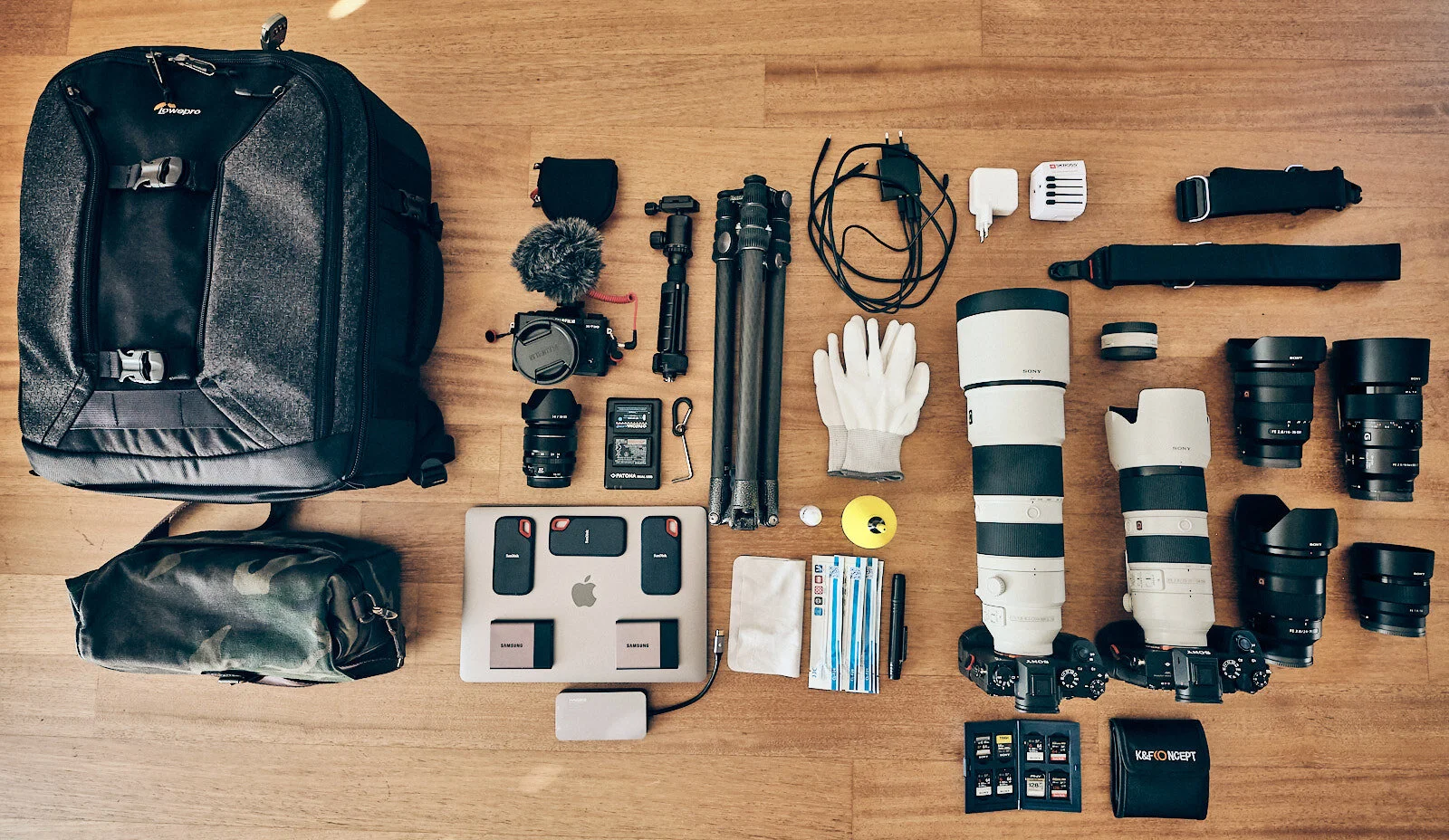
If possible, carry two bodies:
- One with 100–400mm range
- One with 500–600mm range
Avoid changing lenses in dusty conditions.
Camera Settings for Masai Mara Conditions
Baseline settings:
- Shutter: 1/1000–1/2000s for action
- Autofocus: Continuous (AF-C / AI Servo)
- Burst mode: High-speed
- Aperture: f/5.6–f/8
- ISO: Adjust for exposure priority
During dusty scenes:
- Increase shutter speed
- Protect lens front element
- Avoid lens swaps
Wildlife Photography by Season
Dry Season (July–October)
- Short grass
- Migration activity
- Easier visibility
Green Season (November–April)
- Lush landscapes
- Bird activity increases
- Dramatic skies
Both seasons are excellent for photography — with different visual moods.
Why Renting Wildlife Lenses in Kenya Is Smart
Super-telephoto lenses are:
- Heavy
- Expensive
- Risky to transport internationally
Many photographers prefer to:
- Travel light
- Collect gear in Nairobi
- Use during safari
- Return before departure
This reduces airline baggage stress and damage risk.
Book Your Wildlife Lens Before Your Masai Mara Safari
If you are planning a wildlife photography trip to Masai Mara, secure your gear early — especially during peak season.
MaraZooms & Cameras Africa provides:
- 100–400mm
- 100–500mm
- 150–600mm
- 180–600mm
- 200–600mm
- 400mm & 600mm primes
- Sony, Canon & Nikon systems
- Nairobi pickup before safari
Do not arrive underprepared.
The difference between 200mm and 600mm can define your safari portfolio.
Website: https://marazooms.co.ke
Email: hello@marazooms.co.ke
WhatsApp / Call: +254 732 589951
Final Thoughts
Masai Mara Kenya offers world-class wildlife photography opportunities year-round.
But preparation is what separates ordinary safari photos from extraordinary wildlife images.
With the right lens, correct timing, and proper positioning, you can capture:
- Lions at golden hour
- Leopards in trees
- Elephants in dust
- Wildebeest mid-leap
