
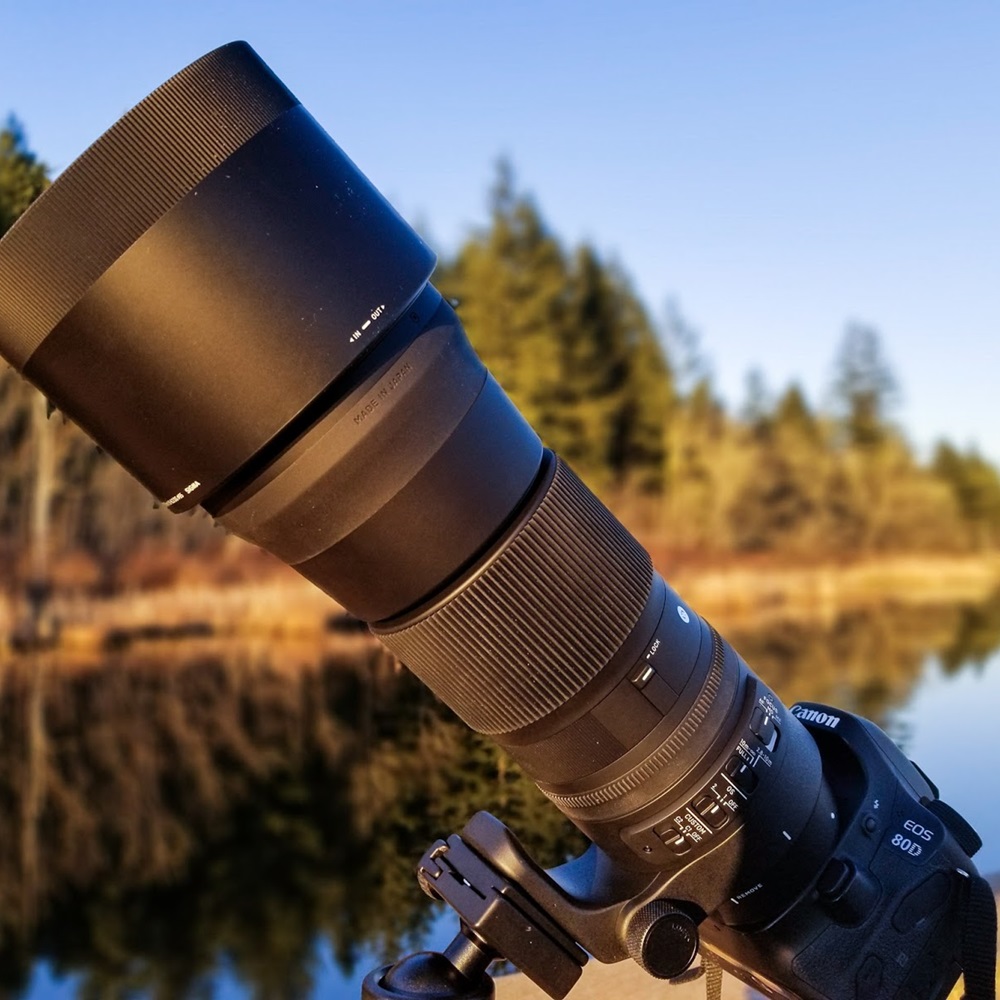
Canon EOS 80D + Sigma 150-600mm Contemporary Rental & Hire in Kenya for Safari & Wildlife Photography
Looking for an affordable wildlife camera and long telephoto lens rental in Kenya? The Canon EOS 80D paired with the Sigma 150-600mm F5-6.3 DG OS HSM Contemporary is a powerful safari photography combination for tourists, beginner wildlife photographers and enthusiasts who want substantial reach without renting one of the largest professional camera systems.
The combination brings together Canon’s 24.2-megapixel APS-C EOS 80D with Sigma’s versatile 150-600mm super-telephoto zoom.
The EOS 80D has a 1.6× APS-C crop factor, meaning the 150-600mm lens provides a field of view equivalent to approximately 240-960mm on a full-frame camera.
That makes this combination particularly useful when photographing distant wildlife.
A lion resting far across the Masai Mara plains, a leopard high in a tree, an elephant in the Amboseli landscape, a rhino in Laikipia or a bird across Lake Nakuru can all benefit from the reach provided by this setup.
MaraZooms Safaris & Cameras Africa offers the Canon EOS 80D + Sigma 150-600mm Contemporary rental and hire in Kenya for international tourists, wildlife photographers, bird photographers and safari travelers.
For tourists staying at hotels within the Nairobi Metropolitan Area, camera and lens equipment can be delivered to the agreed hotel. If you are flying from Nairobi to your safari destination, delivery and collection can also be arranged at Wilson Airport.
Why Rent the Canon 80D + Sigma 150-600mm for a Kenya Safari?
The biggest attraction of this combination is telephoto reach.
The Sigma 150-600mm Contemporary is already a long-range wildlife lens.
When mounted on the APS-C EOS 80D, the resulting field of view is equivalent to approximately 240-960mm on full frame.
This gives safari photographers considerable reach without needing to rent an expensive 600mm prime lens.
The 150mm starting point also provides useful flexibility.
You can photograph larger animals relatively close to the vehicle at 150mm and then zoom toward distant subjects at 600mm.
This makes the combination particularly practical for unpredictable safari encounters.
Understanding the 1.6× Crop Factor
The EOS 80D uses an APS-C sensor with a 1.6× crop factor.
The lens remains physically a 150-600mm lens.
However, the smaller sensor captures a narrower portion of the image produced by the lens.
This results in the following approximate full-frame-equivalent fields of view:
| Sigma 150-600mm setting | Approximate full-frame equivalent |
|---|---|
| 150mm | 240mm |
| 200mm | 320mm |
| 300mm | 480mm |
| 400mm | 640mm |
| 500mm | 800mm |
| 600mm | 960mm |
For wildlife photography, this can be extremely useful because it allows distant subjects to occupy more of the frame.
Canon 80D + Sigma 150-600mm for Masai Mara
The Masai Mara is one of the world’s most famous safari destinations and is a major attraction for international wildlife photographers.
The area is famous for:
- Lions
- Leopards
- Cheetahs
- Elephants
- Giraffes
- Wildebeest
- Zebras
- Buffalo
- Hippos
- Birds of prey
Wildlife is not always close to the safari vehicle.
This is where the Sigma 150-600mm becomes particularly valuable.
At 600mm, the EOS 80D provides approximately 960mm equivalent field of view, allowing you to frame distant animals much more tightly.
For a leopard resting in a tree or a cheetah sitting far across an open plain, this extra reach can make a major difference.
Great Migration Photography
The Great Migration creates some of the most spectacular wildlife photography opportunities in the Masai Mara.
Large herds of wildebeest and zebra can stretch across the landscape.
The 150-600mm allows you to photograph both individual animals and groups from different distances.
At 150-200mm, you can include more animals and their surroundings.
At 400-600mm, you can isolate individual wildebeest, zebra or predators.
The EOS 80D’s continuous shooting capability can also help when photographing moving wildlife.
Canon 80D + Sigma 150-600mm for Amboseli
Amboseli National Park is famous for its elephants and iconic views of Mount Kilimanjaro.
The Canon 80D and Sigma 150-600mm combination is particularly useful for detailed elephant portraits.
At 150mm, you can capture larger subjects and some environmental context.
At 600mm, you can isolate individual elephants from considerable distances.
However, if your goal is to photograph elephants together with Mount Kilimanjaro, a shorter lens will generally be more appropriate because 150mm is already relatively tight on an APS-C camera.
This combination is therefore best for detailed wildlife photography rather than wide environmental compositions.
Canon 80D + Sigma 150-600mm for Laikipia and Ol Pejeta
The Laikipia region is an important destination for wildlife and conservation photography.
At Ol Pejeta Conservancy, photographers may encounter rhinos, elephants, lions, leopards and other wildlife.
Rhinos can often be photographed at useful distances from safari vehicles.
The 600mm end of the Sigma lens provides approximately 960mm equivalent reach on the EOS 80D.
This can be particularly useful for detailed rhino portraits without needing to get close to the animals.
The combination is also useful for photographing other distant wildlife across open conservation areas.
Canon 80D + Sigma 150-600mm in Samburu
Samburu National Reserve offers photographers opportunities to photograph northern Kenya’s distinctive wildlife.
These include:
- Grevy’s zebra
- Reticulated giraffe
- Gerenuk
- Beisa oryx
- Elephants
- Lions
- Leopards
- Birds
Many of these subjects can be encountered across relatively open landscapes.
The Sigma 150-600mm gives photographers the ability to isolate individual animals from a distance.
The APS-C sensor of the EOS 80D adds further apparent reach.
This makes the combination particularly attractive for photographers who want to photograph smaller wildlife without moving closer.
Canon 80D + Sigma 150-600mm for Tsavo
Tsavo East and Tsavo West are among Kenya’s largest protected areas.
The vast landscapes can mean wildlife is sometimes encountered far from the safari vehicle.
This is exactly the type of situation where the Sigma 150-600mm excels.
At 600mm, the approximately 960mm-equivalent field of view can be particularly useful for distant elephants, giraffes, lions and other wildlife.
For tourists travelling through Tsavo who want maximum reach on a reasonable budget, this can be an excellent rental combination.
Canon 80D + Sigma 150-600mm for Lake Nakuru Bird Photography
The combination can be especially useful for bird photography in Kenya.
At Lake Nakuru, photographers may encounter flamingos, pelicans, eagles, herons and many other bird species.
Birds are small subjects, and substantial focal length is often required.
The Sigma 150-600mm provides plenty of reach.
At 600mm on the EOS 80D, the approximately 960mm equivalent field of view can help fill the frame with distant birds.
This makes the combination attractive not only to wildlife tourists but also to bird photographers travelling through Kenya.
Sigma 150-600mm Contemporary for Wildlife
The Sigma 150-600mm F5-6.3 DG OS HSM Contemporary is a popular super-telephoto zoom for wildlife and bird photography.
Its major advantage is the 150-600mm focal range.
Unlike a fixed 500mm or 600mm lens, the photographer can quickly adjust the framing as the distance to the subject changes.
The lens also features optical stabilization, which can help reduce camera shake when shooting handheld.
For safari photography, however, additional support such as a bean bag can be very useful when shooting from a vehicle.
Canon EOS 80D for Wildlife Photography
The EOS 80D provides a 24.2-megapixel APS-C sensor, which works particularly well with long telephoto lenses.
Its crop factor is one of the major attractions of the combination.
The camera also provides:
- 45-point all cross-type autofocus
- Continuous shooting
- Full HD video
- Vari-angle touchscreen
- Weather-resistant construction
- Interchangeable EF and EF-S lens compatibility
For a tourist who wants an affordable DSLR safari camera, the 80D remains a practical option.
Autofocus for Safari Wildlife
Wildlife does not remain stationary.
A lion may stand up.
A cheetah may begin running.
An elephant can suddenly change direction.
A bird may take flight.
The EOS 80D’s autofocus system can help maintain focus on moving subjects when configured appropriately.
For wildlife action, using continuous autofocus and an appropriate shutter speed can improve the chances of capturing sharp images.
Shooting Fast-Moving Wildlife
The Canon 80D can shoot continuously, allowing photographers to capture sequences of movement.
This is particularly useful when photographing:
- Cheetahs running
- Lions hunting
- Elephants interacting
- Wildebeest crossing
- Zebra running
- Birds taking flight
- Predators chasing prey
When photographing fast wildlife, shutter speed is generally more important than image stabilization.
A stabilized lens helps reduce camera movement, but it cannot freeze the motion of an animal.
Early Morning Safari Photography
Kenya safari game drives frequently begin around sunrise.
At this time, light levels can be relatively low.
The EOS 80D and Sigma 150-600mm can still produce excellent wildlife photographs, but photographers need to manage ISO, aperture and shutter speed carefully.
The Sigma’s maximum aperture becomes relatively slow toward 600mm.
This means increasing ISO may be necessary in low light.
As the sun rises, however, the combination becomes increasingly effective.
The long focal length also makes it possible to create tightly framed wildlife portraits against blurred backgrounds.
Wildlife Portraits with the Sigma 150-600mm
The long end of the lens is excellent for wildlife portraits.
At 500-600mm, you can isolate:
- A lion’s face
- A leopard’s eyes
- An elephant’s head
- A giraffe’s head
- A rhino
- A cheetah
- A bird
The long focal length can also produce strong background compression, helping separate the animal from the surrounding landscape.
This is particularly useful in the open plains of the Masai Mara.
Canon 80D + Sigma 150-600mm vs Canon 100-400mm
The Canon EF 100-400mm provides a more versatile focal range for closer wildlife.
The Sigma 150-600mm, however, provides substantially more reach.
On the EOS 80D:
- 100-400mm = approximately 160-640mm equivalent
- 150-600mm = approximately 240-960mm equivalent
If your priority is maximum wildlife reach, the Sigma 150-600mm is the stronger option.
If you expect many close encounters and want a more flexible starting focal length, a 100-400mm can be easier to use.
Canon 80D + Sigma 150-600mm vs Canon R7
The Canon R7 is a much newer mirrorless camera with a higher-resolution APS-C sensor and more advanced autofocus technology.
The EOS 80D is an older DSLR but remains capable.
For tourists looking for an affordable safari rental, the 80D can provide excellent value.
For photographers prioritizing modern autofocus, higher-speed shooting and newer mirrorless technology, the R7 is the better camera body.
The Sigma 150-600mm remains attractive because of the reach it provides.
Canon 80D + Sigma 150-600mm vs Canon R50
The EOS R50 is a newer and much smaller APS-C mirrorless camera.
Its compact size makes it attractive for tourists.
The EOS 80D, however, offers a traditional DSLR experience and works directly with Canon EF lenses such as the Sigma 150-600mm Contemporary for Canon EF.
For photographers already comfortable with DSLR controls, the 80D remains a straightforward wildlife camera.
Who Should Rent This Safari Camera Kit?
The Canon EOS 80D + Sigma 150-600mm Contemporary is particularly suitable for:
- International safari tourists
- Beginner wildlife photographers
- Budget-conscious photographers
- Wildlife enthusiasts
- Bird photographers
- Canon DSLR users
- Masai Mara visitors
- Great Migration tourists
- Amboseli elephant photographers
- Laikipia and Ol Pejeta visitors
- Samburu travelers
- Tsavo safari visitors
- Lake Nakuru bird photographers
- Photographers wanting maximum telephoto reach
- Photographers wanting approximately 960mm equivalent reach
Why International Tourists Rent a Camera and Lens in Kenya
International tourists often want to photograph wildlife properly but may not own a long telephoto lens.
Purchasing a 150-600mm lens and camera specifically for a safari can be a significant investment.
Renting the Canon EOS 80D with Sigma 150-600mm in Kenya provides a ready-to-use wildlife photography kit for the duration of the trip.
It can be particularly useful for visitors from the USA, UK, Canada, Australia, Europe, Asia and other international destinations.
Local rental can also reduce the amount of expensive photography equipment you need to carry through international airports.
Nairobi Hotel Delivery for Safari Tourists
MaraZooms Safaris & Cameras Africa provides camera and lens rental services designed around the schedules of international safari tourists.
If you are staying at a hotel within the Nairobi Metropolitan Area, the Canon EOS 80D and Sigma 150-600mm kit can be delivered to the agreed hotel.
This gives you the opportunity to receive the equipment and familiarize yourself with the camera before travelling to your safari destination.
Wilson Airport Delivery and Collection
If you are flying from Wilson Airport to your safari destination, delivery and collection can also be arranged at Wilson Airport.
This is particularly convenient for tourists flying from Nairobi to the Masai Mara, Amboseli or other safari destinations.
You can arrange collection around your flight schedule and return the equipment through the agreed collection process.
Rent the Canon EOS 80D + Sigma 150-600mm in Kenya
The Canon EOS 80D + Sigma 150-600mm Contemporary is a powerful and affordable wildlife photography combination for Kenya safaris.
The 80D’s 1.6× APS-C crop factor gives the 150-600mm lens an approximately 240-960mm full-frame-equivalent field of view, providing substantial reach for distant wildlife and birds.
It is particularly well suited to the Masai Mara, Amboseli, Laikipia, Ol Pejeta, Samburu, Tsavo and Lake Nakuru.
Use it for lions and leopards in the Masai Mara, elephants in Amboseli, rhinos in Laikipia, distinctive northern Kenya species in Samburu, distant wildlife in Tsavo or bird photography around Lake Nakuru.
For international tourists, MaraZooms Safaris & Cameras Africa offers hotel delivery within the Nairobi Metropolitan Area, as well as delivery and collection at Wilson Airport for photographers flying onward to their safari destination.
Rent or hire the Canon EOS 80D with Sigma 150-600mm Contemporary in Kenya for a high-reach wildlife camera setup built for safari photography.

Reviews
There are no reviews yet.