
Canon EOS R6 Mark II Rental & Hire in Kenya for Safari & Wildlife Photography
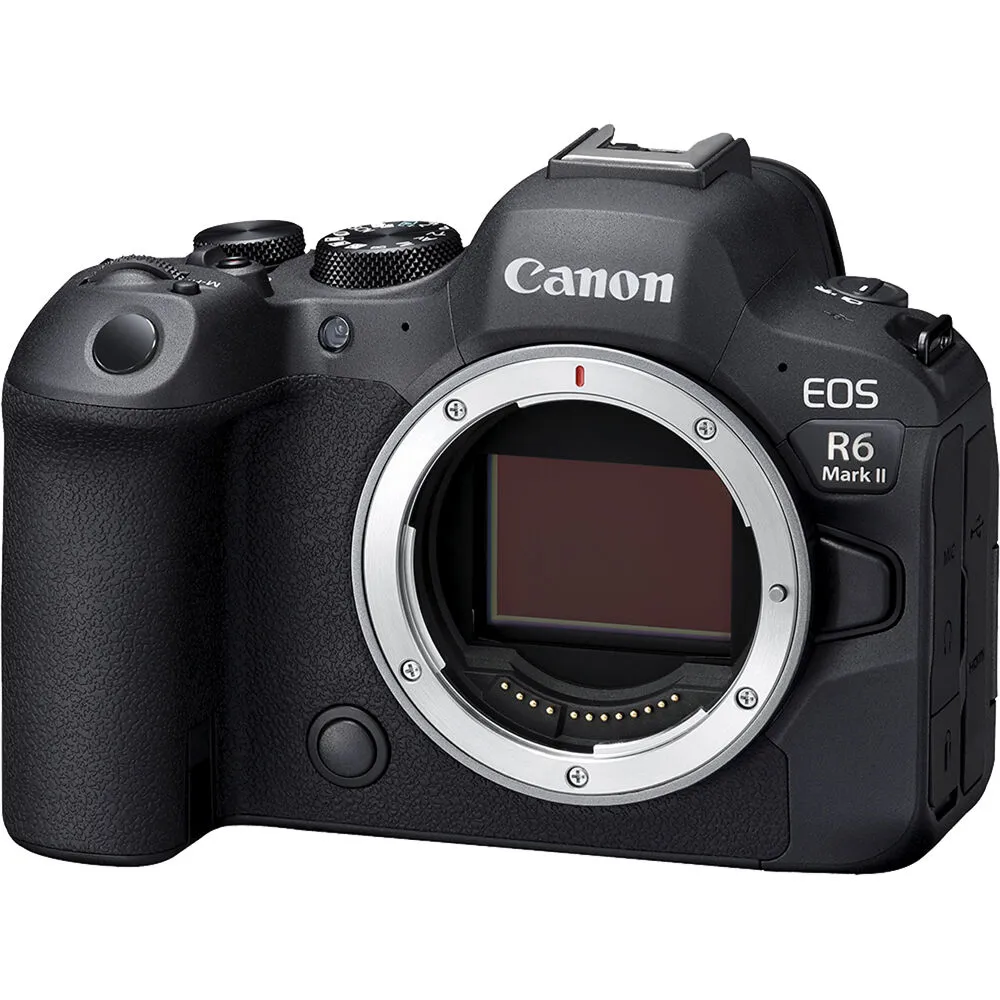
Planning a Kenya safari and looking for a professional-level Canon mirrorless camera to rent? The Canon EOS R6 Mark II is one of Canon’s most capable full-frame cameras for wildlife, action and travel photography, making it an excellent choice for photographers visiting Kenya’s famous safari destinations.
With a 24.2-megapixel full-frame sensor, advanced subject-detection autofocus, high-speed continuous shooting, in-body image stabilization and Canon’s RF lens system, the R6 Mark II is particularly well suited to photographing fast-moving wildlife.
Whether you are photographing a cheetah sprinting across the Masai Mara, elephants beneath Mount Kilimanjaro, a leopard in a tree, rhinos in Laikipia or birds taking flight at Lake Nakuru, the R6 Mark II provides the speed and autofocus performance needed for demanding wildlife photography.
MaraZooms Safaris & Cameras Africa offers Canon EOS R6 Mark II rental and hire in Kenya for international tourists, professional photographers, wildlife enthusiasts and travelers who want a high-performance full-frame camera for their safari.
For tourists staying at hotels within the Nairobi Metropolitan Area, camera and lens equipment can be delivered to the agreed hotel. If you are flying from Nairobi to your safari destination, delivery and collection can also be arranged at Wilson Airport.
Why Rent the Canon EOS R6 Mark II for a Kenya Safari?
Wildlife photography is unpredictable.
Animals rarely pose perfectly for the camera.
A lion can suddenly stand up.
A cheetah can accelerate across the grass.
An elephant can begin interacting with another elephant.
A bird can take flight in a fraction of a second.
This is where the Canon R6 Mark II’s speed and autofocus capabilities become particularly valuable.
The camera is designed around fast-moving subjects, making it a strong option for photographers who want more than basic safari snapshots.
Its full-frame sensor also provides excellent flexibility for working in the changing light conditions commonly encountered during Kenyan game drives.
Canon R6 Mark II for Masai Mara Wildlife Photography
The Masai Mara is one of the world’s most famous safari destinations and a major attraction for international wildlife photographers.
The reserve provides opportunities to photograph:
- Lions
- Leopards
- Cheetahs
- Elephants
- Giraffes
- Wildebeest
- Zebras
- Buffalo
- Hippos
- Birds of prey
The R6 Mark II is particularly useful when wildlife begins moving.
Its advanced subject-detection autofocus can help photographers track animals while maintaining focus.
Pair the camera with the Canon RF 100-500mm for a highly versatile wildlife setup.
The lens provides substantial reach while retaining a useful shorter focal length for closer encounters.
For even more reach, the Canon RF 200-800mm is an excellent option for distant wildlife and birds.
Great Migration Photography
The Great Migration is one of the most spectacular wildlife events in Africa.
During migration season, the Masai Mara can provide extraordinary opportunities to photograph wildebeest and zebra, including dramatic river crossings and large herds moving across the plains.
The R6 Mark II’s fast continuous shooting makes it particularly suitable for capturing sequences of action.
For example, when photographing animals running through water or interacting at a river crossing, shooting a burst can significantly increase the likelihood of capturing the decisive moment.
Canon R6 Mark II for Amboseli Elephant Photography
Amboseli National Park is famous for its large elephant population and spectacular views of Mount Kilimanjaro.
The R6 Mark II provides the flexibility to photograph both detailed wildlife portraits and environmental scenes.
Pair it with the RF 100-500mm for a versatile setup.
At shorter focal lengths, you can include elephants and Mount Kilimanjaro in the composition.
At longer focal lengths, you can isolate individual elephants and create detailed portraits.
The full-frame sensor also provides a natural field of view for environmental wildlife photography.
Canon R6 Mark II for Laikipia and Ol Pejeta
The Laikipia region is an important destination for wildlife and conservation photography.
Photographers can encounter rhinos, elephants, lions, leopards, giraffes and many other species.
At Ol Pejeta Conservancy, the R6 Mark II can be combined with a long telephoto for detailed rhino and wildlife photography.
The camera’s autofocus performance is particularly useful when animals begin moving unexpectedly.
For conservation photographers, the ability to quickly acquire and track subjects can be a major advantage.
Canon R6 Mark II in Samburu
Samburu National Reserve provides opportunities to photograph some of northern Kenya’s most distinctive wildlife.
Visitors may encounter:
- Grevy’s zebra
- Reticulated giraffe
- Gerenuk
- Beisa oryx
- Elephants
- Lions
- Leopards
- Birds
A long telephoto lens paired with the R6 Mark II provides excellent reach for distant subjects.
The camera’s fast autofocus can also be useful when photographing birds and fast-moving wildlife.
Canon R6 Mark II for Tsavo
Tsavo East and Tsavo West contain enormous landscapes and diverse wildlife.
Wildlife encounters can happen at varying distances.
A flexible telephoto such as the RF 100-500mm allows photographers to react quickly.
For more distant subjects, the RF 200-800mm provides considerably more reach.
The R6 Mark II’s full-frame sensor works well with both lenses, making it possible to choose the lens according to the day’s photographic requirements.
Canon R6 Mark II for Lake Nakuru Bird Photography
The R6 Mark II is also a strong choice for bird photography in Kenya.
At Lake Nakuru, photographers can encounter flamingos, pelicans, eagles, herons and numerous other bird species.
Birds can take flight unexpectedly, making fast autofocus and continuous shooting particularly useful.
Pairing the R6 Mark II with the RF 200-800mm can provide substantial reach for distant birds.
For larger birds or closer subjects, the RF 100-500mm can provide greater flexibility.
Advanced Autofocus for Wildlife
One of the biggest reasons to rent the R6 Mark II for wildlife photography is its sophisticated autofocus system.
The camera can recognize and track different subject types, including animals.
For safari photographers, this can simplify the process of maintaining focus on moving wildlife.
Instead of constantly trying to keep a single autofocus point precisely positioned over an animal, subject detection can help the camera identify and track the subject.
This can be especially useful when photographing animals moving through grass or complex backgrounds.
High-Speed Continuous Shooting
Wildlife photography often depends on timing.
The difference between an ordinary photograph and an exceptional one may be a fraction of a second.
The R6 Mark II offers extremely fast continuous shooting, giving photographers the ability to capture rapid sequences.
This is useful for:
- Running cheetahs
- Lions interacting
- Elephants fighting or playing
- Birds taking flight
- Wildebeest crossings
- Zebra movement
- Predators hunting
- Wildlife portraits with changing expressions
For action-heavy safari photography, this is one of the camera’s biggest advantages.
Canon R6 Mark II for Early Morning Game Drives
Kenyan safari game drives frequently begin around sunrise.
At these times, light can be limited.
The R6 Mark II’s full-frame sensor provides strong flexibility for working at higher ISO settings when necessary.
This allows photographers to maintain sufficiently fast shutter speeds while still producing detailed images.
The camera’s in-body image stabilization can also help reduce camera shake when photographing relatively stationary subjects.
However, stabilization cannot freeze a moving animal, so shutter speed remains critical for action.
Canon R6 Mark II In-Body Image Stabilization
The R6 Mark II features in-body image stabilization (IBIS).
This can help when photographing handheld, especially with compatible RF lenses.
When using a long telephoto during a safari, stabilization can be particularly helpful because even small movements become more noticeable at longer focal lengths.
A safari bean bag can provide additional support when photographing from a vehicle.
Popular Canon RF Lenses for the R6 Mark II
The R6 Mark II works with Canon’s RF lens system.
Several lenses are particularly attractive for Kenya wildlife photography.
Canon RF 100-500mm F4.5-7.1 L IS USM
The RF 100-500mm is one of the most versatile professional wildlife lenses for Canon’s RF system.
It provides a broad range that works well for both close and distant wildlife.
It is an excellent choice for photographers who want one premium telephoto for a safari.
Canon RF 200-800mm F6.3-9 IS USM
The RF 200-800mm provides substantially more reach.
It is particularly useful for distant wildlife and bird photography.
At 800mm, photographers can fill much more of the frame with distant subjects.
For photographers whose priority is maximum reach without moving into Canon’s extremely expensive super-telephoto primes, this can be a compelling safari rental option.
Canon RF 100-400mm F5.6-8 IS USM
The RF 100-400mm is a lighter and more affordable telephoto option.
It provides useful reach while being easier to carry during travel.
For tourists who want a relatively compact safari kit, the R6 Mark II and RF 100-400mm can be an attractive combination.
Canon RF 70-200mm F2.8 L IS USM
The RF 70-200mm F2.8 L is not primarily a long-range wildlife lens, but it can be extremely useful for closer wildlife, people, environmental portraits and general travel photography.
It can complement a longer lens such as the RF 100-500mm or RF 200-800mm.
Canon R6 Mark II + RF 100-500mm for Safari
The Canon R6 Mark II and RF 100-500mm combination is one of the most versatile Canon setups for a Kenya safari.
The 100mm starting point provides flexibility when wildlife is close.
The 500mm maximum provides substantial reach when animals are farther away.
This makes the combination particularly useful for photographers who do not want to change lenses frequently during a game drive.
It is suitable for everything from environmental wildlife photographs to detailed animal portraits.
Canon R6 Mark II + RF 200-800mm for Long-Range Wildlife
If maximum reach is your priority, the R6 Mark II with the RF 200-800mm is an even stronger combination.
The 800mm focal length provides substantial magnification for distant animals.
This is particularly useful for:
- Leopards
- Cheetahs
- Distant lions
- Rhinos
- Birds
- Wildlife portraits
- Distant safari subjects
For bird photography, the 800mm reach can be particularly valuable.
The trade-off is that the 200mm starting point is considerably less flexible for close wildlife.
Canon R6 Mark II vs Canon EOS 80D
The EOS 80D uses an APS-C sensor, while the R6 Mark II uses a full-frame sensor.
The 80D’s 1.6× crop factor can provide additional apparent framing reach with telephoto lenses.
The R6 Mark II, however, provides a much more modern mirrorless platform with advanced subject detection, high-speed shooting and excellent full-frame performance.
For photographers who prioritize wildlife action and autofocus performance, the R6 Mark II is a significant step forward.
The 80D remains attractive for photographers looking for an affordable DSLR safari setup.
Canon R6 Mark II vs Canon EOS R50
The EOS R50 is a smaller and more affordable APS-C mirrorless camera.
Its crop factor provides additional apparent reach with telephoto lenses.
The R6 Mark II is positioned much higher in Canon’s lineup and is better suited to photographers who prioritize fast action, autofocus, full-frame image quality and professional shooting performance.
For a serious wildlife photography trip, the R6 Mark II is the more advanced option.
Canon R6 Mark II for Professional and Enthusiast Photographers
The camera is particularly attractive to photographers who already understand exposure and autofocus but want a capable body for demanding wildlife situations.
It provides extensive control over:
- Shutter speed
- Aperture
- ISO
- Autofocus
- Subject detection
- Continuous shooting
- Exposure compensation
- RAW photography
This makes it suitable for both serious enthusiasts and professional photographers.
Why International Tourists Rent the Canon R6 Mark II in Kenya
Many international wildlife photographers already own lenses but may want to use a more advanced camera body during their Kenya safari.
Others may want to experience a professional-level Canon mirrorless system without purchasing one specifically for a holiday.
Renting a Canon EOS R6 Mark II in Kenya provides access to a high-performance full-frame wildlife camera for the duration of the trip.
This is particularly attractive to visitors travelling from the USA, UK, Canada, Australia, Europe, Asia and other international destinations.
Nairobi Hotel Delivery for Safari Tourists
MaraZooms Safaris & Cameras Africa provides camera and lens rental services around the travel schedules of tourists visiting Kenya.
If you are staying at a hotel within the Nairobi Metropolitan Area, your Canon R6 Mark II and selected lens can be delivered to the agreed hotel.
This allows you to receive and test the equipment before travelling to your safari destination.
Wilson Airport Delivery and Collection
If you are flying from Wilson Airport to your safari destination, delivery and collection can also be arranged at Wilson Airport.
This is particularly useful for tourists flying from Nairobi to the Masai Mara, Amboseli or other safari destinations.
You can arrange to collect your Canon R6 Mark II and telephoto lens around your flight schedule and return the equipment through the agreed collection process.
Who Should Rent the Canon EOS R6 Mark II?
The R6 Mark II is particularly suitable for:
- International safari tourists
- Professional wildlife photographers
- Serious enthusiasts
- Canon mirrorless users
- Wildlife photographers
- Bird photographers
- Sports and action photographers
- Great Migration photographers
- Masai Mara visitors
- Amboseli elephant photographers
- Laikipia and Ol Pejeta visitors
- Samburu travelers
- Tsavo safari visitors
- Photographers wanting advanced animal autofocus
- Photographers wanting high-speed shooting
- Photographers wanting a full-frame Canon RF camera
Rent the Canon EOS R6 Mark II for Your Kenya Safari
The Canon EOS R6 Mark II is a powerful full-frame mirrorless camera for wildlife, safari, action and travel photography.
Its 24.2-megapixel full-frame sensor, advanced animal subject detection, fast continuous shooting, in-body image stabilization and Canon RF lens compatibility make it particularly well suited to the unpredictable nature of wildlife photography.
Pair it with the Canon RF 100-500mm for a versatile professional safari setup, the RF 200-800mm for maximum reach, or the RF 100-400mm for a lighter and more affordable telephoto combination.
Take the R6 Mark II to the Masai Mara for lions, leopards, cheetahs and Great Migration photography, to Amboseli for elephants and Mount Kilimanjaro, to Laikipia and Ol Pejeta for rhinos and conservation photography, to Samburu for northern Kenya’s distinctive wildlife, or to Tsavo and Lake Nakuru for wildlife and birds.
For international tourists, MaraZooms Safaris & Cameras Africa offers hotel delivery within the Nairobi Metropolitan Area, as well as delivery and collection at Wilson Airport for photographers flying onward to their safari destination.
Rent or hire the Canon EOS R6 Mark II in Kenya and pair it with a professional Canon RF telephoto lens for a high-performance wildlife photography setup built for your Kenya safari.

Reviews
There are no reviews yet.