
Canon RF 70-200mm F4 L IS USM Rental in Kenya | Safari & Wildlife
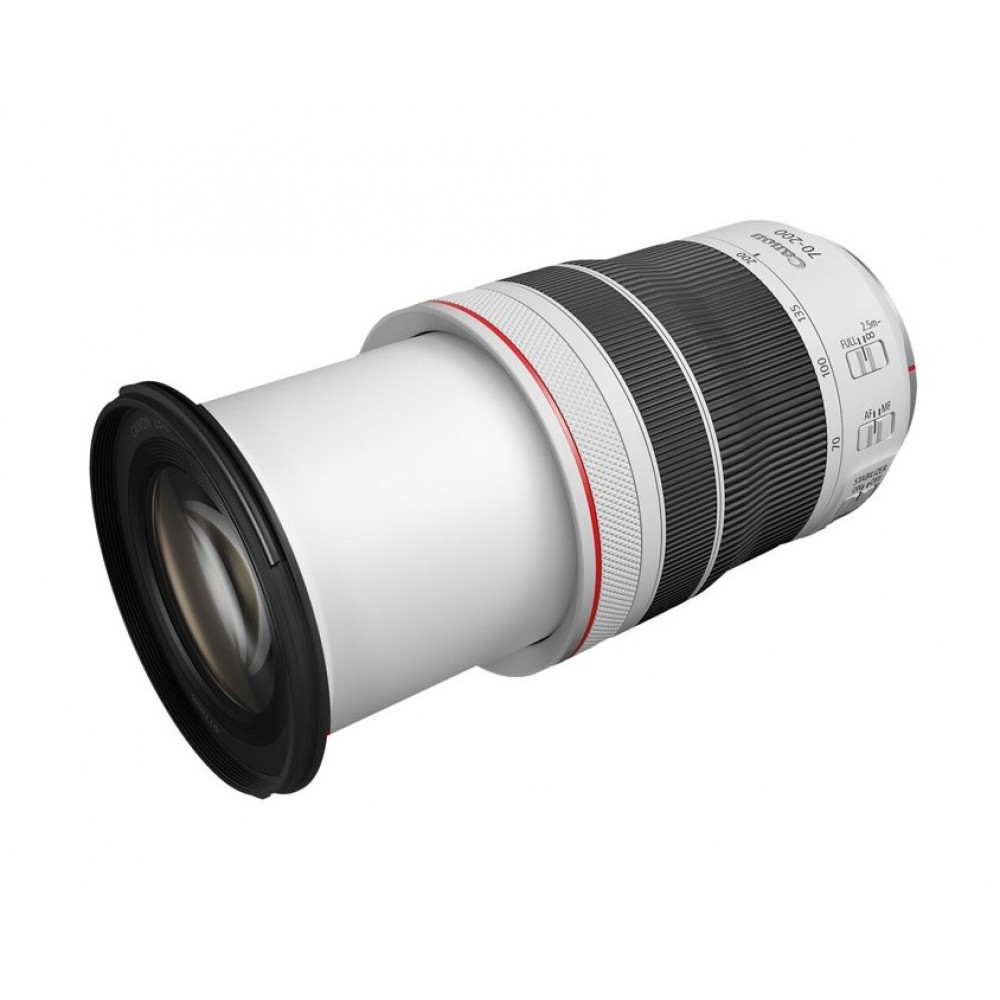
Looking for a Canon RF 70-200mm F4 L IS USM rental in Kenya for your safari or wildlife photography trip? The Canon RF 70-200mm F4 L IS USM is a compact, lightweight L-series telephoto zoom designed for photographers who want professional image quality without carrying a larger, heavier f/2.8 telephoto lens.
With its 70-200mm focal-length range, constant f/4 aperture and optical image stabilization, the lens is a versatile choice for Kenya safari photography, wildlife portraits, environmental photography, travel and low-weight camera setups.
It can be particularly useful for photographers visiting the Masai Mara, Amboseli, Laikipia, Samburu, Tsavo, Lake Nakuru, Ol Pejeta and other Kenyan wildlife destinations.
While a 100-500mm or 200-800mm lens is generally better when maximum wildlife reach is the priority, the RF 70-200mm F4 L IS USM fills a different role. It is an excellent shorter telephoto lens for closer wildlife encounters, environmental scenes and situations where a long super-telephoto would simply be too tight.
Why Rent the Canon RF 70-200mm F4 for a Kenya Safari?
Safari photography does not always require an extremely long lens.
Wild animals can sometimes approach a safari vehicle closely, and photographers may suddenly find that their 500mm or 800mm lens cannot fit the entire subject into the frame.
This is where a 70-200mm safari lens can become extremely useful.
At 70mm, you can photograph wildlife within its environment. At 200mm, you can create tighter portraits of animals while retaining more surrounding context than you would with a 400mm, 500mm or 800mm lens.
The constant f/4 aperture also provides consistent exposure throughout the zoom range.
The lens is particularly attractive to travelers because it combines a professional L-series design with a relatively compact form factor.
Canon RF 70-200mm F4 for Masai Mara Wildlife Photography
The Masai Mara is one of Kenya’s most popular destinations for wildlife photography.
The reserve is famous for lions, leopards, cheetahs, elephants, giraffes, zebras, wildebeest, buffalo and many other species.
The RF 70-200mm F4 is particularly useful when animals are relatively close to the safari vehicle.
For example, if a lion is resting beside the vehicle, a 500mm lens may be too tight for a full-body image. The 70-200mm range gives you considerably more flexibility.
At 70mm, you can include the surrounding Mara grasslands and create an environmental portrait.
At 200mm, you can concentrate more tightly on the animal while maintaining some sense of its surroundings.
Great Migration Photography
The lens can also play an important role during the Great Migration.
The migration involves enormous concentrations of wildebeest and zebra moving across the Mara ecosystem.
Although a long lens is useful for isolating individual animals, the 70-200mm range is often better for photographing the scale of the event.
At 70mm, you can capture large groups and environmental scenes.
At 200mm, you can isolate smaller groups or individual animals while still showing the surrounding landscape.
For photographers carrying two camera bodies, pairing the RF 70-200mm with a longer lens can provide an exceptionally versatile safari setup.
Canon RF 70-200mm F4 for Amboseli Photography
Amboseli National Park is famous for its large elephant herds and iconic views of Mount Kilimanjaro.
The RF 70-200mm F4 is particularly useful for environmental wildlife photography in Amboseli.
At the shorter end of the zoom range, you can photograph elephants within the wider landscape.
This can be especially effective when Mount Kilimanjaro is visible behind the animals.
At 200mm, you can move closer to the elephant visually and create more intimate portraits.
The lens therefore gives photographers a useful middle ground between a standard zoom and an extremely long wildlife lens.
Canon RF 70-200mm F4 for Laikipia Wildlife Photography
The Laikipia region provides a wide range of wildlife photography opportunities.
The region is known for elephants, rhinos, lions, leopards, giraffes, zebras and numerous bird species.
The RF 70-200mm F4 is well suited to relatively close encounters and environmental photography.
It can also be useful beyond traditional game drives.
Photographers visiting conservation areas may want to document landscapes, wildlife researchers, guides, vehicles, camps and conservation activities.
A compact 70-200mm can therefore become a versatile travel lens throughout a Kenya safari rather than being restricted to distant animal photography.
Canon RF 70-200mm F4 in Samburu
Samburu National Reserve offers a distinctive wildlife environment in northern Kenya.
Photographers may encounter elephants, giraffes, gerenuk, Grevy’s zebra, Beisa oryx, lions, leopards and numerous bird species.
The 70-200mm range is useful when wildlife approaches relatively closely.
For smaller and distant subjects, however, a longer lens such as the RF 100-500mm or RF 200-800mm will generally be more appropriate.
This makes the RF 70-200mm F4 particularly useful as part of a multi-lens safari kit.
Canon RF 70-200mm F4 for Tsavo
The vast landscapes of Tsavo East and Tsavo West National Parks create opportunities for both wildlife and environmental photography.
The 70mm end can be useful for photographing elephants, lions and other animals within the expansive Tsavo landscape.
At 200mm, you can produce tighter wildlife portraits when animals come closer to the vehicle.
The lens is also useful when photographing safari vehicles, guides and landscapes during a game drive.
Canon RF 70-200mm F4 for Lake Nakuru
Lake Nakuru National Park provides opportunities to photograph rhinos, giraffes, buffalo, lions and a wide variety of birds.
The RF 70-200mm can be useful for larger wildlife and environmental images.
For small birds and distant subjects, however, photographers will generally benefit from considerably more reach.
A combination such as the RF 70-200mm F4 and RF 200-800mm can cover both close and distant subjects exceptionally well.
Compact and Lightweight L-Series Design
One of the biggest attractions of the Canon RF 70-200mm F4 L IS USM is its relatively compact design.
This matters during a safari.
Photographers may spend many hours inside a vehicle, move between different camps and lodges, and travel with several pieces of camera equipment.
A smaller telephoto lens can be easier to store, carry and handle.
Canon designed the RF 70-200mm F4 L IS USM specifically as a more compact alternative within its professional RF telephoto range.
This makes it particularly appealing to travelers who want L-series image quality without the size and weight of an f/2.8 telephoto zoom.
Canon RF 70-200mm F4 vs F2.8 for Safari
The Canon RF 70-200mm F4 L IS USM and RF 70-200mm F2.8 L IS USM are both excellent lenses, but they are designed for different priorities.
The RF 70-200mm F4 is the lighter and more compact option.
The RF 70-200mm F2.8 provides one additional stop of light and is therefore better suited to photographers who frequently work in challenging low-light conditions or want maximum background separation.
For a safari traveler who prioritizes portability, the f/4 version can be particularly attractive.
For a professional photographer who regularly shoots wildlife in low light, the f/2.8 version may be worth the additional size and weight.
Is the Canon RF 70-200mm F4 Good for Safari?
Yes, particularly as a short telephoto wildlife and travel lens.
It is best suited to:
- Close wildlife
- Environmental wildlife photography
- Safari landscapes
- Wildlife portraits
- Safari guides and people
- Lodge photography
- Travel photography
- Low-weight camera kits
- Two-camera safari setups
It is not intended to replace a 500mm, 600mm or 800mm lens when photographing distant wildlife.
Instead, it complements those lenses.
Pairing the RF 70-200mm F4 With a Longer Lens
For serious wildlife photographers, one of the best ways to use the RF 70-200mm F4 on safari is alongside a longer telephoto.
For example:
RF 70-200mm F4 + RF 100-500mm
This gives you coverage from 70mm through 500mm.
Alternatively:
RF 70-200mm F4 + RF 200-800mm
This combination is particularly powerful for photographers who want both close environmental photographs and extreme reach.
The shorter lens can remain on one camera while the longer lens is ready on another body.
This reduces the need to constantly change lenses in dusty safari conditions.
What Canon Camera Works With the RF 70-200mm F4?
The lens is designed for Canon’s RF-mount mirrorless system.
It can be paired with cameras such as:
- Canon EOS R50
- Canon EOS R7
- Canon EOS R6 Mark II
- Canon EOS R5
- Other compatible Canon EOS R cameras
A Canon EOS R6 Mark II paired with the RF 70-200mm F4 can create a lightweight full-frame travel and wildlife setup.
An EOS R7 provides a narrower field of view because of its APS-C sensor, which can be useful when additional apparent reach is desired.
Rent the Canon RF 70-200mm F4 in Kenya
For international visitors, renting a Canon RF 70-200mm F4 in Kenya can be an attractive alternative to purchasing a professional telephoto lens for a single safari.
It is particularly useful for photographers who already own a Canon RF camera but want an additional lens for their Kenya trip.
Renting locally can also make it possible to build a safari kit around the specific destinations and wildlife photography you plan to do.
MaraZooms Safaris & Cameras Africa specializes in camera and lens rentals for wildlife and safari photography in Kenya.
Rent from MaraZooms Safaris & Cameras Africa
The Canon RF 70-200mm F4 L IS USM is available as part of a range of wildlife photography equipment suitable for Kenya safari travel.
It can be an excellent choice for photographers visiting:
- Masai Mara
- Amboseli
- Laikipia
- Samburu
- Tsavo East
- Tsavo West
- Lake Nakuru
- Ol Pejeta
- Nairobi National Park
- Other Kenyan wildlife destinations
Whether you are photographing an elephant with Mount Kilimanjaro in the background, a lion close to your safari vehicle, a large wildebeest herd in the Mara or a safari guide working in the field, the 70-200mm range provides a perspective that longer super-telephoto lenses cannot always offer.
Frequently Asked Questions
Is the Canon RF 70-200mm F4 good for Kenya safari photography?
Yes. It is particularly useful for close wildlife, environmental photography, safari landscapes, people and travel photography.
Is 200mm enough for wildlife photography?
It can be excellent for close wildlife, but it is not ideal for distant animals. A longer lens such as the RF 100-500mm or RF 200-800mm is better when maximum reach is required.
Is the RF 70-200mm F4 good for the Masai Mara?
Yes. It is useful for close wildlife encounters, environmental wildlife portraits and photographing large herds during the Great Migration.
Is the RF 70-200mm F4 good for Amboseli?
Yes. Its 70-200mm range is particularly useful for environmental elephant photography and compositions that include Mount Kilimanjaro.
What is the difference between the RF 70-200mm F4 and F2.8?
The F2.8 version has a faster maximum aperture, making it better for low-light photography and stronger background separation. The F4 version is more compact and lightweight.
Should I rent a 70-200mm or 100-500mm for safari?
For distant wildlife, the RF 100-500mm is generally the better choice. For close wildlife, environmental photography, travel and a lightweight setup, the RF 70-200mm F4 is an excellent option.
Can I use the RF 70-200mm F4 with a Canon EOS R7?
Yes. The RF 70-200mm F4 L IS USM is designed for Canon’s RF mount and can be used with compatible EOS R-series cameras including the R7.
Can I combine the RF 70-200mm F4 with a longer lens?
Yes. Combining it with an RF 100-500mm or RF 200-800mm can create a highly versatile Kenya safari photography kit.
Book the Canon RF 70-200mm F4 L IS USM for Your Kenya Safari
The Canon RF 70-200mm F4 L IS USM is an excellent choice for photographers who want a professional-quality telephoto zoom while keeping their safari camera kit relatively compact and lightweight.
Its 70-200mm range is particularly useful for close wildlife, environmental portraits, safari landscapes, travel photography and situations where an extremely long lens is simply too tight.
For photographers visiting the Masai Mara, Amboseli, Laikipia, Samburu, Tsavo or Lake Nakuru, the RF 70-200mm F4 can be an excellent complementary lens alongside a longer wildlife lens.
If you are planning a Kenya safari and want a lightweight professional telephoto lens, rent the Canon RF 70-200mm F4 L IS USM from MaraZooms Safaris & Cameras Africa and add versatility to your wildlife photography setup.

Reviews
There are no reviews yet.