
Tamron 18-300mm for Fujifilm X Rental & Hire in Kenya | Safari, Wildlife & Travel Photography
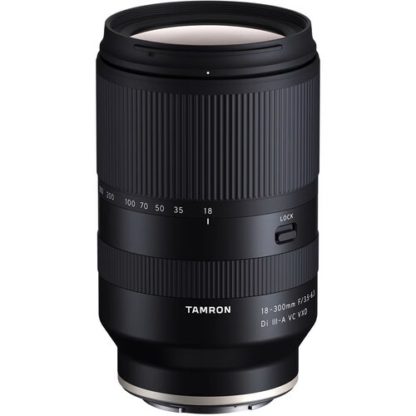
Looking for a versatile Fujifilm X-mount lens to rent in Kenya for your safari or holiday? The Tamron 18-300mm F/3.5-6.3 Di III-A VC VXD is an all-in-one travel and wildlife zoom designed for Fujifilm X-series cameras.
With an enormous 18-300mm focal-length range, this lens can cover everything from wide-angle landscapes and city photography to wildlife and distant subjects. On Fujifilm’s APS-C sensor, it provides a full-frame equivalent field of view of approximately 27-450mm.
That makes it particularly attractive for tourists who want to travel light while still having enough reach for many safari photography situations.
For a Kenya itinerary covering the Masai Mara, Amboseli, Laikipia, Samburu, Tsavo, Lake Nakuru, Lake Naivasha, Nairobi or other destinations, the Tamron 18-300mm can serve as a highly versatile travel lens.
MaraZooms Safaris & Cameras Africa offers the Tamron 18-300mm rental and hire for Fujifilm in Kenya, providing photographers and international tourists with access to a flexible all-purpose lens without needing to purchase one specifically for their trip.
For tourists staying at hotels within the Nairobi Metropolitan Area, equipment can be delivered to the agreed hotel. If you are flying from Nairobi to a safari destination, delivery and collection can also be arranged at Wilson Airport.
Why Rent the Tamron 18-300mm for a Kenya Safari?
The biggest advantage of the Tamron 18-300mm is its extraordinary versatility.
Instead of carrying a wide-angle lens, standard zoom and telephoto lens, you can use one lens for a large part of your trip.
The 18mm end is useful for:
- Nairobi city photography
- Safari landscapes
- Mount Kilimanjaro landscapes
- Large wildlife scenes
- Group photographs
- Hotel and travel photography
- Environmental portraits
The 100-200mm range works well for general wildlife photography.
At 300mm, you have approximately 450mm full-frame equivalent reach, which can provide surprisingly useful magnification for larger animals and closer wildlife encounters.
For tourists who want to keep their luggage and camera bag simple, this can be a major advantage.
Tamron 18-300mm for Masai Mara Photography
The Masai Mara is one of Kenya’s most famous safari destinations and attracts wildlife photographers and tourists from around the world.
The Tamron 18-300mm can be useful when your photography involves more than distant wildlife.
At 18mm, you can photograph the expansive Mara landscape and environmental scenes.
At 50-100mm, you can photograph safari vehicles, guides and closer wildlife.
At 200-300mm, you can photograph larger animals and wildlife at moderate distances.
The approximately 450mm-equivalent reach at 300mm can be useful for elephants, giraffes, zebras, wildebeest and other large animals.
However, photographers whose primary goal is photographing distant lions, leopards, cheetahs or birds should consider a dedicated 400mm, 500mm, 600mm or 800mm wildlife lens.
Great Migration Photography
The Great Migration is one of the biggest attractions for tourists visiting the Masai Mara.
The enormous herds of wildebeest and zebra create spectacular photographic opportunities.
The Tamron 18-300mm can be particularly useful for documenting the overall safari experience.
At the wide end, you can capture huge herds spread across the Mara landscape.
At longer focal lengths, you can isolate smaller groups and individual animals.
The lens is therefore useful for photographers who want to tell the complete story of the migration rather than only capturing close-up animal portraits.
For dedicated migration wildlife photography, a longer telephoto such as a 150-500mm or 200-600mm remains the better option.
Tamron 18-300mm for Amboseli and Mount Kilimanjaro
Amboseli National Park is famous for its elephants and spectacular views of Mount Kilimanjaro.
This is one of the destinations where the Tamron 18-300mm’s versatility becomes particularly useful.
At 18mm, you can capture broad landscapes showing elephants against the Kenyan plains and Mount Kilimanjaro.
At 50-150mm, you can photograph elephants and environmental scenes.
At 300mm, you can create tighter wildlife compositions.
Having a wide-angle and telephoto range in one lens can be especially convenient when moving quickly between landscape and wildlife photography.
Tamron 18-300mm for Laikipia and Ol Pejeta
The Laikipia region is known for wildlife and conservation photography.
Visitors can encounter elephants, rhinos, lions, leopards, giraffes and other species.
At Ol Pejeta Conservancy, the lens can be useful for documenting the broader safari and conservation experience.
The wide-angle end allows photographers to capture landscapes and environmental scenes.
The telephoto end can be used for closer wildlife encounters.
For photographers who want a lightweight general-purpose lens rather than a specialist super-telephoto, this versatility can be very attractive.
Tamron 18-300mm in Samburu
Samburu National Reserve offers some of northern Kenya’s most distinctive wildlife.
Tourists may encounter:
- Grevy’s zebra
- Reticulated giraffe
- Gerenuk
- Beisa oryx
- Elephants
- Lions
- Leopards
- Numerous bird species
The 300mm end provides useful reach for larger wildlife at moderate distances.
The 18mm end is also valuable for capturing Samburu’s rugged landscapes and environmental scenes.
For a tourist carrying only one lens, this combination can cover a surprisingly broad range of photographic situations.
Tamron 18-300mm for Tsavo
Tsavo East and Tsavo West offer enormous landscapes and diverse wildlife.
The Tamron 18-300mm is well suited to travelers who want to photograph the entire environment rather than concentrating exclusively on distant animals.
You can photograph expansive landscapes at 18mm and then quickly zoom toward 300mm when wildlife appears.
This eliminates the need to change lenses during a game drive.
That can be particularly convenient when working inside a safari vehicle where space is limited.
Tamron 18-300mm for Lake Nakuru and Lake Naivasha
Kenya’s Rift Valley lakes provide excellent opportunities for landscape and wildlife photography.
At Lake Nakuru, photographers can encounter rhinos, giraffes, buffalo and a wide variety of birdlife.
At Lake Naivasha, the lens can be useful for landscapes, hippos and birds.
The 300mm maximum focal length provides useful reach for larger birds and closer wildlife.
However, dedicated bird photographers will generally benefit from a longer lens such as a 150-500mm or 200-600mm.
27-450mm Equivalent Range on Fujifilm
One of the strongest features of this lens for Fujifilm photographers is the extremely broad effective field of view.
The lens has a physical focal range of 18-300mm.
Fujifilm X-series cameras use an APS-C sensor with an approximately 1.5× crop factor.
Therefore:
18mm × 1.5 = 27mm equivalent
and
300mm × 1.5 = 450mm equivalent.
This gives the lens an approximately 27-450mm full-frame equivalent range.
For travel photography, that is an enormous range from a single lens.
You can move from wide-angle landscapes to substantial telephoto reach without changing lenses.
Vibration Compensation for Wildlife Photography
The Tamron 18-300mm includes Vibration Compensation (VC).
This can be helpful when photographing handheld, particularly toward the longer end of the zoom range.
Safari photographers often need to react quickly and may not have time to set up a tripod.
VC helps reduce camera shake and can improve the practicality of handheld shooting.
VXD Autofocus for Moving Subjects
The lens uses Tamron’s VXD autofocus technology.
Fast and accurate autofocus is useful for photographing wildlife, people and other moving subjects.
On a safari, animals can change direction or begin moving unexpectedly.
The combination of a versatile zoom range and responsive autofocus allows photographers to react quickly without changing lenses.
Popular Fujifilm Cameras for the Tamron 18-300mm
The lens is designed for Fujifilm X-mount cameras.
Popular compatible Fujifilm cameras include:
Fujifilm X-T5
The X-T5 is an excellent travel and wildlife camera for photographers who want a compact APS-C system.
Combined with the 18-300mm, it becomes an extremely versatile one-lens travel setup.
Fujifilm X-H2
The X-H2 provides high resolution and excellent detail, making it a strong pairing for travel, landscape and wildlife photography.
Fujifilm X-H2S
The X-H2S is particularly attractive for action and moving wildlife photography.
Fujifilm X-S20
The X-S20 offers a compact and versatile option for tourists who want to travel light.
Fujifilm X-T4
The X-T4 remains a capable option for safari and travel photography.
Fujifilm X-T3
The X-T3 can also be paired with the Tamron 18-300mm and remains useful for photographers already using the Fujifilm X system.
Tamron 18-300mm vs Tamron 150-500mm
These two lenses have very different purposes.
The 18-300mm is an all-purpose travel lens.
The 150-500mm is a specialist wildlife telephoto.
The 18-300mm provides a much wider field of view and is better for landscapes, travel and general photography.
The 150-500mm provides substantially more reach for distant wildlife.
On a Fujifilm camera, the 150-500mm reaches approximately 750mm equivalent, compared with approximately 450mm equivalent for the 18-300mm.
If wildlife photography is the primary purpose of your trip, the 150-500mm is the better choice.
If you want one lens for your entire Kenya holiday, the 18-300mm is much more versatile.
Tamron 18-300mm vs Fujifilm XF 18-135mm
The Fujifilm 18-135mm is another versatile travel zoom.
However, the Tamron 18-300mm provides substantially more telephoto reach.
At 300mm, it reaches approximately 450mm equivalent on Fujifilm.
This can make a major difference when photographing wildlife.
For travelers who want a single lens that can handle both travel and moderate wildlife photography, the Tamron is therefore a compelling choice.
Is 300mm Enough for a Kenya Safari?
It depends on what you want to photograph.
For close and medium-distance elephants, giraffes, zebras and other large animals, 300mm can be useful.
The approximately 450mm-equivalent field of view on Fujifilm provides more reach than the physical 300mm figure might suggest.
However, if your main objective is photographing distant lions, leopards, cheetahs or birds, a dedicated longer lens is strongly recommended.
For serious wildlife photography, consider pairing the Tamron 18-300mm with a Tamron 150-500mm or another long telephoto.
This gives you both travel versatility and specialist wildlife reach.
Why Tourists Rent the Tamron 18-300mm in Kenya
International tourists often want to avoid carrying several lenses on holiday.
A lens such as the Tamron 18-300mm can cover a large portion of a Kenya itinerary.
It can be used for:
- Nairobi photography
- Safari landscapes
- Wildlife
- People
- Travel
- Architecture
- Environmental portraits
- Hotels and resorts
- City photography
- General holiday photographs
Instead of changing lenses constantly, photographers can keep one versatile lens attached to their Fujifilm camera.
For tourists travelling from the USA, UK, Canada, Australia, Europe, Asia and other international destinations, renting locally can also reduce the amount of expensive equipment carried through international airports.
Nairobi Hotel Delivery and Wilson Airport Collection
MaraZooms Safaris & Cameras Africa provides rental services designed around the schedules of tourists visiting Kenya.
If you are staying at a hotel within the Nairobi Metropolitan Area, the Tamron 18-300mm can be delivered to your agreed hotel.
If you are flying from Wilson Airport to the Masai Mara, Amboseli or another safari destination, delivery and collection can also be arranged at Wilson Airport.
This is particularly convenient for travelers who want to collect their camera equipment immediately before their safari flight.
You can arrange your rental around your itinerary and return the equipment through the agreed collection arrangement.
Who Should Rent the Tamron 18-300mm for Fujifilm?
This lens is particularly suitable for:
- International tourists visiting Kenya
- Fujifilm X-series photographers
- Travel photographers
- Safari tourists
- Wildlife enthusiasts
- Landscape photographers
- First-time safari photographers
- Masai Mara visitors
- Amboseli travelers
- Laikipia visitors
- Samburu travelers
- Tsavo visitors
- Photographers who want one lens for an entire trip
- Travelers who want to minimize lens changes
Rent the Tamron 18-300mm for Fujifilm in Kenya
The Tamron 18-300mm F/3.5-6.3 Di III-A VC VXD for Fujifilm X-mount is an exceptionally versatile travel zoom for tourists visiting Kenya.
Its 18-300mm focal range provides an approximately 27-450mm full-frame equivalent field of view on Fujifilm X-series cameras, allowing photographers to move from wide-angle landscapes to moderate telephoto wildlife photography without changing lenses.
Use it to photograph the expansive landscapes of the Masai Mara, elephants and Mount Kilimanjaro in Amboseli, wildlife and conservation subjects in Laikipia and Ol Pejeta, northern Kenya’s distinctive species in Samburu, or landscapes and wildlife in Tsavo.
It is compatible with popular Fujifilm cameras including the X-T5, X-H2, X-H2S, X-S20, X-T4 and X-T3.
For international tourists visiting Kenya, MaraZooms Safaris & Cameras Africa offers hotel delivery within the Nairobi Metropolitan Area, as well as delivery and collection at Wilson Airport for travelers flying onward to their safari destination.
For a dedicated wildlife photographer, a longer lens such as the Tamron 150-500mm will provide substantially more reach. But for the tourist who wants one Fujifilm lens for the entire Kenya adventure, from Nairobi to safari landscapes and moderate wildlife photography, the Tamron 18-300mm is an exceptionally practical choice.
Rent or hire the Tamron 18-300mm F/3.5-6.3 Di III-A VC VXD for Fujifilm in Kenya and travel from Nairobi to Kenya’s wildlife destinations with one versatile lens covering wide-angle landscapes to 450mm-equivalent telephoto reach.

Reviews
There are no reviews yet.