
Traveling to Kenya for Safari? Why Renting Camera Gear Locally Is the Smartest Choice
Planning a safari in Kenya is exciting. Whether you are heading to Masai Mara, Amboseli, Samburu, Lake Nakuru, or Tsavo, this may be a once-in-a-lifetime wildlife experience.
But if you are flying internationally from the United States, United Kingdom, Germany, Australia, Canada, India, or elsewhere, one major question arises:
Should you bring all your camera gear — or rent in Kenya?
For many safari travelers, renting camera gear locally is the smarter, safer, and more practical choice.
If you are searching for:
- Safari camera rental Kenya
- Rent lens in Masai Mara
- Camera rental Nairobi for safari
This guide explains exactly why renting locally reduces risk, cost, and stress — while still giving you professional wildlife results.
The Reality of Airline Baggage Limits
Modern safari photography requires reach.
A typical wildlife setup may include:
- Camera body
- Backup body
- 100–400mm or 100–500mm lens
- 150–600mm or 200–600mm lens
- Batteries
- Chargers
- Memory cards
- Cleaning equipment
That can easily exceed 15–20kg.
Airlines flying into Nairobi often have:
- Strict carry-on limits (7–10kg common)
- Size restrictions
- Lithium battery regulations
- Limited overhead space
Many travelers face a dilemma:
Do you check expensive lenses?
Do you split gear between checked and carry-on?
Do you remove personal items to stay under weight limits?
All of this adds stress before your safari even begins.
The Risk of Airline Damage
Long telephoto lenses are delicate and expensive.
For example:
- Sony 200–600mm
- Canon RF 100–500mm
- Nikon Z 180–600mm
- Canon EF 100–400mm
- Nikon 200–500mm
Even in padded cases, checked luggage handling is unpredictable.
Hard impacts, vibration, and temperature changes can affect:
- Autofocus calibration
- Lens elements
- Internal stabilization systems
If damage occurs during travel, your safari photography suffers — and repairs in a foreign country are not ideal.
Renting locally eliminates this transport risk.
Lithium Battery Concerns
International flights have strict regulations regarding lithium batteries.
You cannot place many camera batteries in checked luggage. They must be carried onboard.
This adds complexity:
- Extra battery management
- Power bank restrictions
- Airline-specific rules
When renting camera gear in Kenya, batteries are typically provided as part of the rental package, reducing travel complications.
Carrying 20kg of Camera Gear Across Continents
Imagine flying 8–12 hours with:
- A heavy camera backpack
- Multiple lenses
- Chargers and accessories
Then navigating:
- Airport transfers
- Domestic flights
- Safari vehicles
- Lodge transfers
The physical burden alone can become exhausting.
Many international travelers choose to arrive light — and collect their safari camera rental in Nairobi before heading to the park.
Renting Camera Gear in Kenya: The Smart Alternative
Instead of carrying everything internationally, you can:
- Fly comfortably with minimal gear
- Pick up professional wildlife lenses in Nairobi
- Travel to Masai Mara fully equipped
- Return the gear after safari
This approach reduces:
- Airline stress
- Baggage fees
- Security risk
- Physical fatigue
And it still delivers professional wildlife results.
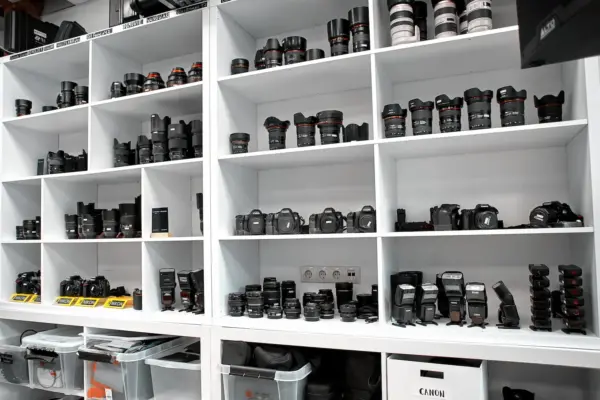
Canon, Sony & Nikon Safari Lens Options Available in Kenya
Professional safari camera rental in Kenya includes leading brands used by wildlife photographers worldwide.
Here are practical examples:
Canon Wildlife Lenses
- Canon RF 100–500mm – Excellent all-round safari lens for Masai Mara
- Canon EF 100–400mm – Reliable and flexible for large mammals
- Canon RF 200–800mm – Strong reach for distant wildlife and birds
- Canon 75–300mm – Budget-friendly option for first-time safari visitors
Sony Wildlife Lenses
- Sony 200–600mm – Ideal for bird photography and distant predators
- Sony 100–400mm GM – Sharp and versatile for elephants and big cats
- Sony 70–300mm – Lightweight and suitable for general wildlife
Nikon Wildlife Lenses
- Nikon Z 180–600mm – Powerful reach for bird photographers
- Nikon 200–500mm – Popular among serious wildlife enthusiasts
- Nikon 100–400mm Z – Strong flexibility for Masai Mara safaris
Each system has strengths, and availability in Kenya allows you to choose based on your itinerary.
Example: Choosing the Right Lens Without Traveling Heavy
If you are visiting Masai Mara for large mammals:
- Sony 100–400mm or Canon 100–500mm works perfectly
- Nikon 100–400mm Z offers similar flexibility
If you are focusing on birds:
- Sony 200–600mm
- Nikon Z 180–600mm
- Canon RF 200–800mm
If you are a beginner:
- Canon 75–300mm or 70–300mm provides better reach than a phone without excessive weight
Instead of buying these lenses or transporting them internationally, renting in Kenya provides access without commitment.
Same-Day Camera Rental in Nairobi for Safari
Many safari travelers land at Jomo Kenyatta International Airport (JKIA) and proceed directly to:
- Masai Mara
- Amboseli
- Samburu
- Lake Nakuru
Arranging camera rental in Nairobi before departure ensures:
- Equipment testing
- Quick briefing
- Lens familiarization
- Secure transport to your safari destination
If your gear was delayed, insufficient, or damaged in transit, same-day rental provides immediate solution.
Cost Efficiency: Renting vs Buying for One Safari
A professional 600mm lens can cost thousands of dollars.
If you only need it for a 5–10 day safari, purchasing may not make financial sense.
Renting allows you to:
- Access premium lenses temporarily
- Choose based on specific safari
- Avoid long-term ownership costs
- Avoid resale hassle
For many international safari visitors, renting camera gear in Kenya is financially logical.
Reducing Stress Before a Once-in-a-Lifetime Safari
Safari should be about wildlife — not logistics.
By renting locally, you remove:
- Baggage anxiety
- Weight calculations
- Security fears
- Repair concerns
- Airline rule confusion
You arrive focused on photography.
Peak Season: Why You Should Reserve in Advance
During Great Migration and peak travel seasons, long telephoto lenses are in high demand.
Booking your safari camera rental in Kenya early ensures:
- Availability of 100–500mm, 200–600mm, or 600mm options
- Proper planning
- Smooth pickup arrangements
Waiting until the last minute increases uncertainty.
Who Should Consider Renting in Kenya?
Renting camera gear locally is ideal if you:
- Are traveling internationally for safari
- Do not want to carry heavy lenses
- Need long telephoto reach
- Want backup support
- Are a beginner unsure what to buy
- Want flexibility between Canon, Sony, or Nikon systems
It is especially practical for travelers from the USA, UK, Germany, Australia, Canada, India, and other long-haul markets.
Final Thoughts: Why Renting Locally Is the Smartest Choice
Kenya offers extraordinary wildlife photography opportunities. But preparation determines results.
Renting camera gear in Kenya:
- Reduces airline risk
- Eliminates baggage stress
- Avoids lithium battery complications
- Provides access to long telephoto lenses
- Offers local support and backup
- Saves money compared to buying expensive equipment
If you are searching for safari camera rental Kenya, rent lens in Masai Mara, or camera rental Nairobi for safari, local rental is not just convenient — it is strategic.
Book Your Safari Camera Rental in Kenya
MaraZooms & Cameras Africa provides:
- Canon, Sony, and Nikon wildlife lenses
- Beginner-friendly and professional setups
- 100–400mm, 100–500mm, 150–600mm, 200–600mm options
- Same-day Nairobi pickup
- Advance booking for peak safari season
- Backup and support solutions
We help you choose the right lens based on your safari destination and photography goals.
Website: https://marazooms.co.ke
Email: hello@marazooms.co.ke
WhatsApp / Call: +254 732 589951
MaraZooms & Cameras Africa
Africa’s Safari Photography Partner
