Nikon Z 180-600mm vs Z 100-400mm for Safari: Which Lens Is Better in Kenya?
Masai Mara, Amboseli, Tsavo & Wildlife Photography
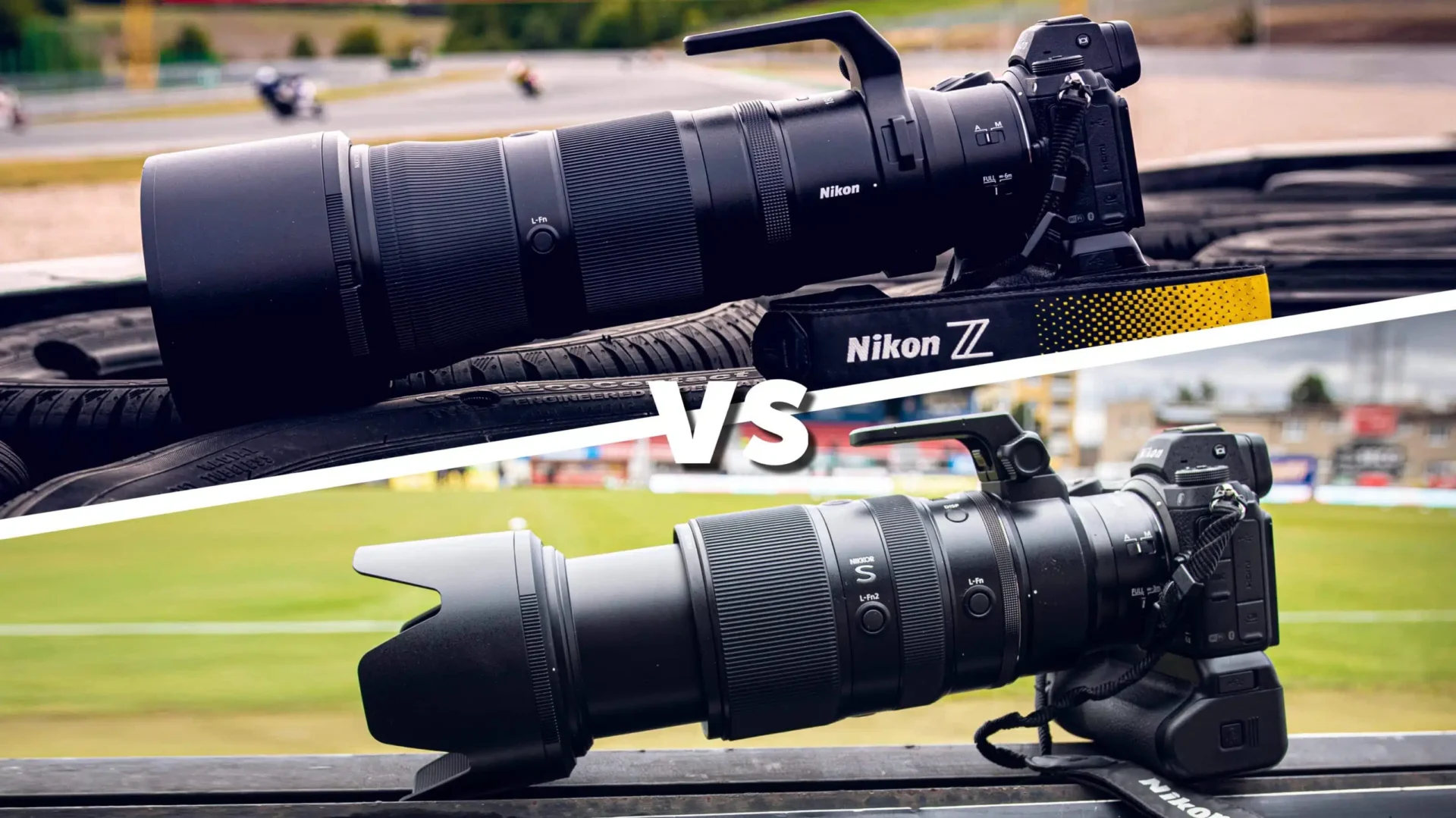
If you are planning a wildlife photography safari in Kenya with a Nikon Z-series camera, two lenses stand out as particularly useful: the NIKKOR Z 180-600mm f/5.6-6.3 VR and the NIKKOR Z 100-400mm f/4.5-5.6 VR S.
Both are excellent lenses for safari photography, but they are designed around different priorities.
The NIKKOR Z 180-600mm is the stronger choice when your priority is wildlife reach, birds, distant animals and tight wildlife portraits.
The NIKKOR Z 100-400mm, on the other hand, is the more flexible lens for close encounters, environmental wildlife photography, landscapes and situations where animals suddenly get close to the safari vehicle.
So which one should you take to the Masai Mara, Amboseli, Tsavo or another Kenyan safari destination?
The short answer is:
You would not really be making a wrong choice with either lens.
If wildlife photography is your main purpose, I would lean toward the Z 180-600mm.
If you want a more versatile safari lens that can handle both wildlife and wider environmental photographs, the Z 100-400mm may actually be the better choice.
The biggest exception is bird photography, where the 100-400mm’s native 400mm maximum reach can leave you wanting more.
Nikon Z 180-600mm vs Z 100-400mm: Quick Comparison
| Feature | NIKKOR Z 180-600mm | NIKKOR Z 100-400mm |
|---|---|---|
| Focal length | 180-600mm | 100-400mm |
| Maximum aperture | f/5.6-6.3 | f/4.5-5.6 |
| Format | FX | FX |
| Stabilization | VR | VR |
| Weight | Approx. 1,955g | Approx. 1,435g |
| Minimum focus distance | 1.3m at 180mm | 0.75m at 100mm |
| Maximum magnification | 0.25x | 0.38x |
| Internal zoom | Yes | No |
| Teleconverter compatibility | 1.4x and 2x | 1.4x and 2x |
| Maximum native reach | 600mm | 400mm |
| Maximum with 1.4x | 840mm | 560mm |
| Maximum with 2x | 1200mm | 800mm |
| Best for | Wildlife and birds | Versatile safari photography |
| Main strength | Reach | Flexibility |
Nikon lists the Z 180-600mm at approximately 1,955g, with 5.5-stop VR, a 1.3m minimum focus distance at 180mm and 0.25x maximum reproduction ratio. Its internal zoom keeps the lens length constant while zooming.
The Z 100-400mm weighs approximately 1,435g, has a 0.75m minimum focus distance at 100mm, 0.38x maximum reproduction ratio and 5.5-stop VR.
That means the 100-400mm is approximately 520g lighter than the 180-600mm.
That difference is noticeable, particularly when you are travelling with camera bodies, batteries, binoculars and additional lenses.
The Real Difference: 100mm vs 180mm vs 400mm vs 600mm
The easiest way to understand these lenses is not to simply ask which one is “better.”
Ask:
What focal lengths do you actually need during a safari?
The Z 100-400mm gives you:
100 → 200 → 300 → 400mm
The Z 180-600mm gives you:
180 → 300 → 400 → 500 → 600mm
This overlap from 180-400mm is important.
Both lenses can produce excellent wildlife photographs within that range.
The difference is what happens at either end.
The 100-400mm gives you significantly more room when an animal gets close.
The 180-600mm gives you significantly more reach when an animal is far away.
That is essentially the entire argument between these two lenses.
Why the Nikon Z 180-600mm Is So Good for Safari
The biggest advantage is obvious:
600mm reach.
When wildlife is distant, 600mm gives you significantly more magnification than 400mm.
This can be extremely useful in Kenya.
You may encounter:
- A leopard in a distant tree
- A cheetah across the plains
- A lion several hundred metres away
- A rhino at a distance
- An elephant herd across a river
- A small antelope
- Birds in trees
- Birds in flight
You cannot always ask your safari driver to move closer.
There may be other vehicles, roads, rivers, vegetation or park restrictions.
Sometimes the animal simply doesn’t want to come closer.
Having 600mm available gives you another option.
Nikon itself describes the 180-600mm as a super-telephoto designed to make distant subjects possible, and highlights its usefulness for birds and wildlife.
Why the Nikon Z 100-400mm Is So Good for Safari
The Z 100-400mm has a completely different advantage.
It is much more versatile.
The 100mm starting point can be extremely useful inside a safari vehicle.
Imagine an elephant walking toward your vehicle.
At 600mm, you may only be able to photograph its face.
At 400mm, you can capture more of the animal.
At 200mm, you can capture even more.
At 100mm, you may be able to photograph the entire elephant together with the surrounding landscape.
This makes the 100-400mm particularly useful for:
- Elephants
- Giraffes
- Buffalo
- Lions approaching the vehicle
- Large herds
- Environmental wildlife
- Wildlife with mountains
- Wildlife landscapes
- General travel photography
Nikon’s own wildlife photography material highlights the 100-400mm’s ability to quickly reframe as animals move closer and farther away.
Is 400mm Enough for Safari?
Yes, for many safari photographers.
This is important because people sometimes assume you need a 600mm lens to photograph wildlife in Africa.
You don’t.
A 400mm lens can produce excellent wildlife photographs.
If you are photographing:
- Lions
- Elephants
- Giraffes
- Buffalo
- Zebras
- Wildebeest
- Rhinos
400mm can be more than enough, particularly when animals are relatively close.
The issue is not whether 400mm is capable.
The issue is whether you want more reach when the animals are far away.
That’s where the 180-600mm becomes more attractive.
Is 600mm Too Much for Safari?
Usually, no.
But it can be too much in certain situations.
A 600mm lens is fantastic when the animal is distant.
However, safari encounters can change very quickly.
An animal that was 100 metres away may suddenly walk toward the vehicle.
This is where the 180-600mm’s 180mm starting point becomes important.
It is not as wide as 100mm, but it is considerably more flexible than a fixed 600mm or 800mm lens.
For many wildlife photographers, that makes the Z 180-600mm a particularly useful one-lens safari solution.
Nikon Z 180-600mm vs Z 100-400mm for the Masai Mara
The Masai Mara is an excellent environment for both lenses.
The open grasslands can produce distant wildlife encounters, but the Mara is also famous for close safari sightings.
You might photograph:
- Lions
- Leopards
- Cheetahs
- Elephants
- Wildebeest
- Zebras
- Giraffes
- Buffalo
- Birds of prey
For lions
Both lenses work very well.
The 100-400mm is excellent when a pride is close or when you want to photograph several lions together.
The 180-600mm is better when you want a tighter portrait or the pride is further away.
Winner for distant lions:
180-600mm
Winner for close lions:
100-400mm
Which Lens Is Better for Leopards?
I’d choose the 180-600mm.
Leopards are one of the strongest reasons to carry a longer telephoto.
They may be:
- High in a tree
- Across a river
- Hidden in vegetation
- Resting far from the vehicle
The 600mm end gives you more ability to isolate the animal.
You can capture:
- Leopard faces
- Eyes
- Full-body portraits
- Leopards in trees
- Leopards surrounded by vegetation
The 100-400mm can certainly photograph a leopard, but the additional reach of the 180-600mm is valuable.
Which Lens Is Better for Cheetahs?
Again, I would favor the 180-600mm when the cheetah is distant.
Cheetahs can occupy large open areas of the Mara.
A long telephoto lets you fill more of the frame without needing to move the vehicle closer.
But if the cheetah suddenly comes close, the 100-400mm becomes more useful.
This is a recurring theme:
180-600mm = distance
100-400mm = flexibility
Which Lens Is Better for Elephants?
This is much closer.
Elephants are enormous animals.
You don’t necessarily need 600mm.
In fact, 600mm can sometimes be too tight when an elephant is close.
The 100-400mm is excellent for:
- Entire elephants
- Elephant families
- Herds
- Elephants with their environment
- Elephants with Mount Kilimanjaro
The 180-600mm becomes excellent when you want:
- Elephant portraits
- Eyes
- Tusks
- Facial details
- Skin texture
- Distant elephant herds
For elephants:
Close/environmental: Z 100-400mm
Distant/detail: Z 180-600mm
Nikon Z 180-600mm vs Z 100-400mm for Amboseli
This is probably one of the most interesting comparisons because Amboseli is famous for elephants and Mount Kilimanjaro.
If your goal is:
Elephant standing beneath Mount Kilimanjaro
I would choose the Z 100-400mm.
The 100mm end gives you far more flexibility for environmental compositions.
If your goal is:
Detailed elephant portrait
I’d choose the Z 180-600mm.
At 600mm you can isolate the elephant and produce much tighter compositions.
Amboseli recommendation
Elephant + Kilimanjaro: 100-400mm
Close elephants: 100-400mm
Distant elephants: 180-600mm
Elephant portraits: 180-600mm
General wildlife: Either
Nikon Z 180-600mm vs Z 100-400mm for Tsavo
For Tsavo National Park, I’d lean toward the Z 180-600mm if wildlife photography is your main objective.
The park is enormous, and wildlife may be encountered at different distances.
The extra reach can be valuable for:
- Elephants
- Lions
- Giraffes
- Buffalo
- Birds
- Smaller wildlife
However, if you want a single lens that can handle wildlife and environmental photography, the 100-400mm remains an excellent choice.
Which Lens Is Better for Birds?
This is where the Z 180-600mm clearly wins.
If you are specifically interested in bird photography, I would choose the 180-600mm.
400mm can work for large birds and relatively close birds.
But many African birds are small or distant.
You may encounter:
- Eagles
- Vultures
- Kingfishers
- Bee-eaters
- Rollers
- Secretary birds
- Kori bustards
- Storks
- Smaller songbirds
- Birds high in trees
Having 600mm gives you considerably more reach.
And the 180-600mm can also be paired with Nikon’s Z TC-1.4x to reach 840mm. Nikon has specifically highlighted the 180-600mm + TC-1.4x combination for bird and wildlife photography.
The 100-400mm can also accept Nikon’s 1.4x and 2x Z teleconverters, reaching 560mm or 800mm respectively.
However, if you need 560mm or 800mm frequently, you should ask whether you would simply be better off starting with the 180-600mm.
Why the 100-400mm Is Still Excellent for Wildlife
It would be a mistake to look at the 400mm maximum and assume that the lens is inadequate for wildlife.
The Z 100-400mm is a premium S-Line lens designed specifically for demanding outdoor and wildlife use.
It has:
- Fast autofocus
- 5.5-stop VR
- Excellent optical quality
- 100-400mm range
- 0.38x maximum reproduction ratio
- Close focusing
- Weather sealing
Nikon also gives it compatibility with both Z teleconverters.
The biggest strength is simply how easy it is to adapt to changing situations.
Which Lens Is Better for Close Wildlife Encounters?
Nikon Z 100-400mm
This is one category where the answer is clear.
At 100mm, you have much more room.
This matters when:
- Elephants approach
- Lions walk toward the vehicle
- Giraffes get close
- Buffalo approach
- Multiple animals gather near the vehicle
The ability to zoom from 100mm to 400mm makes the lens extremely adaptable.
Which Lens Is Better for Environmental Wildlife Photography?
Nikon Z 100-400mm
This is another strong advantage.
Environmental wildlife photography is about showing:
Animal + environment
rather than:
Animal filling the entire frame.
Think:
- Elephant + Kilimanjaro
- Giraffe + savannah
- Lion + Mara landscape
- Zebra herd + sunset
- Wildebeest + grasslands
- Flamingos + Lake Nakuru
The 100mm end gives you much more freedom to create these compositions.
Which Lens Is Better for Wildlife Portraits?
I’d give the advantage to the 180-600mm.
At 600mm, you can create very tight compositions without needing to approach the animal.
This is excellent for:
- Lion faces
- Leopard eyes
- Cheetah portraits
- Elephant faces
- Giraffe heads
- Bird portraits
The 100-400mm can still produce beautiful portraits, especially at 400mm, but the 600mm provides more working distance and magnification.
Which Lens Is Better for a Beginner?
For a beginner who wants a single safari lens, I would actually consider the Z 100-400mm very seriously.
It is easier to frame with.
You can find the animal at 100mm and then zoom toward 400mm.
That is particularly helpful when learning wildlife photography.
The 180-600mm is more powerful, but 600mm requires better technique.
Finding a moving animal at 600mm can be challenging for someone who has never used a long telephoto.
However, if the beginner’s primary objective is:
“I want maximum wildlife reach.”
then the 180-600mm is still an excellent choice.
Which Lens Is Easier to Carry?
Nikon Z 100-400mm
This is one of its biggest advantages.
The lenses weigh approximately:
Z 100-400mm: 1,435g
Z 180-600mm: 1,955g
That’s approximately 520g of additional weight for the 180-600mm.
For a safari vehicle, the difference is manageable.
But for travelling through airports, walking around lodges and carrying equipment between vehicles, the lighter 100-400mm is noticeably easier.
Which Lens Is Better in Low Light?
The Z 100-400mm has the advantage on paper.
Its maximum aperture is:
f/4.5-5.6
while the 180-600mm is:
f/5.6-6.3.
That extra light can be useful during:
- Early morning game drives
- Late afternoon
- Cloudy conditions
- Forested areas
- Dusk
However, the difference should not be overstated.
The 180-600mm’s extra reach can be more valuable than the aperture difference in many safari situations.
And with a modern Nikon Z camera, you can raise ISO when necessary.
Which Lens Has Better Close-Focusing Ability?
The Z 100-400mm has a significant advantage.
Nikon lists a minimum focus distance of:
0.75m at 100mm
and:
0.98m at 400mm.
It also has a maximum reproduction ratio of 0.38x.
The 180-600mm focuses down to 1.3m at 180mm and 2.4m at 600mm, with a 0.25x maximum reproduction ratio.
This makes the 100-400mm more versatile for close subjects.
It can even be useful for:
- Flowers
- Insects
- Small details
- Lodge photography
- General travel photography
Which Lens Has Better Reach?
Obviously:
Nikon Z 180-600mm
And the difference is significant.
400mm vs 600mm
is a 50% increase in focal length.
For distant wildlife, this can be very noticeable.
If you photograph a small subject at the same distance, the 600mm lens can make the subject appear substantially larger in the frame.
That’s particularly valuable for birds and distant animals.
What About the 180-600mm on a Nikon DX Camera?
This becomes even more interesting.
On a Nikon DX camera with a 1.5x crop factor:
180-600mm becomes approximately 270-900mm equivalent.
The 100-400mm becomes approximately:
150-600mm equivalent.
So if you’re using something like a Nikon Z50, Z fc or another DX Z body, the 180-600mm provides tremendous wildlife reach.
For a dedicated wildlife photographer, that combination can be extremely powerful.
The trade-off is that 180mm on DX is already equivalent to 270mm, so close wildlife becomes more difficult to frame.
That’s where the 100-400mm has a significant advantage.
Should You Use a Teleconverter?
Both lenses offer teleconverter options.
The Z 180-600mm can reach:
840mm with the 1.4x
and:
1200mm with the 2x.
Nikon confirms the 180-600mm’s compatibility with the Z TELECONVERTER TC-1.4x and TC-2.0x.
The Z 100-400mm can reach:
560mm with the 1.4x
and:
800mm with the 2x.
However, teleconverters reduce the effective maximum aperture.
So while they can be very useful, they shouldn’t automatically be considered a replacement for a longer native lens.
For example, if you frequently need 800mm, you may be better off renting the 180-600mm rather than relying on the 100-400mm + 2x converter for every encounter.
Which Lens Is Better for the Great Migration?
For the Great Migration in the Masai Mara, both lenses can work extremely well.
Z 100-400mm
Excellent for:
- Herds
- Environmental scenes
- Wider migration photographs
- Animals approaching the vehicle
- Groups of wildebeest
- Landscapes
Z 180-600mm
Excellent for:
- Individual wildebeest
- River crossings
- Predators
- Distant animals
- Tight portraits
- Action at a distance
If the migration is your primary photographic goal, I’d choose the 180-600mm if you are only taking one telephoto lens.
But if you already have another long lens, the 100-400mm becomes an excellent second camera lens.
Should You Carry Both?
For a serious wildlife photographer, yes, there is a strong argument for carrying both.
They complement each other surprisingly well.
Camera 1: Z 180-600mm
Use it for:
- Distant wildlife
- Birds
- Leopards
- Cheetahs
- Wildlife portraits
- Distant action
Camera 2: Z 100-400mm
Use it for:
- Close animals
- Environmental photographs
- Elephants
- Groups
- Landscapes
- Animals approaching the vehicle
This is especially useful because you don’t need to change lenses when the situation suddenly changes.
For example, you might have a leopard far away:
180-600mm → 600mm
Then a herd of elephants approaches:
100-400mm → 100-200mm
You simply switch cameras.
But Do You Need Both?
For most safari tourists:
No.
If you’re travelling for a holiday and photography is an important part of the experience, one lens is probably enough.
Choose:
Z 180-600mm
if wildlife reach is your priority.
Z 100-400mm
if versatility and portability are your priority.
For a professional wildlife photographer or serious enthusiast, however, carrying both can make a lot of sense.
Which One Would I Rent for the Masai Mara?
If I had to choose one:
Nikon Z 180-600mm
The Masai Mara rewards reach.
The lens is particularly useful for:
- Leopards
- Cheetahs
- Lions
- Birds
- Distant wildlife
- Migration photography
- Wildlife portraits
The 180mm starting point also makes it much more flexible than a fixed 600mm or 800mm lens.
Which One Would I Rent for Amboseli?
This is closer.
If your priority is:
Elephants + Kilimanjaro
I’d choose the Z 100-400mm.
If your priority is:
Elephant portraits + distant wildlife + birds
I’d choose the Z 180-600mm.
For general wildlife photography, either is an excellent choice.
Which One Would I Rent for Tsavo?
For dedicated wildlife photography:
Z 180-600mm
For general safari photography:
Z 100-400mm
Tsavo’s large scale makes additional reach useful, but the ability to zoom down to 100mm can also be valuable when large animals are close.
The Interesting Part: You Really Can’t Go Very Wrong With Either
This is what makes this comparison different from some other lens comparisons.
The Z 180-600mm isn’t simply better.
And the Z 100-400mm isn’t simply better.
They solve different problems.
The 180-600mm asks:
“How can I get more reach?”
The 100-400mm asks:
“How can I handle more situations?”
That distinction is important.
If you’re primarily photographing wildlife, you’ll probably appreciate the 600mm reach.
If you’re photographing the entire safari experience, you’ll probably appreciate the 100mm starting point.
The One Situation Where I Would Strongly Favor the 180-600mm
Bird photography.
This is where the difference becomes much more significant.
At 400mm, you can photograph many birds successfully.
But if you’re serious about African bird photography, 600mm gives you considerably more flexibility.
And with the 1.4x teleconverter, the 180-600mm can reach 840mm. Nikon has shown this exact combination being used for bird photography.
For:
- Small birds
- Distant birds
- Birds high in trees
- Birds across water
- Bird portraits
I’d take the 180-600mm.
Final Verdict: Nikon Z 180-600mm vs Z 100-400mm for Kenya Safari
If you want the simplest answer:
Choose the Nikon Z 180-600mm if wildlife photography is your priority.
It gives you:
- 600mm reach
- Excellent wildlife reach
- Strong bird photography capability
- Tight wildlife portraits
- Distant subject performance
- 180mm for closer encounters
- Internal zoom
- 5.5-stop VR
- Teleconverter compatibility
Nikon lists the lens at 1,955g and specifically highlights its 180-600mm range, internal zoom and 5.5-stop VR.
Choose the Nikon Z 100-400mm if versatility is your priority.
It gives you:
- 100mm for close encounters
- 400mm for substantial wildlife reach
- Lower weight
- Better low-light aperture
- Excellent close focusing
- Environmental wildlife flexibility
- Strong optical performance
- Teleconverter compatibility
Nikon describes the Z 100-400mm as a highly versatile wildlife lens, and its 100mm starting point can be particularly valuable when wildlife gets close.
My Kenya safari recommendations
| Situation | Better choice |
|---|---|
| One lens for general safari | Z 100-400mm |
| Dedicated wildlife photography | Z 180-600mm |
| Masai Mara wildlife | Z 180-600mm |
| Masai Mara general photography | Z 100-400mm |
| Amboseli elephants | Either |
| Elephant + Kilimanjaro | Z 100-400mm |
| Elephant portraits | Z 180-600mm |
| Tsavo wildlife | Z 180-600mm |
| Close wildlife | Z 100-400mm |
| Distant wildlife | Z 180-600mm |
| Leopards | Z 180-600mm |
| Cheetahs | Z 180-600mm |
| Lions | Either |
| Birds | Z 180-600mm |
| Wildlife portraits | Z 180-600mm |
| Environmental wildlife | Z 100-400mm |
| Lightweight setup | Z 100-400mm |
| Low-light advantage | Z 100-400mm |
| Maximum reach | Z 180-600mm |
| Best all-round wildlife lens | Z 180-600mm |
| Best all-round travel/safari lens | Z 100-400mm |
So, Which Nikon Lens Should You Take to Kenya?
If you are going to Kenya and you’re asking:
“I want one lens primarily for wildlife photography. Which should I choose?”
I’d choose the NIKKOR Z 180-600mm.
The extra reach makes it particularly valuable in the Masai Mara, Tsavo and other large wildlife areas, and it is the stronger choice for birds, leopards, cheetahs and distant wildlife.
But if you’re asking:
“I want one lens that can handle wildlife, close encounters, elephants, landscapes and general safari photography.”
I’d choose the NIKKOR Z 100-400mm.
And that is why you really would not be wrong with either lens.
The 100-400mm is not “too short” for safari. It is a highly capable wildlife lens with the advantage of being much more flexible when subjects get close.
The 180-600mm is not “too long” for safari. Its 180mm starting point makes it much more practical than an ultra-long prime, while its 600mm end gives you the reach serious wildlife photographers often want.
The main reason I would strongly favor the 180-600mm is birds and distant wildlife.
Renting a Nikon Z 180-600mm or Z 100-400mm for a Kenya Safari
For an international photographer coming to Kenya, renting a telephoto lens can make sense if you don’t want to purchase expensive equipment specifically for a safari.
If you already own a Nikon Z camera, you can simply bring your body and rent the lens that best matches your itinerary.
For example:
Masai Mara + wildlife-heavy itinerary: Z 180-600mm
Amboseli + landscapes + elephants: Z 100-400mm
Bird-heavy safari: Z 180-600mm
General Kenya safari: Z 100-400mm or Z 180-600mm
Professional wildlife photography: Consider carrying both on two camera bodies.
MaraZooms Safaris & Cameras Africa can build safari camera and lens rental combinations around destinations such as the Masai Mara, Amboseli, Tsavo and other Kenyan wildlife destinations.
Related MaraZooms Guides
- Sony 200-600mm vs Tamron 150-500mm for Kenya Safari
- Sony 200-600mm vs Sony 100-400mm for Kenya Safari
- Sony 200-600mm vs Sony 400-800mm for Wildlife Safari
- Sony A7 IV + 200-600mm for Kenya Safari
- Best Nikon Camera and Lens Combination for Kenya Safari
- Best Lens for Masai Mara Wildlife Photography
- Best Lens for Amboseli Elephant Photography
- Best Lens for Bird Photography in Kenya
- Best Camera and Lens for the Great Migration
- Should You Rent or Buy a Telephoto Lens for an African Safari?
