
Canon RF 100-400mm vs RF 100-500mm vs RF 200-800mm for Safari: Which Should You Choose?
Masai Mara, Amboseli & Other Kenya Wildlife Destinations
If you are planning a Kenya safari with a Canon EOS R-series camera, choosing the right telephoto lens can make a surprisingly big difference to your photographs.
Three RF lenses are particularly interesting for safari and wildlife photography:
- Canon RF 100-400mm F5.6-8 IS USM
- Canon RF 100-500mm F4.5-7.1 L IS USM
- Canon RF 200-800mm F6.3-9 IS USM
All three can produce excellent wildlife photographs, but they are aimed at different types of photographers.
The RF 100-400mm is the lightweight and affordable option.
The RF 100-500mm is the premium all-rounder.
The RF 200-800mm is the long-reach specialist.
So, which one should you take to the Masai Mara, Amboseli, Tsavo, Lake Nakuru or another Kenyan wildlife destination?
For most photographers who want one lens for an entire safari, I would choose the RF 100-500mm.
If your priority is maximum reach for distant wildlife and birds, I would choose the RF 200-800mm.
And if you want a lightweight, affordable telephoto that is easy to carry, the RF 100-400mm is remarkably capable.
Canon RF 100-400 vs 100-500 vs 200-800: Quick Comparison
| Feature | RF 100-400mm | RF 100-500mm | RF 200-800mm |
|---|---|---|---|
| Focal length | 100-400mm | 100-500mm | 200-800mm |
| Maximum aperture | f/5.6-8 | f/4.5-7.1 | f/6.3-9 |
| Series | Standard RF | L-series | Standard RF |
| Weight | 635g | 1,370g | Approx. 2,050g |
| Image stabilization | Yes | Yes | Yes |
| Minimum focus distance | 0.88m at 200mm | 0.9m | Approx. 0.8m |
| Maximum magnification | 0.41x | 0.33x | 0.25x |
| Maximum native reach | 400mm | 500mm | 800mm |
| Best for | Lightweight safari | All-round safari | Long-range wildlife |
| Birds | Good | Very good | Excellent |
| Close wildlife | Excellent | Excellent | Limited |
| Distant wildlife | Good | Very good | Excellent |
| Environmental wildlife | Excellent | Excellent | Limited |
| Portability | Excellent | Very good | Moderate |
| Overall safari versatility | ★★★★★ | ★★★★★ | ★★★★☆ |
Canon lists the RF 100-400mm at approximately 635g, with 100-400mm coverage, optical IS and a maximum magnification of 0.41x.
The RF 100-500mm is an L-series lens weighing approximately 1,370g, with 100-500mm coverage, 5-stop optical stabilization and 0.33x maximum magnification.
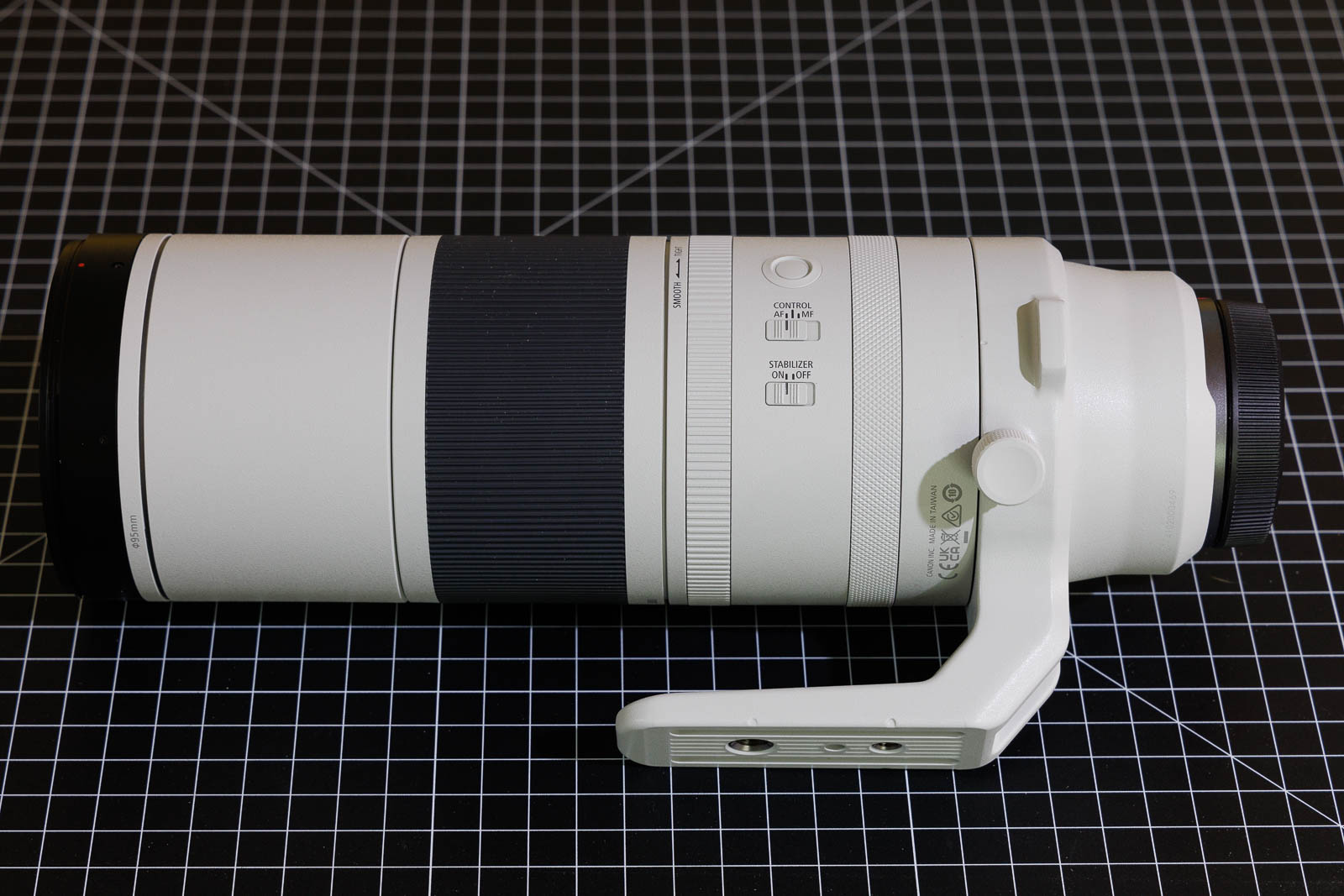
The RF 200-800mm takes a completely different approach by extending the native reach all the way to 800mm. That additional reach is one of its biggest attractions for wildlife and bird photography.
The Biggest Question: Do You Need 800mm in Kenya?
This is probably the first question you should ask yourself.
The answer is:
Not necessarily.
Kenyan safari photography isn’t simply about having the longest lens possible.
Your safari vehicle may sometimes be relatively close to wildlife.
In the Masai Mara, for example, you might find a lion resting only a few metres from the vehicle.
An elephant may walk directly past you.
A giraffe may stand right beside the road.
In these situations, an 800mm lens can actually be too long.
That’s why the 100-500mm is such an attractive safari lens.
You can go from:
100mm → 200mm → 300mm → 400mm → 500mm
without changing lenses.
The RF 200-800mm gives you:
200mm → 400mm → 600mm → 800mm
That is fantastic for distant wildlife, but much less flexible when animals approach.
Canon RF 100-400mm: The Lightweight Safari Option
The RF 100-400mm F5.6-8 IS USM is the lens I would recommend to someone who wants to keep their safari kit small and lightweight.
At approximately 635g, it is dramatically lighter than both the 100-500mm and 200-800mm.
That’s a major advantage when travelling.
You can carry:
Canon camera + RF 100-400mm
without feeling like you are carrying a huge wildlife setup.
It also starts at 100mm.
That is extremely useful when wildlife gets close.
Why 100mm Is So Useful on Safari
Imagine an elephant walks toward your vehicle.
With an 800mm lens, you might only see its eye and part of its head.
With a 500mm lens, you may still need to zoom out.
With a 400mm lens, you have more room.
With a 100mm lens, you can potentially photograph:
the entire elephant + the surrounding landscape.
This makes the RF 100-400mm particularly useful for:
- Elephants
- Giraffes
- Buffalo
- Lions at close range
- Large herds
- Environmental wildlife
- Safari landscapes
- Wildlife with Mount Kilimanjaro
Is 400mm Enough for a Kenya Safari?
Yes.
This is an important point.
You do not need an 800mm lens to photograph African wildlife successfully.
At 400mm, you can produce excellent photographs of:
- Lions
- Elephants
- Giraffes
- Buffalo
- Zebras
- Wildebeest
- Rhinos
- Hippos
The question is what happens when the animal is far away.
At 400mm, you may need to crop more.
At 500mm, you get a little more reach.
At 800mm, you can fill the frame with subjects that would otherwise appear quite small.
So the RF 100-400mm is not “too short.”
It is simply the least powerful of the three at long distances.
Canon RF 100-500mm: The Safari Sweet Spot
If I had to choose one Canon RF lens for the majority of safari photographers, this would be my pick.
RF 100-500mm F4.5-7.1 L IS USM
Why?
Because it sits almost perfectly between the other two.
You get:
100mm for close encounters.
500mm for distant wildlife.
And you get L-series optical performance, weather-resistant construction and a more premium design.
Canon describes it as a super-telephoto zoom suitable for wildlife and other demanding telephoto applications. It provides 100-500mm coverage, 5-stop optical stabilization and a 0.33x maximum magnification.
It is also much lighter than the 200-800mm.
Why the RF 100-500mm Is Such a Good Safari Lens
The 100-500mm range is incredibly useful inside a safari vehicle.
You can photograph:
At 100mm
- Elephants close to the vehicle
- Giraffes
- Herds
- Environmental scenes
- Animals with landscapes
Around 200-300mm
- Individual animals
- Groups
- Medium-distance wildlife
Around 400mm
- Wildlife portraits
- Medium-distance animals
- Predators
At 500mm
- Distant lions
- Leopards
- Cheetahs
- Birds
- Wildlife details
That versatility is difficult to beat.
Canon RF 200-800mm: The Long-Reach Specialist
The RF 200-800mm F6.3-9 IS USM is the most interesting lens of the three if your primary concern is reach.
800mm is a serious focal length.
It allows you to photograph distant wildlife without relying as heavily on cropping.
This can be extremely useful for:
- Leopards
- Cheetahs
- Birds
- Distant lions
- Distant elephants
- Small mammals
- Wildlife across open plains
The trade-off is obvious:
You lose the 100mm starting point.
That makes it much less versatile for close encounters.
RF 100-400 vs 100-500 vs 200-800 for the Masai Mara
The Masai Mara is where all three lenses can make sense.
The open savannah provides plenty of opportunities for long telephoto photography.
But wildlife can also get extremely close.
RF 100-400mm
Best for:
- Close wildlife
- Environmental photography
- General safari
- Travellers who prioritize low weight
RF 100-500mm
Best for:
- Almost everything
- General wildlife
- Close encounters
- Distant wildlife
- Wildlife portraits
- Environmental compositions
RF 200-800mm
Best for:
- Distant wildlife
- Birds
- Leopards
- Cheetahs
- Tight portraits
For a first-time Masai Mara visitor carrying one telephoto, my preference would be:
RF 100-500mm
But if wildlife photography is the sole purpose of the trip, the 200-800mm becomes very attractive.
Which Canon Lens Is Best for Leopards?
RF 200-800mm
This is one of the strongest arguments for the 200-800mm.
Leopards can be difficult to photograph because they may be:
- High in trees
- Far away
- Hidden in vegetation
- Across rivers
- Resting in areas where vehicles cannot approach closely
The 800mm focal length can make a major difference.
The RF 100-500mm is also excellent for leopard photography.
But when the leopard is distant, the 200-800mm has the advantage.
Which Canon Lens Is Best for Cheetahs?
Again:
RF 200-800mm for distant cheetahs.
Cheetahs can be found across open grasslands where they may be quite far from the vehicle.
The extra reach helps.
However, if a cheetah comes close, the 100-500mm becomes much easier to use.
Which Canon Lens Is Best for Lions?
This is more balanced.
Close lions
100-400mm / 100-500mm
Distant lions
200-800mm
Lion portraits
100-500mm or 200-800mm
Lion pride + environment
100-400mm or 100-500mm
For an all-round lion photography experience, I’d choose the 100-500mm.
Which Canon Lens Is Best for Elephants?
The answer is interesting.
RF 100-400mm
is excellent for elephants because of its 100mm starting point.
RF 100-500mm
is even more versatile because it combines the 100mm starting point with an additional 100mm of reach.
RF 200-800mm
is excellent for distant elephant portraits, but can be awkward when elephants approach.
For Amboseli specifically, I would strongly consider the 100-500mm if you want to photograph elephants in different ways.
Canon RF 100-400 vs 100-500 vs 200-800 for Amboseli
Amboseli National Park is an excellent example of why the longest lens isn’t always the best lens.
The park is famous for elephants and spectacular views of Mount Kilimanjaro.
Suppose you want this photograph:
Elephant standing beneath Mount Kilimanjaro.
You want enough focal-length flexibility to include the elephant and its environment.
The 100-400mm is excellent.
The 100-500mm is excellent.
The 200-800mm can be too restrictive.
But if you want:
Detailed elephant face with the background compressed.
The 200-800mm becomes extremely attractive.
Amboseli verdict
Elephant + Kilimanjaro: RF 100-500mm
Close elephants: RF 100-400 / 100-500
Elephant portraits: RF 100-500 / 200-800
Distant elephants: RF 200-800
General Amboseli photography: RF 100-500
Which Lens Is Best for Tsavo?
For Tsavo National Park, I would lean toward the RF 100-500mm for a general safari.
Tsavo can produce encounters with:
- Elephants
- Lions
- Giraffes
- Buffalo
- Birds
- Other wildlife
The 100-500mm provides a good balance between reach and flexibility.
If your priority is specifically distant wildlife and birds, then the 200-800mm becomes more attractive.
Which Canon Lens Is Best for Lake Nakuru?
Lake Nakuru is particularly interesting because of its combination of wildlife and birds.
For mammals:
100-500mm
For birds:
200-800mm
For general photography:
100-500mm
The extra reach of the 200-800mm can be extremely useful when photographing smaller birds.
Which Canon Lens Is Best for Birds?
RF 200-800mm
This is the clearest category winner.
Birds are smaller subjects, so reach becomes increasingly important.
At 800mm you can capture much more detail without getting physically closer.
This is particularly useful for:
- Eagles
- Vultures
- Kingfishers
- Bee-eaters
- Rollers
- Storks
- Secretary birds
- Kori bustards
- Smaller birds
The 100-500mm is still a very capable bird lens.
But if birds are one of the main reasons you are bringing a camera to Kenya:
200-800mm.
What About the Great Migration?
The Great Migration is another situation where you need both reach and flexibility.
For wide migration scenes:
100-400mm
For general migration photography:
100-500mm
For distant action:
200-800mm
For river crossings:
200-800mm
For individual wildebeest:
200-800mm
For herds and environmental scenes:
100-500mm
If I were travelling specifically to photograph the migration with one Canon telephoto, I’d still take the 100-500mm because of its flexibility.
If I had a second camera body, I would seriously consider putting the 200-800mm on the second body.
Which Lens Is Better for Environmental Wildlife Photography?
RF 100-400mm and RF 100-500mm
Both start at 100mm.
That is a major advantage.
Environmental wildlife photography is about showing:
animal + landscape
rather than simply filling the frame with the animal.
Think:
- Elephant + Kilimanjaro
- Giraffe + savannah
- Lion + Mara grasslands
- Zebra herd + sunset
- Wildebeest + migration landscape
The 200-800mm is much more specialized toward isolating distant subjects.
Which Lens Is Better for Close Wildlife?
RF 100-400mm and RF 100-500mm
There is no contest here.
Both begin at 100mm.
The 200-800mm begins at 200mm.
That extra 100mm on the shorter lenses can be extremely important when animals get close.
This is one of the reasons I wouldn’t automatically recommend the 200-800mm as the best “one lens for safari.”
Which Lens Is Easiest to Carry?
RF 100-400mm
By far.
At approximately 635g, it is exceptionally light for a 400mm telephoto.
The 100-500mm weighs approximately 1,370g, while the 200-800mm is around 2kg.
The difference is substantial.
If you are travelling through:
- Nairobi
- Masai Mara
- Amboseli
- Tsavo
- Lake Nakuru
and carrying camera equipment between vehicles, lodges and airports, weight matters.
Which Lens Has the Best Low-Light Performance?
RF 100-500mm
This is another reason why the 100-500mm is such a strong safari lens.
Its maximum aperture is f/4.5-7.1, compared with f/5.6-8 on the RF 100-400mm and f/6.3-9 on the RF 200-800mm.
That matters during:
- Early morning game drives
- Late afternoon
- Cloudy conditions
- Dusk
- Forested environments
The 100-500mm therefore has an important advantage when light becomes challenging.
The 200-800mm compensates with reach, but it is a relatively slow lens at 800mm.
Does the RF 100-500 Have Better Image Quality?
Generally, the RF 100-500mm is the premium optical option among these three.
It is an L-series lens and uses a more sophisticated optical design.
Canon specifies one Super UD element and six UD elements to help suppress chromatic aberration, along with a floating focus system for performance across focusing distances.
Independent testing also generally places the RF 100-500mm ahead of the RF 100-400mm in optical performance, particularly at shared focal lengths.
That doesn’t make the RF 100-400mm poor.
Far from it.
The 100-400mm offers an impressive combination of low weight, low cost and good image quality.
Is the RF 200-800mm Sharper Than the 100-500mm?
This isn’t a simple yes-or-no question.
The 200-800mm’s biggest advantage is reach.
The 100-500mm’s biggest advantage is optical quality, aperture and versatility.
At 800mm, the 200-800mm can capture subjects that simply occupy too few pixels with the 100-500mm.
So even if the 100-500mm produces a very sharp image at 500mm, an 800mm photograph may still contain more useful detail simply because the subject is larger in the frame.
This is why reach matters so much in wildlife photography.
What About Canon APS-C Cameras?
This is particularly important for cameras such as the Canon EOS R7 and EOS R50.
Canon’s APS-C cameras have approximately a 1.6x crop factor.
That means the approximate full-frame equivalent fields of view become:
RF 100-400mm
160-640mm equivalent
RF 100-500mm
160-800mm equivalent
RF 200-800mm
320-1280mm equivalent
That makes the 200-800mm extremely powerful on an R7 or R50.
But there is a catch.
At 800mm equivalent, framing moving wildlife can become difficult.
And at 320mm equivalent at the wide end, you may struggle when an elephant approaches very close.
This is why the RF 100-500mm + Canon APS-C body is such an interesting safari combination.
You get approximately 160-800mm equivalent while retaining the ability to zoom down to 100mm.
Canon R7 + RF 100-500mm vs R7 + RF 200-800mm
For dedicated wildlife photography:
R7 + 200-800mm
is an extremely powerful long-range combination.
But for a general Kenya safari:
R7 + 100-500mm
may be more practical.
The R7 already provides substantial reach through its APS-C sensor.
Adding 800mm can produce an enormous effective field of view.
If you are photographing birds or extremely distant wildlife, that’s fantastic.
But for normal safari encounters, 500mm may already be plenty.
Canon R50 + RF 100-400mm for Safari
This deserves a special mention because it is one of the most affordable and lightweight safari combinations.
The R50 is an APS-C camera.
With the RF 100-400mm:
100-400mm × 1.6 = approximately 160-640mm equivalent.
That’s a very useful range for safari photography.
And because the RF 100-400mm weighs only about 635g, the combination is extremely easy to carry.
For someone travelling to Kenya who doesn’t want to carry a large professional setup, this can be a surprisingly capable combination.
It won’t give you the same low-light performance or optical quality as a more expensive setup.
But in good African daylight, it can produce excellent wildlife photographs.
Which Canon Lens Should a Beginner Choose?
This depends on budget.
Limited budget
RF 100-400mm
You get a very capable telephoto without spending heavily.
Moderate budget
RF 100-500mm
This is the lens I’d recommend if wildlife photography is becoming a serious interest.
Maximum reach
RF 200-800mm
Choose this when distant wildlife and birds are the priority.
Which Lens Should a Professional Wildlife Photographer Choose?
If you’re shooting a professional wildlife assignment, the answer changes.
I would consider:
Camera 1
RF 200-800mm
For:
- Distant animals
- Birds
- Leopards
- Cheetahs
- Wildlife portraits
Camera 2
RF 100-500mm
For:
- Close animals
- Environmental photographs
- Herds
- Elephants
- General safari photography
This is a very powerful two-camera setup.
You don’t need to constantly change lenses.
Should You Carry Both the 100-500mm and 200-800mm?
If you’re a serious wildlife photographer:
Yes, there is a strong argument for it.
They complement each other.
The 100-500mm handles the situations where the 200-800mm is too long.
The 200-800mm handles the situations where 500mm isn’t enough.
For example:
Leopard 300 metres away → 200-800mm
Elephant 15 metres away → 100-500mm
Wildebeest crossing → 200-800mm
Elephant + Kilimanjaro → 100-500mm
This gives you tremendous flexibility.
For an ordinary safari tourist, however, carrying both may be unnecessary.
What About the RF 100-400mm + RF 200-800mm?
This is an interesting combination for someone who wants two very different lenses.
The RF 100-400mm is extremely light.
The 200-800mm gives you extreme reach.
Together, you cover:
100-800mm
with only some overlap.
This could make sense for a traveller who wants a lightweight close/mid-range telephoto plus a dedicated long-range wildlife lens.
But the 100-500mm is a much more premium lens and may be the better one-lens solution.
Which Lens Should You Choose for the Masai Mara?
Best budget option
RF 100-400mm
Best all-round option
RF 100-500mm
Best for maximum reach
RF 200-800mm
Best for birds
RF 200-800mm
Best for close wildlife
RF 100-500mm
Best one-lens safari solution
RF 100-500mm
Which Lens Should You Choose for Amboseli?
For elephants and Mount Kilimanjaro, I’d choose:
RF 100-500mm
It gives you enough reach for wildlife while retaining 100mm for environmental compositions.
If you’re mainly photographing distant elephant portraits:
RF 200-800mm
If you’re travelling light:
RF 100-400mm
Which Lens Should You Choose for Tsavo?
For a general wildlife safari:
RF 100-500mm
For distant wildlife and birds:
RF 200-800mm
For budget-conscious travellers:
RF 100-400mm
Which Lens Should You Choose for Lake Nakuru?
If birds are a major priority:
RF 200-800mm
For a combination of mammals and environmental photography:
RF 100-500mm
For a lightweight setup:
RF 100-400mm
Final Verdict: RF 100-400 vs 100-500 vs 200-800
There is no single winner because each lens is designed around a different idea.
Canon RF 100-400mm
The lightweight safari lens.
Choose it if you want:
- Low weight
- Affordable wildlife photography
- Close wildlife
- Environmental photography
- General safari photography
- A simple setup
Canon lists it at approximately 635g, which is its biggest practical advantage.
Canon RF 100-500mm
The best all-round safari lens.
Choose it if you want:
- 100mm for close encounters
- 500mm for distant wildlife
- Better optics
- Better low-light performance
- L-series construction
- Strong wildlife performance
- One lens for most safari situations
Canon describes it as an L-series super-telephoto zoom suitable for wildlife, with 100-500mm coverage, 5-stop IS and a 0.33x maximum magnification.
This is my overall pick for most Kenya safari photographers.
Canon RF 200-800mm
The long-reach wildlife specialist.
Choose it if you want:
- 800mm reach
- Distant wildlife
- Birds
- Leopards
- Cheetahs
- Tight wildlife portraits
- Maximum subject magnification
The trade-off is that it starts at 200mm, is considerably heavier and has a slower maximum aperture at the long end.
But if you keep finding yourself saying:
“I wish I had more reach.”
then this is the Canon RF lens to consider.
My Recommendations for a Kenya Safari
| Safari situation | Best choice |
|---|---|
| Best overall | RF 100-500mm |
| Best budget | RF 100-400mm |
| Best lightweight setup | RF 100-400mm |
| Maximum reach | RF 200-800mm |
| Birds | RF 200-800mm |
| Leopards | RF 200-800mm |
| Distant cheetahs | RF 200-800mm |
| Close elephants | RF 100-500mm |
| Elephant + Kilimanjaro | RF 100-500mm |
| Close lions | RF 100-500mm |
| Distant lions | RF 200-800mm |
| Wildlife portraits | RF 100-500 / 200-800 |
| Environmental wildlife | RF 100-400 / 100-500 |
| Great Migration | RF 100-500mm |
| Bird-heavy safari | RF 200-800mm |
| General Kenya safari | RF 100-500mm |
| Beginner on a budget | RF 100-400mm |
| Serious enthusiast | RF 100-500mm |
| Specialist wildlife photographer | RF 200-800mm |
| Two-camera setup | 100-500mm + 200-800mm |
So, Which Canon RF Lens Should You Rent for Kenya?
If you are coming to Kenya for a safari and want one Canon telephoto lens, my recommendation would be:
RF 100-500mm
It is the best compromise between reach, flexibility, optical quality, aperture and portability.
It starts at 100mm when wildlife gets close and reaches 500mm when animals are farther away.
That makes it particularly suitable for the unpredictable nature of safari photography.
If you are a serious bird photographer or wildlife specialist, however:
RF 200-800mm
may be the better choice.
The extra 300mm at the long end compared with the 100-500mm is substantial, and 800mm can be extremely valuable for distant birds and wildlife.
If you’re travelling on a tighter budget or simply don’t want to carry a large lens:
RF 100-400mm
is an excellent lightweight alternative.
It is especially attractive when paired with a Canon APS-C body such as the R7 or R50, where the 1.6x crop factor gives you approximately 160-640mm equivalent reach.
The Simple Answer
If you asked me to rank the three specifically for Kenya safari photography:
🥇 RF 100-500mm
Best overall safari lens
🥈 RF 200-800mm
Best for maximum wildlife and bird reach
🥉 RF 100-400mm
Best lightweight and budget option
But that ranking changes depending on the photographer.
One lens for everything: RF 100-500mm
Birds and distant wildlife: RF 200-800mm
Lightweight and affordable: RF 100-400mm
Professional two-camera setup: RF 100-500mm + RF 200-800mm
Canon R50 budget safari setup: R50 + RF 100-400mm
Canon R7 serious wildlife setup: R7 + RF 100-500mm or RF 200-800mm
Renting Canon Wildlife Lenses for a Kenya Safari
If you’re travelling to Kenya specifically for wildlife photography, renting can be an excellent way to use a high-end telephoto without purchasing one solely for your trip.
For the Masai Mara, the RF 100-500mm is an excellent all-round choice, while the RF 200-800mm becomes particularly attractive for distant wildlife and birds.
For Amboseli, the 100-500mm is particularly versatile because it can handle both elephants and environmental photographs involving Mount Kilimanjaro.
For Tsavo, either the 100-500mm or 200-800mm can work extremely well depending on how much reach you want.
For Lake Nakuru, I’d lean toward the 200-800mm if bird photography is an important part of your safari.
MaraZooms Safaris & Cameras Africa can provide camera and telephoto lens rental options for photographers visiting Kenya for wildlife photography, including the Masai Mara, Amboseli, Tsavo, Lake Nakuru and other safari destinations.
Related MaraZooms Guides
- Canon R50 + RF 100-400mm for Safari
- Canon R7 + RF 100-500mm for Kenya Wildlife Photography
- Best Canon Camera and Lens Combination for a Kenya Safari
- Best Canon Lens for Masai Mara Wildlife Photography
- Best Lens for Amboseli Elephant Photography
- Best Canon Lens for Bird Photography in Kenya
- Best Camera and Lens for the Great Migration
- Should You Rent or Buy a Telephoto Lens for an African Safari?
