
What Happens If Your Camera Fails on Safari?
Emergency Support & Backup Options in Kenya
You’ve traveled thousands of miles.
You’re in the middle of the savannah. A lioness begins to stalk. A cheetah locks onto prey. An elephant herd crosses golden light.
You raise your camera — and it won’t focus.
Or worse, it won’t turn on.
Safari moments do not repeat themselves.
If your camera fails in the middle of a once-in-a-lifetime trip to Masai Mara, Amboseli National Park, or another Kenyan park, you cannot rewind the scene.
This guide explains what really happens when equipment fails on safari — and how to protect yourself with backup and emergency support options in Kenya.
Because preparation is the difference between panic and peace of mind.
The Reality: Safari Conditions Are Tough on Equipment
Kenyan safari environments are demanding.
You will encounter:
- Fine dust
- Rough roads
- Vibration for hours
- Heat
- Sudden movement
- Rapid shooting bursts
Even high-end Canon, Sony, and Nikon cameras can experience issues under these conditions.
Common failures include:
- Autofocus malfunction
- Error codes
- Shutter failure
- Battery charging problems
- Sensor dust contamination
- Lens communication errors
If you only brought one body and one lens, a failure can end your photography completely.
Scenario 1: Camera Stops Working Mid-Safari
This is the worst-case moment.
You press the shutter and:
- Nothing happens
- The screen freezes
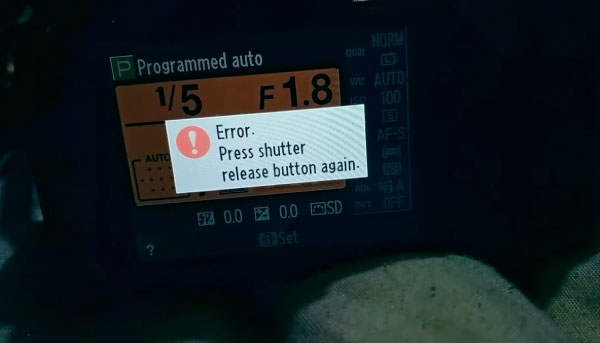
- You see an error message
- The autofocus hunts endlessly
- The camera shuts down
Now what?
If you are deep inside Masai Mara or Amboseli and have no backup, your only option is to watch wildlife without photographing it.
That emotional impact is real.
Many travelers say later:
“I wish I had brought a second body.”
Why a Second Camera Body Is Not a Luxury
For serious safari photographers, a second body is not optional — it is insurance.
Even enthusiasts benefit from redundancy.
Advantages of a second body:
- Immediate backup if one fails
- Ability to mount two lenses (for example, 100–500mm on one and 70–200mm on the other)
- No risky lens changes in dusty conditions
- Faster response during action
If your primary body fails, your safari continues uninterrupted.
Scenario 2: Sensor Dust Ruins Your Images
Dust in Masai Mara and Amboseli is very fine.
If you change lenses frequently, dust can enter the camera body and settle on the sensor.
You may notice:
- Dark spots in the sky
- Repeated marks in every image
- Loss of image clarity
In the field, this is frustrating.
While basic blower cleaning can help, stubborn dust may require professional sensor cleaning.
Without support, you may shoot the entire safari with visible spots on your images.
Scenario 3: Autofocus Issues on a Critical Moment
Autofocus failure is particularly painful during:
- Cheetah chases
- Birds in flight
- Lions interacting
- Elephants running
If your lens fails to lock focus or communicates improperly with the body, sharp images become impossible.
This can be caused by:
- Lens calibration issues
- Internal dust
- Electronic communication errors
- Impact damage during travel
In these moments, having backup equipment available is invaluable.
Emergency Replacement in Masai Mara: Is It Possible?
Many travelers assume that if something breaks in the Mara, there is no solution.
While remote locations are challenging, emergency coordination is sometimes possible depending on:
- Duration of your stay
- Accessibility of your lodge
- Availability of replacement gear
- Timing
Having pre-arranged rental or support options in Kenya increases the likelihood of fast resolution.
Without local contacts, replacement becomes extremely difficult.
Why Renting in Kenya Adds a Safety Net
Travelers who rent camera gear in Kenya gain a major advantage:
Local support.
If something goes wrong:
- Replacement bodies may be available
- Lenses can be swapped
- Technical advice can be provided
- Emergency logistics can be discussed
If you bring everything internationally and it fails, your options are limited.
If you rent locally, you are not alone.
Canon, Sony & Nikon: Backup Planning Examples
Here are practical backup approaches:
Canon Users
Primary: Canon RF 100–500mm
Backup: Second Canon body or EF 100–400mm
Sony Users
Primary: Sony 200–600mm
Backup: Second Sony body or 100–400mm
Nikon Users
Primary: Nikon Z 180–600mm
Backup: Second Z body or 200–500mm
Even a lighter backup lens ensures your safari does not stop completely.
What to Do Immediately If Your Camera Fails
If you experience a failure mid-safari:
- Turn the camera off and remove the battery.
- Reinsert battery and restart.
- Check memory card integrity.
- Try a different battery if available.
- Inspect lens contacts carefully.
If the problem persists, professional support may be required.
This is where having access to local safari camera rental Kenya providers becomes critical.
Emotional Cost of Equipment Failure
Most safari travelers spend:
- Years planning
- Significant financial investment
- Emotional anticipation
Missing the migration crossing.
Missing a leopard in golden light.
Missing elephant calves playing.
These moments cannot be recreated.
Equipment failure is not just technical — it is emotional.
That is why preparation matters.
Preventing Failure Before It Happens
You can reduce risk by:
- Bringing a second body
- Avoiding frequent lens changes
- Carrying extra batteries
- Cleaning lens mounts carefully
- Booking reliable equipment
- Testing all gear before departure
If renting in Kenya, test your equipment at pickup in Nairobi before heading to Masai Mara.
Camera Rental Nairobi for Safari: A Strategic Advantage
Many safari travelers arrange camera rental in Nairobi before traveling to Masai Mara or Amboseli.
Advantages include:
- Access to backup equipment
- On-ground support
- Reduced airline transport risk
- Immediate replacement possibility
- Flexibility in peak season
This is especially important during Great Migration when wildlife activity is intense and unpredictable.
Peak Season: Why Backup Matters Even More
During peak migration months:
- Action is fast
- Shooting volume is high
- Long lenses are in heavy use
- Dust levels increase
Mechanical stress on equipment rises.
Having emergency support options during peak season provides critical security.
Who Should Seriously Consider Backup Planning?
You should strongly consider backup options if you:
- Are traveling internationally
- Have only one camera body
- Are focusing on wildlife photography
- Are staying in Masai Mara for less than a week
- Are photographing birds or action
- Cannot afford to miss critical moments
Even beginner safari photographers benefit from simple redundancy.
Don’t Let Equipment Failure Ruin Your Once-in-a-Lifetime Safari
Kenya offers extraordinary wildlife experiences.
But wildlife does not pause for technical problems.
The smartest safari photographers prepare for the unexpected.
They plan:
- Proper focal length
- Backup body
- Lens redundancy
- Local support access
- Emergency replacement options
This transforms anxiety into confidence.
Emergency & Backup Support with MaraZooms & Cameras Africa
If you are planning a safari to Masai Mara, Amboseli, or anywhere in Kenya, we provide:
- Safari camera rental Kenya solutions
- Backup camera body options
- Long telephoto lens rentals
- Technical guidance before departure
- Same-day Nairobi pickup
- Peak season advance booking
Whether you use Canon, Sony, or Nikon systems, we help you structure your setup so equipment failure does not end your photography.
Website: https://marazooms.co.ke
Email: hello@marazooms.co.ke
WhatsApp / Call: +254 732 589951
MaraZooms & Cameras Africa
Africa’s Safari Photography Partner
