
Sigma 150-600mm for Canon EF Rental & Hire in Kenya | Safari & Wildlife Photography
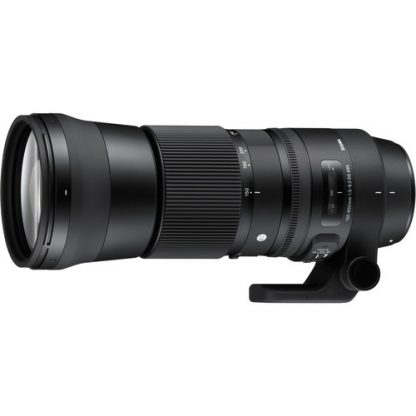
Looking to rent or hire the Sigma 150-600mm F5-6.3 DG OS HSM Contemporary for Canon EF in Kenya? For safari tourists and wildlife photographers who want substantial telephoto reach without the cost and size of a professional super-telephoto prime, this Sigma 150-600mm lens is one of the most practical options available.
With a focal-length range extending from 150mm to 600mm, the lens provides significantly more reach than a standard 70-200mm or 100-400mm telephoto. That makes it particularly attractive for photographing distant lions, leopards, cheetahs, elephants, giraffes, birds and other wildlife encountered during a Kenya safari.
For visitors travelling to the Masai Mara, Amboseli, Laikipia, Samburu, Tsavo, Lake Nakuru, Ol Pejeta and other wildlife destinations, the Sigma 150-600mm can provide the reach needed to capture detailed wildlife images while remaining a practical rental option for tourists.
MaraZooms Safaris & Cameras Africa provides wildlife camera and lens rental services in Kenya, including options for tourists who need equipment for their safari without purchasing a long telephoto lens specifically for their trip.
Why Rent the Sigma 150-600mm for a Kenya Safari?
The biggest attraction of the Sigma 150-600mm Contemporary is simple: 600mm reach.
Wildlife photography often requires long focal lengths because animals cannot always be approached closely.
On a Kenya safari, you may encounter a lion resting far from the road, a cheetah crossing an open plain, a leopard high in a tree or a bird perched at a considerable distance.
At 600mm, the Sigma provides the reach needed to bring these subjects much closer within the frame.
The 150mm end also gives you considerably more flexibility than a fixed 600mm lens.
When wildlife moves closer, you can zoom out.
When an animal moves farther away, you can zoom toward 600mm.
This flexibility is particularly useful when photographing from a safari vehicle.
Sigma 150-600mm for Masai Mara Photography
The Masai Mara is arguably Kenya’s most famous wildlife photography destination.
The open grasslands provide excellent opportunities for photographing big cats and large mammals, and the distances involved often make a long telephoto lens extremely useful.
The Sigma 150-600mm is particularly well suited to photographing:
- Lions
- Leopards
- Cheetahs
- Elephants
- Giraffes
- Wildebeest
- Zebras
- Buffalo
- Birds of prey
- Other wildlife
At 150mm, you can photograph larger animals while retaining some environmental context.
At 400-500mm, you can produce tighter wildlife compositions.
At 600mm, you can isolate distant animals and create detailed portraits.
Great Migration Photography
For tourists visiting Kenya during the Great Migration, the 150-600mm range can be especially useful.
The migration brings huge numbers of wildebeest and zebra into the Mara ecosystem.
Photographers may need to photograph both large groups and individual animals.
The 150mm end can capture groups and environmental scenes, while 600mm provides the reach required for individual animals farther away.
The lens can therefore cover a broad range of migration photography situations without requiring a lens change.
Sigma 150-600mm for Amboseli Safari Photography
Amboseli National Park is famous for its elephants and iconic views of Mount Kilimanjaro.
The Sigma 150-600mm is particularly useful for photographing elephants at a distance.
At 600mm, photographers can create tightly framed elephant portraits while maintaining distance from the animals.
At shorter focal lengths, you can include more of the surrounding Amboseli landscape.
This provides opportunities for both intimate wildlife portraits and environmental images.
When Mount Kilimanjaro is visible, experimenting with different focal lengths can also change the visual relationship between the wildlife and mountain.
Sigma 150-600mm for Laikipia Wildlife Photography
The Laikipia region is another major destination for wildlife and conservation photography.
The region is known for rhinos, elephants, lions, leopards, giraffes, zebras and many other species.
A 600mm focal length can be especially useful for photographers who encounter animals across open areas.
The lens is also useful for conservation photography where maintaining distance from wildlife is important.
For photographers documenting both large mammals and smaller subjects, the 150-600mm range offers considerable flexibility.
Sigma 150-600mm for Samburu
Samburu National Reserve provides opportunities to photograph distinctive northern Kenya wildlife, including Grevy’s zebra, gerenuk, reticulated giraffe and Beisa oryx.
These species can sometimes be encountered at considerable distances.
The 600mm focal length gives photographers the ability to isolate animals without relying on close approaches.
It can also be useful for birds and smaller wildlife, although dedicated bird photographers may eventually prefer even longer focal lengths or faster lenses.
Sigma 150-600mm for Tsavo
The vast landscapes of Tsavo East and Tsavo West National Parks can make a long telephoto particularly useful.
Elephants, lions, giraffes and other wildlife can be encountered across large open areas.
The 600mm end allows photographers to reach distant subjects, while 150-300mm provides more flexibility when animals come closer.
The lens therefore works well for both traditional wildlife portraits and environmental wildlife photography.
Sigma 150-600mm for Lake Nakuru and Bird Photography
The Sigma 150-600mm is not just a big-animal lens.
Its long focal length makes it attractive for bird photography in Kenya.
At destinations such as Lake Nakuru, photographers may encounter flamingos, pelicans, eagles, herons, kingfishers and many other species.
Birds are generally much smaller subjects than elephants or lions, making 500-600mm particularly useful.
For tourists who want to photograph both mammals and birds during the same Kenya trip, a 150-600mm lens can be a highly practical choice.
Optical Stabilization for Safari Photography
The Sigma 150-600mm Contemporary incorporates Sigma’s Optical Stabilizer (OS) system.
Image stabilization is particularly useful when photographing handheld from a safari vehicle.
At 600mm, even small amounts of camera movement can become noticeable.
Optical stabilization helps reduce the effects of camera shake and makes handheld shooting more practical.
A safari bean bag or other camera support can also be useful, particularly during extended game drives.
Hyper Sonic Motor Autofocus
The lens uses Sigma’s Hyper Sonic Motor (HSM) autofocus system.
Fast autofocus is important for wildlife because animals can move unexpectedly.
A lion can suddenly stand up, a cheetah can begin running or a bird can take flight.
A responsive autofocus system gives photographers a better opportunity to react quickly to these moments.
When paired with a compatible Canon camera, the Sigma 150-600mm can form a capable wildlife photography setup.
Most Popular Canon Cameras for the Sigma 150-600mm EF
One of the advantages of this lens is its compatibility with a broad range of Canon EF-mount cameras.
Popular Canon cameras to pair with the Sigma 150-600mm include:
Canon EOS 80D
The EOS 80D is a popular APS-C DSLR and can make a capable wildlife combination with the Sigma 150-600mm.
Its APS-C sensor provides a narrower field of view than a full-frame camera, which can be useful when photographing distant wildlife.
Canon EOS 90D
The EOS 90D is another excellent APS-C option for wildlife photographers.
Its high-resolution sensor and crop-sensor field of view make it attractive for photographers who prioritize reach and cropping flexibility.
Canon EOS 7D Mark II
The EOS 7D Mark II was designed with action and wildlife photography in mind.
Its autofocus and high-speed shooting capabilities make it a natural pairing with a long telephoto such as the Sigma 150-600mm.
Canon EOS 5D Mark IV
The full-frame EOS 5D Mark IV provides a different shooting experience, with excellent image quality and a wider field of view compared with APS-C bodies.
It can be a strong combination for photographers who want professional full-frame image quality.
Canon EOS 6D Mark II
The EOS 6D Mark II can also be paired with the Sigma 150-600mm for photographers who want a full-frame Canon DSLR setup.
Canon EOS R-Series Cameras
Because the Sigma lens uses the Canon EF mount, it can also be used with compatible Canon EOS R mirrorless cameras through an EF-EOS R adapter.
Potential combinations include:
- Canon EOS R7 + Sigma 150-600mm
- Canon EOS R6 Mark II + Sigma 150-600mm
- Canon EOS R5 + Sigma 150-600mm
- Canon EOS R8 + Sigma 150-600mm
For photographers already using Canon RF cameras, an EF-to-RF adapter can make the Sigma lens an attractive rental option.
Sigma 150-600mm Contemporary vs Canon 100-400mm
The biggest difference is reach.
A Canon 100-400mm lens is more compact and provides a useful range for close and medium-distance wildlife.
The Sigma 150-600mm extends considerably farther.
That additional 200mm can make a significant difference when photographing distant animals and birds.
If your Kenya safari is primarily focused on wildlife and you want more reach, the Sigma 150-600mm is the more powerful option.
Sigma 150-600mm vs Canon RF 100-500mm
The RF 100-500mm is a native Canon RF-mount L-series lens and provides excellent optical performance.
The Sigma 150-600mm Contemporary, however, offers 600mm reach and can be considerably more attractive from a rental-value perspective.
For tourists who want maximum reach while keeping rental costs under control, the Sigma can be an excellent choice.
Sigma 150-600mm vs Canon RF 200-800mm
The Canon RF 200-800mm goes even farther, reaching 800mm.
However, it is designed specifically for Canon RF mirrorless cameras.
The Sigma 150-600mm works with Canon EF-mount DSLRs and can also be adapted to compatible EOS R mirrorless cameras.
For tourists using a Canon DSLR such as the EOS 80D, EOS 90D, 7D Mark II or 5D Mark IV, the Sigma provides a straightforward route to 600mm without changing camera systems.
Is 600mm Enough for Kenya Safari Photography?
For many safari situations, 600mm provides substantial reach.
It is particularly useful for:
- Distant lions
- Leopards
- Cheetahs
- Elephants
- Giraffes
- Wildebeest
- Zebras
- Birds
- Wildlife portraits
- Action photography
There will still be situations where 800mm or longer is beneficial, particularly for small birds and very distant subjects.
However, 600mm represents a significant amount of reach for a safari lens and is enough for a wide range of wildlife encounters.
Why Tourists Rent the Sigma 150-600mm in Kenya
International tourists often want professional wildlife photographs without purchasing a specialist lens solely for their holiday.
The Sigma 150-600mm is particularly attractive because it provides substantial reach without requiring the investment associated with some premium Canon super-telephoto lenses.
Renting also means tourists can select equipment specifically for their Kenya itinerary.
If you are spending several days in the Masai Mara, for example, a 150-600mm can be an excellent choice for big-cat and Great Migration photography.
If your itinerary includes Amboseli, the lens can provide useful reach for elephants.
If you are visiting Lake Nakuru, it can also double as a long-range bird photography lens.
Nairobi Hotel Delivery and Wilson Airport Collection
MaraZooms Safaris & Cameras Africa provides rental services designed for photographers and tourists travelling through Kenya.
For visitors staying at hotels within the Nairobi Metropolitan Area, camera and lens equipment can be delivered to the agreed hotel location.
If you are flying from Nairobi to your safari destination, delivery and collection can also be arranged at Wilson Airport.
This is particularly useful for tourists flying to destinations such as the Masai Mara, Amboseli and other safari locations served by flights from Wilson Airport.
You can arrange to receive the Sigma 150-600mm before your safari flight and return it through the agreed collection arrangement after your trip.
Who Should Rent the Sigma 150-600mm?
The lens is an excellent option for:
- International safari tourists
- Wildlife photographers
- Bird photographers
- Canon DSLR users
- Canon EOS R users with an EF adapter
- Masai Mara visitors
- Great Migration photographers
- Amboseli elephant photographers
- Laikipia wildlife photographers
- Safari enthusiasts
- Photographers wanting 600mm reach
- Travelers seeking a cost-effective long telephoto
Book the Sigma 150-600mm for Your Kenya Safari
The Sigma 150-600mm F5-6.3 DG OS HSM Contemporary for Canon EF is a powerful and practical wildlife photography lens for photographers visiting Kenya.
Its 150-600mm focal range, optical stabilization and 600mm maximum reach make it particularly useful for distant wildlife, birds and safari photography.
For tourists visiting the Masai Mara, it provides the reach needed for big cats and Great Migration photography. In Amboseli, it can be excellent for elephants and distant wildlife. In Laikipia, it provides useful reach for rhinos, predators and conservation photography. Across Samburu, Tsavo and Lake Nakuru, it can serve as a versatile long-range wildlife and bird photography lens.
It is also compatible with popular Canon cameras including the EOS 80D, EOS 90D, EOS 7D Mark II and EOS 5D Mark IV, as well as compatible EOS R-series cameras when used with an EF-EOS R adapter.
For international tourists, MaraZooms makes the rental process easier with hotel delivery within the Nairobi Metropolitan Area and delivery and collection at Wilson Airport for travelers flying onward to their safari destination.
Rent or hire the Sigma 150-600mm for Canon EF from MaraZooms Safaris & Cameras Africa and take 600mm of wildlife photography reach with you on your Kenya safari.

Reviews
There are no reviews yet.