
NIKKOR Z 180-600mm f/5.6-6.3 VR Rental & Hire in Kenya for Wildlife & Safari Photography
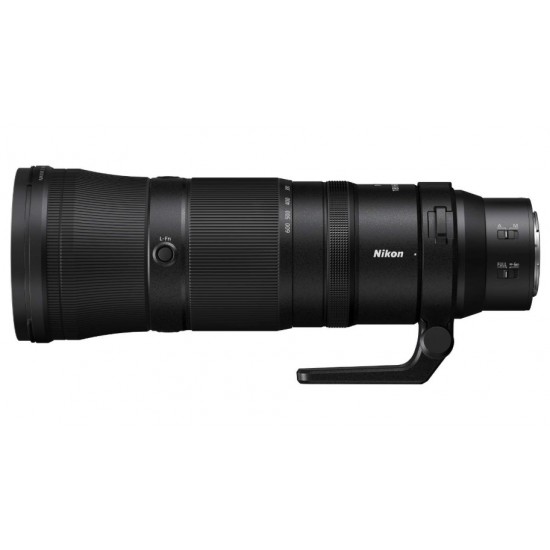
If you are travelling to Kenya with a Nikon Z camera and want serious telephoto reach for your safari, the NIKKOR Z 180-600mm f/5.6-6.3 VR is one of the most compelling lenses to rent.
Offering a huge 180-600mm zoom range, Nikon’s native Z-mount super-telephoto gives wildlife photographers the reach required for distant big cats, elephants, rhinos, antelopes and birds while retaining enough zoom flexibility for changing safari encounters.
For photographers visiting the Masai Mara, Amboseli, Laikipia, Samburu, Tsavo, Lake Nakuru, Ol Pejeta and other Kenya wildlife destinations, 600mm can make a significant difference when animals cannot be approached closely.
MaraZooms Safaris & Cameras Africa offers the NIKKOR Z 180-600mm rental and hire in Kenya for tourists, wildlife photographers and Nikon users preparing for safari.
For international visitors, equipment can be delivered to hotels within the Nairobi Metropolitan Area. If you are taking a safari flight from Wilson Airport, rental delivery and collection can also be arranged around your flight itinerary.
Why the NIKKOR Z 180-600mm Is Made for Wildlife Photography
Wildlife photographers frequently face one major limitation: distance.
You cannot control where a lion decides to rest, where a leopard climbs a tree or where a bird chooses to land.
A 200mm or 300mm lens can leave distant wildlife occupying only a small part of the photograph.
The NIKKOR Z 180-600mm solves much of this problem by extending all the way to 600mm.
At 180mm, photographers can capture larger wildlife and environmental compositions.
Around 300-400mm, the lens provides an excellent range for medium-distance animals.
At 500-600mm, it becomes a powerful tool for distant wildlife, tight animal portraits and bird photography.
This makes the NIKKOR Z 180-600mm particularly well suited to the unpredictable distances encountered during a Kenya safari.
NIKKOR Z 180-600mm for Masai Mara Photography
Few places demonstrate the advantages of a 600mm lens better than the Masai Mara.
The Mara’s open grasslands provide exceptional wildlife viewing, but animals are not always close to the safari vehicle.
A cheetah may be sitting far across the plains.
A leopard may be resting high in a distant tree.
Lions may be interacting away from the road.
At 600mm, photographers can create tighter compositions without needing to move physically closer to the animals.
The lens is particularly useful for photographing the Mara’s famous big cats, including lions, leopards and cheetahs.
Great Migration Photography With the NIKKOR Z 180-600mm
The Great Migration attracts wildlife photographers and safari tourists from around the world to the Masai Mara.
Huge herds of wildebeest and zebra create countless photographic opportunities.
The NIKKOR Z 180-600mm allows photographers to isolate individual animals within those enormous herds.
The longer focal lengths are also useful for photographing wildlife behaviour and interactions taking place farther from the vehicle.
At the same time, zooming back toward 180mm gives photographers more room when groups of animals move closer.
For serious Great Migration photography, this flexibility can be invaluable.
Photographing Amboseli Elephants at 600mm
Amboseli National Park is synonymous with elephants.
Large herds move across the plains beneath Mount Kilimanjaro, producing some of Kenya’s most iconic wildlife photography opportunities.
While shorter lenses are useful for photographing entire herds and landscapes, 400-600mm opens another creative possibility: detailed elephant portraits.
You can concentrate on an elephant’s eyes, tusks, trunk and skin texture or isolate individuals within a larger herd.
The ability to zoom back toward 180mm means the same lens can still be used when elephants move closer to the vehicle.
Photographers interested in environmental compositions featuring more of Kilimanjaro may want to carry a shorter second lens alongside the 180-600mm.
NIKKOR Z 180-600mm for Laikipia and Ol Pejeta
The wildlife conservancies of Laikipia offer exceptional opportunities for photographers interested in conservation and wildlife.
The region is home to elephants, rhinos, lions, leopards, giraffes and numerous other species.
The NIKKOR Z 180-600mm is particularly useful when maintaining distance from wildlife.
At Ol Pejeta Conservancy, for example, photographers interested in rhino photography can benefit from the ability to switch between moderate and extreme telephoto focal lengths.
Rather than being restricted to a fixed 500mm or 600mm prime lens, you can quickly change your composition as an animal moves.
Take the NIKKOR Z 180-600mm to Samburu
Samburu National Reserve provides a completely different photographic environment.
Wildlife photographers visit the region for elephants and big cats as well as northern Kenya species such as Grevy’s zebra, reticulated giraffe, gerenuk and Beisa oryx.
A 600mm lens is particularly valuable for smaller or more distant subjects.
The NIKKOR Z 180-600mm also gives bird photographers substantial reach for the diverse birdlife found across northern Kenya.
Long-Reach Photography in Tsavo
Tsavo East and Tsavo West National Parks are enormous.
In such expansive landscapes, wildlife can sometimes be considerably farther away than photographers would prefer.
This is exactly where a super-telephoto zoom becomes valuable.
The NIKKOR Z 180-600mm provides enough reach to photograph distant elephants, lions, giraffes and other wildlife while still offering the flexibility to zoom back when animals approach.
For photographers planning a multi-destination Kenya safari, this versatility can make the lens particularly attractive.
A Serious Lens for Bird Photography in Kenya
The NIKKOR Z 180-600mm is also an excellent rental choice for bird photography in Kenya.
Kenya has an extraordinary variety of birdlife, and smaller subjects often require significantly more focal length than large mammals.
Destinations such as Lake Nakuru, Lake Naivasha, Samburu, Amboseli and the Masai Mara provide opportunities to photograph everything from large waterbirds and raptors to much smaller species.
At 600mm, birds occupy substantially more of the frame than they would at 200mm or 300mm.
This makes the lens attractive to tourists whose safari interests include both mammals and birds.
Internal Zoom: A Major Safari Advantage
One of the particularly useful characteristics of the NIKKOR Z 180-600mm is its internal zoom design.
The physical length of the lens does not extend dramatically as you move from 180mm toward 600mm.
That can be extremely useful inside a safari vehicle.
Space can be limited, especially when several photographers are carrying large lenses.
An internal zoom also allows photographers to move quickly between focal lengths without the large change in lens length associated with some external-zoom super-telephotos.
For photographers spending several hours each day inside a safari vehicle, handling characteristics matter almost as much as specifications.
Vibration Reduction for Handheld Wildlife Photography
The lens incorporates Nikon’s VR, or Vibration Reduction, technology.
At 600mm, small camera movements become increasingly visible.
VR helps compensate for camera shake, making handheld photography more practical when conditions require it.
This is useful when photographers need to react quickly to sudden wildlife behaviour.
A safari bean bag, monopod or other suitable support can still be useful during extended shooting, particularly with a large super-telephoto lens.
Popular Nikon Cameras Compatible With the NIKKOR Z 180-600mm
Because this is a native Nikon Z-mount lens, it pairs directly with Nikon Z-series mirrorless cameras without requiring an FTZ adapter.
Popular combinations include:
Nikon Z8 + NIKKOR Z 180-600mm
The Nikon Z8 is one of the strongest pairings for serious wildlife photography.
Its high-resolution sensor, advanced autofocus and high-speed capabilities complement the 180-600mm extremely well.
For professional and advanced wildlife photographers visiting Kenya, this can be a formidable safari combination.
Nikon Z9 + NIKKOR Z 180-600mm
The flagship Nikon Z9 paired with the 180-600mm creates a professional wildlife setup suitable for demanding action photography.
It is particularly attractive for photographers prioritizing autofocus, continuous shooting and professional handling.
Nikon Z6 III + NIKKOR Z 180-600mm
The Nikon Z6 III provides another excellent full-frame combination for wildlife and safari photography.
It offers a strong balance between performance, body size and professional features.
Nikon Z6 II + NIKKOR Z 180-600mm
Photographers using the popular Nikon Z6 II can pair their existing camera with the 180-600mm to transform it into a much more capable long-range wildlife setup.
Nikon Z7 II + NIKKOR Z 180-600mm
The high-resolution Nikon Z7 II can be attractive to photographers who value detail and cropping flexibility.
Nikon Z50 and Z50 II + NIKKOR Z 180-600mm
The lens can also be used with Nikon’s APS-C Z-series cameras.
On a DX-format Nikon camera, the narrower field of view can be particularly attractive for photographers seeking even greater apparent reach for distant wildlife and birds.
NIKKOR Z 180-600mm vs Z 100-400mm for Safari
Choosing between these two excellent Nikon safari lenses depends primarily on your priorities.
The NIKKOR Z 100-400mm is more versatile when animals are close. Starting at 100mm also makes it more useful for environmental wildlife photography.
The NIKKOR Z 180-600mm prioritizes reach.
Those additional 200mm at the long end can make a substantial difference for distant wildlife and birds.
For a general safari where portability and flexibility are priorities, the 100-400mm is extremely attractive.
For a wildlife-focused safari where big cats, birds and distant animals are the priority, the 180-600mm is difficult to beat.
Is 600mm Enough for a Kenya Safari?
For most wildlife photography situations, 600mm provides excellent reach.
It is particularly valuable for:
- Lions
- Leopards
- Cheetahs
- Rhinos
- Elephants
- Giraffes
- Antelopes
- Wildebeest
- Birds
- Distant wildlife
- Tight animal portraits
There will always be situations where photographers want even more reach, particularly with small birds.
However, 600mm provides a very strong balance between magnification and practical usability.
Renting the NIKKOR Z 180-600mm Instead of Buying
Professional wildlife lenses are expensive, and many tourists do not need a 600mm lens during everyday photography.
You might use a 24-70mm or 70-200mm lens throughout most of the year and only need extreme telephoto reach during your Kenya safari.
In that situation, renting the NIKKOR Z 180-600mm in Kenya can make considerably more sense than purchasing one specifically for the trip.
You can bring your compatible Nikon Z camera and rent the specialist wildlife lens you need for the safari.
This is particularly convenient for international tourists travelling from the USA, UK, Canada, Australia, Europe, Asia and other parts of the world.
Nairobi Hotel Delivery for International Tourists
MaraZooms Safaris & Cameras Africa provides camera and lens rental services designed around the needs of photographers visiting Kenya.
If you are staying at a hotel within the Nairobi Metropolitan Area, your NIKKOR Z 180-600mm rental can be delivered to the agreed hotel location.
This allows tourists to arrange their safari photography equipment without spending valuable holiday time travelling around Nairobi searching for rental equipment.
Flying to the Masai Mara? Collect at Wilson Airport
Many tourists travel from Nairobi to safari destinations by air rather than road.
Wilson Airport is an important departure point for safari flights from Nairobi.
If your safari itinerary involves flying from Wilson Airport, MaraZooms can arrange camera and lens delivery and collection at Wilson Airport.
This is particularly convenient for photographers flying onward to the Masai Mara or other safari destinations.
Your equipment rental can therefore be coordinated around your safari flight itinerary.
Who Should Rent the NIKKOR Z 180-600mm?
The NIKKOR Z 180-600mm is particularly well suited to:
- International tourists visiting Kenya
- Nikon Z camera owners
- Wildlife photographers
- Bird photographers
- Professional photographers
- Great Migration photographers
- Masai Mara safari tourists
- Amboseli wildlife photographers
- Laikipia and Ol Pejeta visitors
- Samburu photographers
- Photographers wanting native Nikon Z 600mm reach
- Travelers who need a specialist lens only for their safari
Rent the NIKKOR Z 180-600mm for Your Kenya Safari
The NIKKOR Z 180-600mm f/5.6-6.3 VR is one of the most compelling Nikon Z lenses for serious safari and wildlife photography in Kenya.
Its combination of 180-600mm super-telephoto reach, internal zoom, Vibration Reduction and native Nikon Z compatibility makes it exceptionally useful when wildlife is distant or unpredictable.
Take it to the Masai Mara for lions, cheetahs, leopards and Great Migration photography. Use its 600mm reach for elephants and birds in Amboseli, rhinos and predators across Laikipia and Ol Pejeta, northern Kenya wildlife in Samburu, or distant animals across the huge landscapes of Tsavo.
The lens pairs particularly well with popular Nikon wildlife cameras including the Nikon Z8, Z9, Z6 III, Z6 II, Z7 II, Z50 and Z50 II.
For tourists travelling to Kenya, MaraZooms Safaris & Cameras Africa offers hotel delivery within the Nairobi Metropolitan Area, as well as delivery and collection at Wilson Airport for photographers flying onward to their safari destination.
Instead of buying a specialist super-telephoto lens that you may only need for your safari, rent or hire the NIKKOR Z 180-600mm f/5.6-6.3 VR in Kenya from MaraZooms Safaris & Cameras Africa and arrive at your safari with the reach needed for serious wildlife photography.

Reviews
There are no reviews yet.