
NIKKOR Z 70-200mm f/2.8 VR S Rental & Hire in Kenya for Safari, Wildlife & Travel Photography
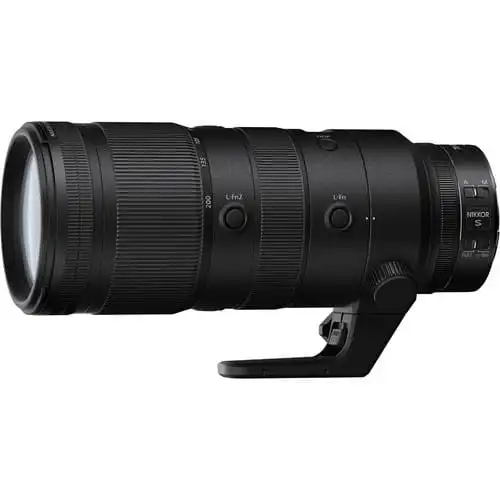
Looking for a Nikon Z telephoto lens rental in Kenya for your safari, wildlife photography or Kenya holiday? The NIKKOR Z 70-200mm f/2.8 VR S is a premium professional zoom lens that combines a versatile telephoto range with a fast f/2.8 aperture, making it an excellent choice for wildlife, safari, portraits, events and travel photography.
Unlike longer super-telephoto lenses such as the NIKKOR Z 180-600mm, the 70-200mm is designed for closer wildlife encounters, environmental portraits, people, travel photography and situations where a wider field of view is important.
Its constant f/2.8 maximum aperture makes the lens particularly useful when photographing in low light, including early-morning and late-afternoon game drives.
For tourists visiting Kenya, the NIKKOR Z 70-200mm f/2.8 VR S can be a valuable second lens alongside a longer wildlife lens.
MaraZooms Safaris & Cameras Africa offers NIKKOR Z 70-200mm f/2.8 VR S rental and hire in Kenya for international tourists, wildlife photographers, travel photographers, safari enthusiasts and professional photographers.
The lens is particularly useful for visitors travelling to destinations such as the Masai Mara, Amboseli, Laikipia, Ol Pejeta, Samburu, Tsavo, Lake Nakuru and Nairobi National Park.
For tourists staying at hotels within the Nairobi Metropolitan Area, camera and lens equipment can be delivered to the agreed hotel. If you are flying from Nairobi to your safari destination, delivery and collection can also be arranged at Wilson Airport.
Why Rent the NIKKOR Z 70-200mm f/2.8 VR S in Kenya?
The NIKKOR Z 70-200mm f/2.8 VR S is a professional-grade lens designed for photographers who need speed, sharpness and versatility.
Its 70-200mm focal range is particularly useful when wildlife is relatively close or when the photographer wants to include more of the surrounding environment.
The constant f/2.8 aperture is another major advantage.
You can shoot at f/2.8 at:
- 70mm
- 100mm
- 135mm
- 200mm
The maximum aperture does not become slower as you zoom.
This makes it particularly useful during the changing light of a safari.
NIKKOR Z 70-200mm for Safari Photography
A safari is not exclusively about photographing distant animals.
Some of the most memorable photographs can be made when wildlife comes relatively close to the vehicle.
A 600mm lens may be too tight when a lion walks close to the safari vehicle.
A 70-200mm lens gives you considerably more flexibility.
At 70mm, you can photograph larger scenes.
At 100-135mm, you can capture animals within their environment.
At 200mm, you can create tighter wildlife portraits.
This makes the NIKKOR Z 70-200mm particularly useful as a short telephoto safari lens.
NIKKOR Z 70-200mm for Masai Mara Wildlife
The Masai Mara is one of Kenya’s most famous wildlife destinations and attracts international tourists and photographers throughout the year.
The area is renowned for:
- Lions
- Leopards
- Cheetahs
- Elephants
- Giraffes
- Wildebeest
- Zebras
- Buffalo
- Hippos
- Birds of prey
The 70-200mm is especially useful when wildlife is close to the safari vehicle.
At 70mm, you can photograph an animal within its surroundings.
At 135-200mm, you can create tighter portraits.
For distant predators or wildlife across the plains, however, a longer lens such as a NIKKOR Z 180-600mm will generally be more appropriate.
The 70-200mm therefore works particularly well as a complementary lens to a super-telephoto.
Great Migration Photography
The Great Migration creates many different types of photographic opportunities.
While long lenses are useful for distant wildebeest and predators, a 70-200mm can be valuable for capturing larger scenes and closer action.
Use 70mm for:
- Herds within the landscape
- Environmental scenes
- Dust and movement
- Groups of animals
- Safari vehicle scenes
Use 135-200mm for:
- Individual wildebeest
- Zebras
- Close action
- Wildlife portraits
During a river crossing, a 70-200mm can be particularly useful when animals approach the vehicle or when you want to capture the wider scene rather than isolate a single animal.
NIKKOR Z 70-200mm for Amboseli
Amboseli National Park is famous for its elephants and iconic views of Mount Kilimanjaro.
The 70-200mm is particularly useful here because the shorter focal length allows photographers to show wildlife within the landscape.
At 70mm, you can include substantial environmental context.
At 100-200mm, you can create elephant portraits while retaining some of the surrounding landscape.
For photographs of elephants with Mount Kilimanjaro, this lens can be much more useful than an extremely long telephoto.
It is particularly valuable when the photographer wants the relationship between the animal and its environment to be part of the photograph.
NIKKOR Z 70-200mm for Laikipia and Ol Pejeta
The Laikipia region is an important destination for conservation and wildlife photography.
At Ol Pejeta Conservancy, photographers can encounter:
- Rhinos
- Elephants
- Lions
- Leopards
- Giraffes
- Buffalo
- Birds
The 70-200mm can be useful for environmental portraits and closer encounters.
For example, rather than photographing only the head of a rhino, you can include the surrounding conservation landscape.
A longer lens remains preferable when wildlife is far away, but the 70-200mm can produce excellent environmental wildlife photographs.
NIKKOR Z 70-200mm in Samburu
Samburu National Reserve provides opportunities to photograph northern Kenya’s distinctive wildlife.
These include:
- Grevy’s zebra
- Reticulated giraffe
- Gerenuk
- Beisa oryx
- Elephants
- Lions
- Leopards
- Birds
The 70-200mm can be particularly useful for environmental wildlife photography.
At 70mm, you can show the animal against the dramatic Samburu landscape.
At 200mm, you can create tighter portraits when wildlife comes closer.
For distant animals and birds, a longer telephoto remains preferable.
NIKKOR Z 70-200mm for Tsavo
Tsavo East and Tsavo West offer enormous landscapes and diverse wildlife.
The 70-200mm is useful for photographing wildlife within those landscapes.
At 70mm, you can capture environmental scenes.
At 100-200mm, you can photograph larger animals and closer encounters.
Because Tsavo is so expansive, however, wildlife can sometimes be far away.
A 180-600mm or similar super-telephoto lens would therefore be a better choice when maximum reach is the primary objective.
NIKKOR Z 70-200mm for Lake Nakuru
The lens can also be useful for Lake Nakuru photography, particularly when photographing larger birds and wildlife at relatively close distances.
Photographers may encounter:
- Flamingos
- Pelicans
- Eagles
- Herons
- Rhinos
- Giraffes
- Buffalo
The 200mm maximum provides some telephoto reach, but serious bird photographers will generally prefer a longer lens.
The strength of the 70-200mm at Lake Nakuru is its ability to combine wildlife with the surrounding environment.
Fast f/2.8 Aperture for Safari Photography
One of the biggest reasons photographers rent the NIKKOR Z 70-200mm f/2.8 VR S is its constant f/2.8 aperture.
This is particularly useful during early-morning and late-afternoon game drives.
Safari photography often takes place during the golden hours when the light is changing rapidly.
A fast aperture allows more light to reach the camera sensor.
This can help photographers maintain faster shutter speeds when photographing moving wildlife.
It can also create a shallow depth of field for wildlife portraits.
Wildlife Photography in Low Light
Early morning game drives can begin before the sun is fully above the horizon.
This can produce beautiful but challenging light.
The f/2.8 aperture gives the photographer more flexibility than a slower telephoto lens.
It is useful for:
- Lions at dawn
- Leopards in low light
- Elephants at sunrise
- Wildlife silhouettes
- Birds in shaded areas
- Evening game drives
The lens’s fast aperture is one of its major advantages over many slower safari zooms.
Wildlife Portraits with the NIKKOR Z 70-200mm
At 135-200mm, the lens can produce excellent wildlife portraits when the subject is close enough.
You can photograph:
- Lion faces
- Elephant portraits
- Giraffe heads
- Rhino portraits
- Zebra
- Buffalo
- Cheetahs
The f/2.8 aperture can help separate the animal from the background.
This is particularly useful when the background contains bushes, grass or other visual distractions.
NIKKOR Z 70-200mm for Environmental Wildlife Photography
One of the biggest advantages of the lens is its ability to show wildlife in context.
Wildlife photographs do not always need to be tightly cropped.
A giraffe standing beneath an acacia tree can be more powerful when you can see the tree and landscape.
An elephant walking across Amboseli with Mount Kilimanjaro in the background can benefit from a wider composition.
A lion resting among the golden grass of the Masai Mara can be photographed together with the surrounding plains.
The 70-200mm is particularly good for these types of images.
NIKKOR Z 70-200mm for Travel Photography in Kenya
The lens is not limited to wildlife.
For international tourists, the NIKKOR Z 70-200mm can be useful throughout a Kenya trip.
It can be used for:
- Safari photography
- Travel portraits
- People photography
- Events
- Cultural photography
- Landscapes
- Architecture
- Nairobi photography
- Beach photography
- Sports
- Wildlife
Its 70mm starting point is wide enough for many portrait and travel situations while 200mm provides useful compression and reach.
NIKKOR Z 70-200mm for Safari Portraits
The f/2.8 aperture makes the lens particularly useful for portraits.
International tourists can use it for:
- Travel portraits
- Safari guides
- Group photographs
- Cultural experiences
- People in natural environments
- Environmental portraits
At 70-100mm, you can include more of the environment.
At 135-200mm, you can create tighter portraits with stronger background separation.
NIKKOR Z 70-200mm for Video
The lens can also be useful for video production.
The combination of a versatile focal range, fast aperture and stabilization makes it useful for:
- Safari video
- Travel films
- Documentary footage
- Interviews
- Events
- Wildlife video
- Tourism content
The 70-200mm range provides useful flexibility when filming subjects from a fixed position.
Nikon Z Cameras Compatible with the Lens
The NIKKOR Z 70-200mm f/2.8 VR S is designed for Nikon Z-mount mirrorless cameras.
Popular compatible Nikon Z cameras include:
- Nikon Z5
- Nikon Z6 II
- Nikon Z6 III
- Nikon Z7 II
- Nikon Z8
- Nikon Z9
- Nikon Z50
- Nikon Z50 II
- Nikon Zf
- Nikon Zfc
- Other compatible Nikon Z-mount cameras
On Nikon DX-format Z cameras such as the Z50, the lens provides an approximately 105-300mm full-frame-equivalent field of view due to the 1.5× crop factor.
This can make the lens particularly useful as a short-to-medium telephoto on a Nikon Z DX body.
NIKKOR Z 70-200mm vs NIKKOR Z 180-600mm
These two lenses serve very different purposes.
NIKKOR Z 70-200mm f/2.8 VR S:
- 70-200mm range
- Constant f/2.8 aperture
- Excellent low-light performance
- Excellent for close wildlife
- Excellent for environmental photography
- Excellent for portraits
- More versatile for travel
NIKKOR Z 180-600mm:
- 180-600mm range
- Much greater wildlife reach
- Better for distant animals
- Better for birds
- Better for distant predators
- More specialized wildlife lens
For a serious safari photographer, carrying both can create an excellent two-lens wildlife setup.
Use the 70-200mm for close and environmental wildlife.
Use the 180-600mm for distant wildlife and birds.
NIKKOR Z 70-200mm vs NIKKOR Z 100-400mm
The NIKKOR Z 100-400mm provides considerably more telephoto reach.
The 70-200mm has a major advantage in maximum aperture.
The 70-200mm provides a constant f/2.8, while the 100-400mm has a slower variable aperture.
Therefore:
70-200mm f/2.8: better for low light, portraits and close wildlife.
100-400mm: better for greater wildlife reach.
For early morning and evening photography, the f/2.8 aperture of the 70-200mm can be particularly valuable.
NIKKOR Z 70-200mm vs 70-200mm f/4
Nikon also produces a NIKKOR Z 70-200mm f/4 VR S.
The two lenses have the same focal range but different maximum apertures.
The f/2.8 version provides one additional stop of light compared with f/4.
This makes the f/2.8 particularly attractive for:
- Early morning safari
- Evening photography
- Wildlife action
- Portraits
- Background separation
- Events
- Low-light photography
The f/4 version is generally the more compact option, while the f/2.8 is the higher-performance choice.
Why International Tourists Rent the NIKKOR Z 70-200mm in Kenya
International tourists often need more than one type of lens during a Kenya safari.
A super-telephoto is excellent for distant wildlife, but it can be too tight for close encounters, environmental photographs and portraits.
The NIKKOR Z 70-200mm f/2.8 provides a complementary option.
It can be particularly useful for photographers carrying a second lens such as the NIKKOR Z 180-600mm.
This two-lens approach can cover a very broad range of safari photography situations.
Renting locally can also eliminate the need to purchase an expensive professional lens for a single trip.
Nairobi Hotel Delivery for Safari Tourists
MaraZooms Safaris & Cameras Africa provides camera and lens rental services designed around the schedules of international safari tourists.
If you are staying at a hotel within the Nairobi Metropolitan Area, the NIKKOR Z 70-200mm f/2.8 VR S can be delivered to the agreed hotel.
This allows you to receive the equipment and familiarize yourself with the lens before leaving Nairobi.
Wilson Airport Delivery and Collection
If you are flying from Wilson Airport to your safari destination, delivery and collection can also be arranged at Wilson Airport.
This is particularly convenient for tourists flying from Nairobi to the Masai Mara, Amboseli or other safari destinations.
You can arrange collection around your flight schedule and return the equipment through the agreed collection process.
Who Should Rent the NIKKOR Z 70-200mm f/2.8 VR S?
This lens is particularly suitable for:
- International safari tourists
- Nikon Z camera users
- Wildlife photographers
- Travel photographers
- Professional photographers
- Portrait photographers
- Safari videographers
- Event photographers
- Masai Mara visitors
- Amboseli visitors
- Laikipia and Ol Pejeta visitors
- Samburu travelers
- Tsavo visitors
- Photographers needing excellent low-light performance
- Photographers wanting environmental wildlife photographs
- Photographers using a second lens alongside a 180-600mm or similar telephoto
Rent the NIKKOR Z 70-200mm f/2.8 VR S in Kenya
The NIKKOR Z 70-200mm f/2.8 VR S is a premium professional Nikon Z-mount zoom lens that offers an ideal combination of 70-200mm versatility, constant f/2.8 aperture and stabilization.
For Kenya safari photography, it is particularly useful for close wildlife encounters, environmental wildlife photographs, safari portraits, early-morning photography and travel photography.
It is an excellent complement to a longer telephoto such as the NIKKOR Z 180-600mm.
The lens is particularly useful in the Masai Mara, Amboseli, Laikipia, Ol Pejeta, Samburu, Tsavo, Lake Nakuru and Nairobi National Park.
For international tourists, MaraZooms Safaris & Cameras Africa offers hotel delivery within the Nairobi Metropolitan Area, as well as delivery and collection at Wilson Airport for photographers flying onward to their safari destination.
Rent or hire the NIKKOR Z 70-200mm f/2.8 VR S in Kenya for safari, wildlife, travel, portrait and low-light photography.

Reviews
There are no reviews yet.