
Sony 200-600mm vs Sony 100-400mm for Safari: Which Is Better in Kenya?
Masai Mara, Amboseli & Other Wildlife Destinations
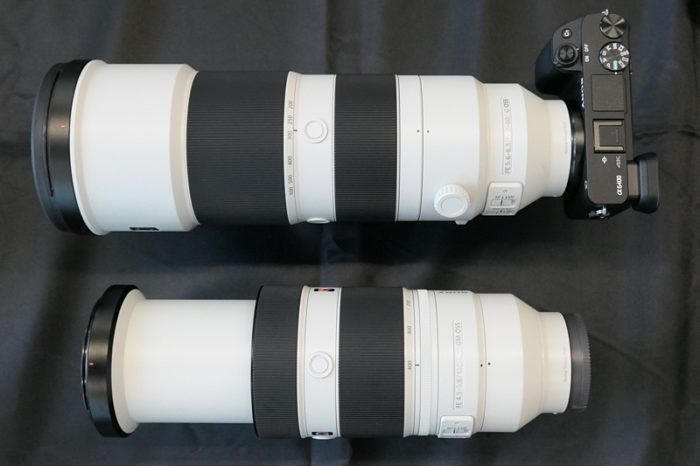
If you are planning a wildlife photography safari in Kenya and use a Sony E-mount camera, two of Sony’s most popular telephoto zoom lenses deserve serious consideration: the Sony FE 200-600mm F5.6-6.3 G OSS and the Sony FE 100-400mm F4.5-5.6 GM OSS.
Both lenses are excellent for wildlife photography, but they serve somewhat different purposes.
The Sony 100-400mm GM is the more versatile and comparatively lighter option, giving you a much wider 100mm starting point and a brighter maximum aperture. The Sony 200-600mm G, however, is purpose-built around long-range wildlife photography and provides substantially more reach at the long end.
So, which is better for a Kenya safari?
For a photographer whose primary goal is wildlife photography, distant animals, birds and tight wildlife portraits, I would generally choose the Sony 200-600mm.
For a photographer who wants a more flexible lens for wildlife, landscapes, close encounters, environmental portraits and general travel photography, the Sony 100-400mm GM can be the better all-round choice.
The answer becomes even more interesting when comparing destinations such as the Masai Mara, Amboseli, Tsavo and Lake Nakuru.
Sony 200-600mm vs 100-400mm: Key Differences
| Feature | Sony 200-600mm G | Sony 100-400mm GM |
|---|---|---|
| Focal length | 200-600mm | 100-400mm |
| Maximum aperture | f/5.6-6.3 | f/4.5-5.6 |
| Full-frame format | Yes | Yes |
| APS-C equivalent | 300-900mm | 150-600mm |
| Stabilization | Optical SteadyShot | Optical SteadyShot |
| Minimum focus distance | 2.4m | 0.98m |
| Maximum magnification | 0.20x | 0.35x |
| Weight | 2,115g | 1,395g |
| Filter size | 95mm | 77mm |
| Teleconverter compatibility | 1.4x and 2x | 1.4x and 2x |
| Best for | Distant wildlife and birds | Versatility and closer wildlife |
| Main advantage | 600mm reach | 100mm wide end and lower weight |
Sony lists the 200-600mm at 2,115g, with a 200-600mm focal range, 2.4m minimum focus distance and 0.20x maximum magnification. The 100-400mm GM weighs 1,395g without its tripod mount, focuses as close as 0.98m and reaches 0.35x maximum magnification.
That means the 100-400mm is approximately 720g lighter than the 200-600mm.
That is a significant difference when you are carrying camera equipment throughout a full day of safari.
Is the Sony 200-600mm Better Than the 100-400mm for Safari?
For dedicated wildlife photography, yes, in most situations.
The biggest reason is reach.
The 200-600mm gives you an additional 200mm at the long end.
At 400mm, an animal that is relatively distant may occupy only part of the frame. At 600mm, you can produce a much tighter composition without moving the vehicle closer.
This matters when photographing:
- Leopards
- Cheetahs
- Lions
- Birds
- Rhinos
- Small antelope
- Distant elephants
- Wildlife portraits
- Animals across open plains
The 100-400mm is certainly capable of wildlife photography, but it is more of a versatile telephoto zoom.
The 200-600mm is much more of a dedicated wildlife specialist.
Is the Sony 100-400mm Better Than the 200-600mm in Some Situations?
Absolutely.
The biggest advantage of the 100-400mm is its 100mm starting point.
That is a huge difference in a safari vehicle.
Imagine a lion suddenly walks very close to your vehicle.
At 600mm, you may only be able to photograph its face.
At 400mm, you have more room.
At 200mm, you have even more room.
At 100mm, you can potentially photograph the entire animal and surrounding environment.
This makes the 100-400mm particularly useful for unpredictable encounters.
Safari photography is not always about reaching as far as possible.
Sometimes the animal is too close.
Sony 200-600mm vs 100-400mm for the Masai Mara
The Masai Mara is arguably the strongest use case for the Sony 200-600mm.
The Mara’s open grasslands can produce wildlife encounters at a wide variety of distances.
You may encounter:
- Lions resting in the grass
- Leopards in trees
- Cheetahs on open plains
- Elephants at a distance
- Wildebeest herds
- Zebras
- Giraffes
- Birds of prey
- Smaller wildlife
When animals are distant, the 600mm end becomes extremely useful.
For leopard photography
The 200-600mm is particularly attractive.
A leopard may be:
- High in a tree
- Across a river
- Hidden in vegetation
- Several hundred metres from the vehicle
You may not be able to position the vehicle exactly where you want.
The extra reach can therefore make the difference between getting a recognizable wildlife portrait and having to crop heavily.
For lions
Again, the 200-600mm generally wins for distant lions.
A lion pride can occupy a large area, and individual animals may be positioned at different distances.
The 600mm end gives you greater flexibility for isolating one animal.
For cheetahs
The 200-600mm is also excellent.
Cheetahs frequently occupy open areas where they may be relatively distant from the vehicle.
The additional reach helps produce tighter compositions without disturbing the animals.
For wildebeest and zebras
This is more balanced.
Large herds can benefit from the 100-400mm because you may want to photograph the animals and the surrounding landscape.
For individual animals or distant subjects, the 200-600mm becomes more useful.
Masai Mara verdict
Dedicated wildlife photography: Sony 200-600mm
Wildlife + landscape: Sony 100-400mm
Bird photography: Sony 200-600mm
Close encounters: Sony 100-400mm
Wildlife portraits: Sony 200-600mm
Sony 200-600mm vs 100-400mm for Amboseli
Amboseli National Park is particularly interesting because the photographic opportunities aren’t limited to close-up wildlife.
You may want to photograph:
Elephant + Mount Kilimanjaro + African landscape
This type of photograph requires a completely different focal length from a tight elephant portrait.
The 100-400mm therefore has a strong advantage when you want to include more of the surroundings.
At 100mm, you can create much wider environmental compositions.
But when an elephant is far away and you want to photograph its face, tusks or details, the 200-600mm is much more powerful.
For Amboseli elephants
I’d divide it like this:
Elephant portraits: 200-600mm
Elephant herds: Either
Elephants with Kilimanjaro: 100-400mm
Distant wildlife: 200-600mm
General Amboseli photography: 100-400mm
If your primary goal is wildlife rather than landscapes, however, I’d still take the 200-600mm.
Sony 200-600mm vs 100-400mm for Tsavo
Tsavo is another destination where reach can be valuable.
Wildlife can be encountered at varying distances, and the ability to isolate an animal from its surroundings can be particularly useful.
The 200-600mm gives you the advantage when:
- Animals are far away
- You want detailed wildlife portraits
- You’re photographing birds
- You’re photographing smaller wildlife
- You want strong subject isolation
The 100-400mm becomes more attractive when:
- Animals are close
- You want environmental images
- You want to photograph landscapes
- You are travelling with limited luggage
For a dedicated wildlife photographer, I’d still lean toward the 200-600mm.
Sony 200-600mm vs 100-400mm for Lake Nakuru
Lake Nakuru can provide excellent opportunities for both mammals and birds.
This makes the comparison interesting.
For:
- Rhinos
- Lions
- Giraffes
- Flamingos
- Eagles
- Other birds
the 200-600mm provides more reach.
Bird photography particularly benefits from longer focal lengths.
The 100-400mm is more useful when you want to capture the animal within the broader environment or when larger animals approach relatively close.
For a photographer visiting Lake Nakuru primarily for wildlife and bird photography, I would favor the 200-600mm.
Which Lens Is Better for Birds?
This is one of the clearest advantages of the Sony 200-600mm.
Birds are relatively small subjects.
Even when a bird is not particularly far away, 400mm may not provide enough frame-filling reach.
At 600mm, you have substantially more ability to fill the frame.
This is particularly useful for:
- Eagles
- Vultures
- Kingfishers
- Bee-eaters
- Rollers
- Storks
- Kori bustards
- Secretary birds
- Flamingos
- Birds of prey
- Birds in flight
Both lenses are compatible with Sony’s 1.4x and 2x teleconverters. Sony specifies that the 100-400mm can reach 560mm with the 1.4x or 800mm with the 2x, while the 200-600mm can reach 840mm or 1,200mm respectively.
However, teleconverters reduce the available aperture, so they are not necessarily something you want to use all the time.
For straightforward safari bird photography, I’d rather have the native 600mm of the 200-600mm.
Which Lens Is Better for Leopards?
Sony 200-600mm.
Leopards are one of the strongest reasons to choose the longer lens.
A leopard can be difficult to find and may be positioned high in a tree.
Once you find it, you may be unable to get closer.
The 600mm focal length allows you to make better use of that encounter.
You can capture:
- Leopard portraits
- Facial details
- Eyes
- Leopards in trees
- Leopards surrounded by foliage
- Distant leopard sightings
The 100-400mm can certainly photograph leopards, but the 200-600mm gives you considerably more reach.
Which Lens Is Better for Elephants?
This is much closer.
Elephants are huge.
You often don’t need 600mm to photograph an elephant.
In fact, if an elephant approaches your vehicle, 600mm may be far too tight.
The 100-400mm gives you much more flexibility.
At 100mm, you can photograph an elephant together with its surroundings.
At 200-300mm, you can capture an individual elephant.
At 400mm, you can create a tighter portrait.
The 200-600mm becomes useful when the elephant is distant or when you want detailed close-ups without physically moving closer.
Elephant verdict
Close elephants: 100-400mm
Environmental elephant photography: 100-400mm
Distant elephants: 200-600mm
Elephant portraits/details: 200-600mm
Which Lens Is Better for Wildlife Portraits?
Sony 200-600mm.
The longer focal length makes it easier to isolate individual animals.
For example, instead of photographing an entire lion pride, you can concentrate on one lion’s:
- Eyes
- Face
- Mane
- Expression
- Fur
- Body details
This is especially useful when the animal is far away.
The 100-400mm is still excellent for portraits, but the 200-600mm gives you more working distance and tighter framing.
Which Lens Is Better for Environmental Wildlife Photography?
Sony 100-400mm.
This is probably the strongest category for the 100-400mm.
Environmental wildlife photography is about showing the animal and its surroundings.
Examples include:
- Elephant beneath Mount Kilimanjaro
- Giraffe against a wide African landscape
- Lion in the Mara grasslands
- Zebra herd crossing an open plain
- Flamingos around Lake Nakuru
- Wildlife beneath a dramatic sunset
The 100mm end gives you considerably more flexibility for these compositions.
Which Lens Is Better for Close Wildlife Encounters?
Sony 100-400mm.
This is one of the biggest differences between the two lenses.
At 100mm, you can quickly zoom out when an animal approaches.
The 200-600mm starts at 200mm, which can already be quite tight with a large animal nearby.
If you are photographing elephants, giraffes, buffalo or lions that regularly approach safari vehicles, the 100-400mm can be much easier to use.
Sony 100-400mm vs 200-600mm: Which Is More Versatile?
The 100-400mm.
Its 100-400mm range covers a much broader range of photographic situations.
You can use it for:
- Wildlife
- Birds
- Landscapes
- Environmental portraits
- Sports
- Travel
- Outdoor events
- Close subjects
- Distant subjects
The 200-600mm is more specialized.
It excels when you need reach.
That is exactly why it is so attractive for wildlife photographers.
Which Lens Is Better for a One-Lens Safari Setup?
This depends on what you mean by “one lens.”
If you mean:
I only want one lens for wildlife photography.
Choose the 200-600mm.
If you mean:
I only want one lens for my entire safari, including wildlife and landscapes.
The 100-400mm makes more sense.
That’s because a safari isn’t always about photographing animals.
You may want to photograph:
- Landscapes
- People
- Safari vehicles
- Camps
- Lodge interiors
- Mount Kilimanjaro
- Sunsets
- Environmental scenes
The 100-400mm gives you greater flexibility for those situations.
Which Lens Is Better for a Beginner?
I’d lean toward the 100-400mm GM for a beginner who wants a manageable safari setup.
Why?
Because it is:
- Lighter
- Easier to handle
- Easier to frame with
- More flexible
- Better for close subjects
- More useful outside wildlife photography
The Sony 100-400mm weighs 1,395g without the tripod mount, compared with 2,115g for the 200-600mm.
That 720g difference is significant.
However, if the beginner has one clear objective:
“I want the best possible wildlife photographs from my Kenya safari.”
I’d recommend learning with the 200-600mm.
Which Lens Is Easier to Carry on Safari?
The 100-400mm GM, by a considerable margin.
The difference is approximately 720g before considering any other equipment.
That’s roughly the weight of another substantial camera accessory or lens.
It also has a smaller physical profile.
Sony lists the 100-400mm at approximately 93.9 × 205mm, compared with approximately 111.5 × 318mm for the 200-600mm.
This can matter when:
- Packing for safari
- Travelling between parks
- Taking domestic flights
- Carrying equipment around a lodge
- Moving between safari vehicles
- Photographing handheld for several hours
Which Lens Has the Better Maximum Aperture?
The 100-400mm GM.
It has a maximum aperture of f/4.5-5.6, while the 200-600mm is f/5.6-6.3.
That gives the 100-400mm an advantage when light is limited.
This can matter during:
- Early morning game drives
- Late afternoon drives
- Cloudy weather
- Forested areas
- Dusk photography
However, the difference isn’t enormous at the overlapping focal lengths.
The bigger advantage of the 200-600mm is that it gives you considerably more reach.
For wildlife, reach often matters more than a modest aperture advantage.
What About Minimum Focus Distance?
The 100-400mm has another important advantage here.
Sony specifies a minimum focus distance of 0.98m and maximum magnification of 0.35x. The 200-600mm focuses down to 2.4m with a maximum magnification of 0.20x.
That means the 100-400mm is considerably more capable when your subject is close.
Although this isn’t usually the deciding factor for large African wildlife, it adds to the lens’s overall versatility.
It can also be useful for photographing:
- Flowers
- Insects
- Small details
- Objects around safari camps
- Close wildlife
What About Sony APS-C Cameras?
This comparison changes slightly when using a Sony APS-C body such as an A6700.
The Sony 200-600mm provides a full-frame equivalent field of view of 300-900mm on APS-C.
The 100-400mm provides approximately 150-600mm equivalent.
This makes the 200-600mm an extremely powerful combination on an APS-C Sony camera.
For example:
A6700 + 200-600mm = 300-900mm equivalent
That’s a serious wildlife photography setup.
The 100-400mm becomes:
A6700 + 100-400mm = 150-600mm equivalent
Still excellent, but with a considerably wider field of view.
For dedicated wildlife photography, the 200-600mm therefore becomes particularly compelling on APS-C.
Can the Sony 100-400mm Replace the 200-600mm?
For some photographers, yes.
But they shouldn’t be viewed as identical lenses.
The 100-400mm can replace the 200-600mm if:
- You mostly photograph large animals
- Animals are usually relatively close
- You want environmental photographs
- Weight is important
- You want a versatile travel lens
- You don’t photograph many birds
- You already have another longer lens
It becomes difficult to replace the 200-600mm if:
- Wildlife photography is your main purpose
- You photograph birds
- You photograph leopards
- You photograph distant cheetahs
- You want tight wildlife portraits
- You frequently photograph animals across open plains
Should You Take Both the 100-400mm and 200-600mm?
For a serious wildlife photographer, yes, there are situations where carrying both makes sense.
They can complement each other rather than simply duplicate each other.
You could use:
Sony 100-400mm
For:
- Close animals
- Environmental photography
- Landscapes
- Larger wildlife
- General safari photography
Sony 200-600mm
For:
- Distant animals
- Birds
- Wildlife portraits
- Leopards
- Cheetahs
- Distant elephants
However, there is considerable overlap between 200-400mm.
For most tourists, carrying both may therefore be unnecessary.
A better two-lens setup could sometimes be:
100-400mm + a shorter general-purpose lens
or simply:
200-600mm + 24-70mm/24-105mm
depending on your photography style.
Sony 200-600mm vs 100-400mm for the Great Migration
If your primary reason for visiting Kenya is the Great Migration, I’d lean strongly toward the 200-600mm.
Wildebeest crossings can happen at a distance, and photographers often need to work around the position of the vehicle.
You may want to photograph:
- Individual wildebeest
- Herds
- Crocodile encounters
- River crossings
- Dust
- Dramatic wildlife action
- Lions and other predators
The 600mm reach is valuable for isolating individual animals and action.
But if you want broad photographs showing the scale of the migration, the 100-400mm becomes useful.
For the best overall setup, some photographers would ideally have both a long telephoto and a shorter lens.
Sony 200-600mm vs 100-400mm for Safari: Which One Should You Rent?
If you are travelling to Kenya specifically for wildlife photography, I would choose based on your priorities.
Choose the Sony 200-600mm if:
- Wildlife is the main purpose of your trip
- You want maximum reach
- You photograph birds
- You want tight animal portraits
- You are going to the Masai Mara
- You want to photograph the Great Migration
- You expect many distant subjects
- You use an APS-C Sony body and want extreme reach
Choose the Sony 100-400mm if:
- You want a lighter setup
- You photograph wildlife and landscapes
- You expect close encounters
- You want environmental wildlife images
- You want one versatile telephoto
- You are travelling with limited luggage
- You want a lens that is easier to handle
What Would I Choose for the Masai Mara?
For a dedicated wildlife photography trip, I would choose:
Sony 200-600mm
The Masai Mara is one of the places where the extra 200mm can genuinely make a difference.
The combination of open grasslands, distant animals, predators and birds makes long reach particularly valuable.
For a general holiday where photography is one of several activities, I would be more tempted by the:
Sony 100-400mm GM
because it is considerably easier to carry and much more versatile.
What Would I Choose for Amboseli?
This is more balanced.
If your dream photograph is:
Elephant standing beneath Mount Kilimanjaro
I’d favor the 100-400mm.
If your dream photograph is:
Detailed elephant portrait with the animal filling the frame
I’d favor the 200-600mm.
For a dedicated wildlife photographer, the 200-600mm still wins overall.
What Would I Choose for Tsavo?
I’d choose the 200-600mm for dedicated wildlife photography.
Tsavo offers opportunities for elephants, lions, giraffes, birds and other wildlife, and the extra reach gives you more options when animals are distant.
If you are combining wildlife with general travel photography, however, the 100-400mm is arguably the more convenient travel lens.
Final Verdict: Sony 200-600mm vs Sony 100-400mm for Kenya Safari
The important thing to understand is that these two lenses aren’t really competing for exactly the same photographer.
The Sony 100-400mm GM is the more versatile, lighter and wider-ranging option.
The Sony 200-600mm G is the more specialized wildlife lens.
Choose the Sony 200-600mm for:
Wildlife reach: ★★★★★
Bird photography: ★★★★★
Leopard photography: ★★★★★
Cheetah photography: ★★★★★
Distant animals: ★★★★★
Wildlife portraits: ★★★★★
Portability: ★★★
Environmental photography: ★★★
Choose the Sony 100-400mm GM for:
Wildlife versatility: ★★★★★
Close encounters: ★★★★★
Environmental photography: ★★★★★
Portability: ★★★★★
Low-light advantage: ★★★★☆
Distant wildlife: ★★★☆
Bird photography: ★★★☆
Wildlife portraits: ★★★★
So, Which Sony Lens Is Better for a Kenya Safari?
If you ask me:
“I am going to Kenya primarily to photograph wildlife. Which lens should I rent?”
My answer is:
Sony 200-600mm.
For the Masai Mara, Amboseli, Tsavo and other Kenyan wildlife destinations, the 600mm reach provides a significant advantage for distant animals, birds and wildlife portraits.
But if you ask:
“I want one relatively lightweight lens that can handle wildlife, landscapes, close encounters and general safari photography.”
Then I would choose:
Sony 100-400mm GM.
The 100-400mm should not be dismissed simply because it has less reach. Its 100mm starting point, f/4.5-5.6 aperture, 1,395g weight, 0.98m minimum focus distance and 0.35x maximum magnification make it a remarkably versatile safari lens.
The 200-600mm, meanwhile, is the lens I would reach for when the goal is maximum wildlife reach. Its 600mm end, 2,115g weight, optical stabilization and compatibility with Sony’s 1.4x and 2x teleconverters make it a particularly strong dedicated wildlife option.
The simplest decision:
Masai Mara wildlife photography: 200-600mm
Masai Mara general safari photography: 100-400mm
Amboseli elephants + Kilimanjaro: 100-400mm
Amboseli wildlife portraits: 200-600mm
Tsavo wildlife: 200-600mm
Lake Nakuru birds: 200-600mm
Bird photography: 200-600mm
Close wildlife: 100-400mm
Environmental wildlife: 100-400mm
Distant wildlife: 200-600mm
Lightweight setup: 100-400mm
Maximum reach: 200-600mm
Dedicated wildlife photographer: 200-600mm
General safari traveller: 100-400mm
Renting a Sony 200-600mm or 100-400mm for Your Kenya Safari
If you’re flying into Kenya for a safari and don’t want to purchase an expensive telephoto lens solely for the trip, renting can be a practical alternative.
A photographer staying in Nairobi can collect equipment before heading to destinations such as the Masai Mara, Amboseli, Tsavo or Lake Nakuru, while international visitors can plan their rental around their safari itinerary.
For someone unsure between the two lenses, the best choice ultimately comes down to one question:
Do you want maximum wildlife reach, or maximum versatility?
If the answer is maximum reach, choose the Sony 200-600mm.
If the answer is maximum versatility and lower weight, choose the Sony 100-400mm GM.
MaraZooms Safaris & Cameras Africa focuses on camera and wildlife lens rentals for safari photography in Kenya, with equipment options suited to different safari destinations, photography styles and budgets.
Related MaraZooms Safari Photography Guides
- Sony 200-600mm vs Tamron 150-500mm for Kenya Safari
- Sony 200-600mm vs Sony 400-800mm for Kenya Wildlife Photography
- Best Sony Camera and Lens Combination for a Kenya Safari
- Best Lens for Masai Mara Wildlife Photography
- Best Lens for Amboseli Elephant Photography
- Best Lens for Kenya Bird Photography
- Best Camera Equipment for the Great Migration
- Should You Rent or Buy a Telephoto Lens for an African Safari?
- Best Lightweight Camera Setup for a Kenya Safari
