
Sony 200-600mm vs Sony 400-800mm for Wildlife Safari: Which Is Better in Kenya?
Masai Mara, Amboseli & Other Safari Destinations
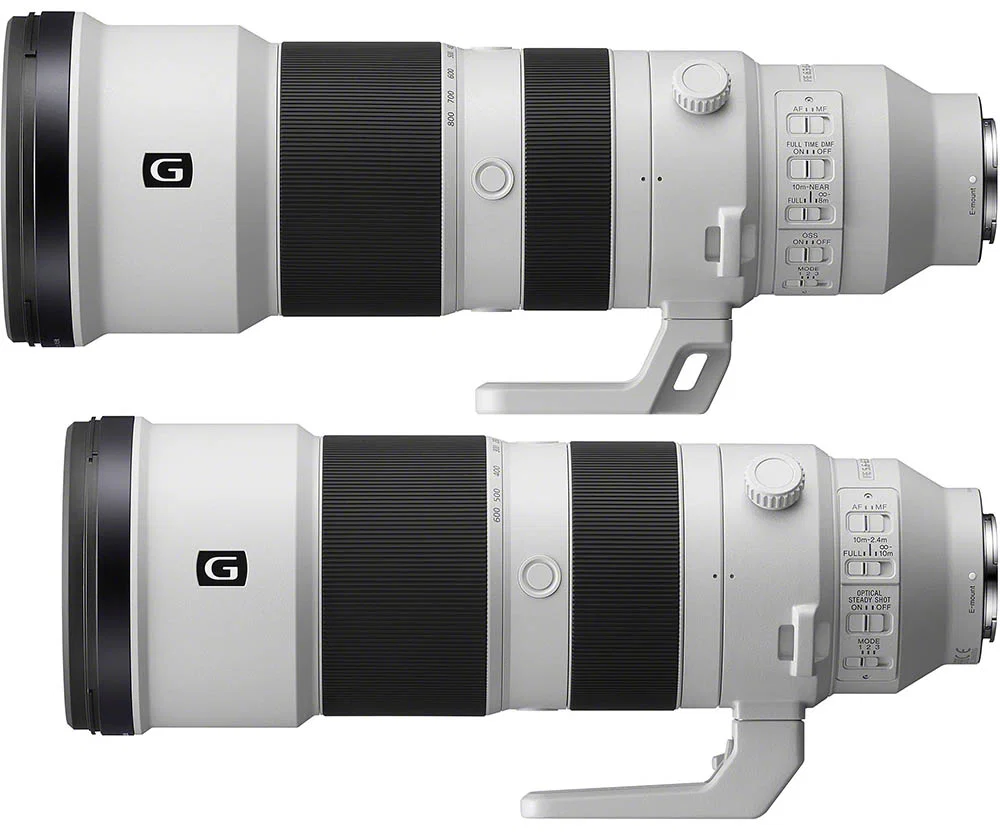
If you are planning a wildlife photography safari in Kenya, the Sony FE 200-600mm F5.6-6.3 G OSS and Sony FE 400-800mm F6.3-8 G OSS are two of the most interesting long telephoto lenses you can consider.
Both are designed with wildlife photography in mind, but they serve different purposes.
The Sony 200-600mm is the more versatile option. Its 200mm starting point makes it easier to photograph large animals at close range, while 600mm provides plenty of reach for most safari encounters.
The Sony 400-800mm is much more specialized. Starting at 400mm and reaching 800mm, it is designed for photographers who prioritize maximum reach for distant wildlife and birds.
So, which is better for a Kenya safari?
For most safari photographers, I would choose the Sony 200-600mm because it is more flexible and easier to use across different wildlife situations.
However, if your main goal is to photograph distant wildlife, birds, small animals and tight wildlife portraits, the Sony 400-800mm can be the more powerful choice.
The right lens therefore depends heavily on what you want to photograph and where you are going.
Sony 200-600mm vs 400-800mm: Quick Comparison
| Feature | Sony 200-600mm G | Sony 400-800mm G |
|---|---|---|
| Focal length | 200-600mm | 400-800mm |
| Maximum aperture | f/5.6-6.3 | f/6.3-8 |
| Minimum focus distance | 2.4m | 1.7m |
| Maximum magnification | 0.20x | 0.70x |
| Weight | Approx. 2,115g | Approx. 2,475g |
| Stabilization | Optical SteadyShot | Optical SteadyShot |
| Teleconverter support | 1.4x and 2x | 1.4x and 2x |
| Starting focal length | 200mm | 400mm |
| Maximum focal length | 600mm | 800mm |
| Best for | General wildlife + reach | Maximum reach + birds |
| Main advantage | Versatility | 800mm reach |
Sony lists the 200-600mm at approximately 2,115g, while the 400-800mm is approximately 2,475g. The 400-800mm therefore adds roughly 360g, although the difference is relatively modest considering the additional reach. Sony also lists a 1.7m minimum focus distance and 0.70x maximum magnification for the 400-800mm.
The Biggest Difference: 200mm vs 400mm at the Wide End
The most important thing to understand about these lenses is that the comparison isn’t simply:
600mm vs 800mm.
It is really:
200-600mm vs 400-800mm.
That difference at the wide end completely changes how you use the lenses.
The 200-600mm can go from relatively wide telephoto framing at 200mm all the way to 600mm.
The 400-800mm starts at 400mm.
That means the 400-800mm is already very tight when a large animal approaches the vehicle.
Imagine a large elephant suddenly walks toward your safari vehicle.
At 800mm, you may only be able to photograph its face.
At 600mm, you can still produce a tight portrait.
At 400mm, you have considerably more room.
With the 200-600mm, you can continue zooming down to 200mm.
That flexibility is a major advantage.
Why 800mm Is So Powerful for Safari Photography
The main attraction of the Sony 400-800mm is obvious:
800mm is a lot of reach.
When wildlife is distant, the extra 200mm over the 200-600mm can make a significant difference.
This is particularly useful for:
- Birds
- Leopards
- Cheetahs
- Small antelope
- Distant lions
- Distant elephants
- Wildlife portraits
- Animals across large open plains
You can fill more of the frame without needing the safari vehicle to move closer.
This can be particularly valuable in Kenya because you cannot always position the vehicle exactly where you want.
There may be:
- Other safari vehicles
- Rivers
- Tall grass
- Roads
- Difficult terrain
- Park regulations
- Animals that simply don’t want to approach
In those situations, having 800mm available can be a major advantage.
Why 200mm Is So Important on Safari
At the same time, 200mm is extremely useful.
Safari encounters are unpredictable.
You might spend 20 minutes photographing a distant lion at 600mm.
Then suddenly the lion gets up and walks directly toward your vehicle.
At that point, the ability to zoom out to 200mm can save the shot.
You can photograph:
- The whole animal
- Multiple animals
- Animals interacting
- Animals with their surroundings
- Close encounters
- Environmental compositions
The 400-800mm simply cannot provide that same flexibility.
This is why I consider the 200-600mm the more universally useful safari lens.
Sony 200-600mm vs 400-800mm for the Masai Mara
The Masai Mara is probably one of the best places in Kenya to appreciate the strengths of both lenses.
The Mara’s open grasslands can provide long-distance wildlife encounters, making the 400-800mm extremely attractive.
But the Mara also produces very close encounters.
You could photograph:
- Lions beside the vehicle
- Leopards in trees
- Cheetahs on open plains
- Elephants crossing the road
- Wildebeest during migration
- Giraffes nearby
- Birds of prey
- Small mammals
For lions
Both lenses are excellent.
The 400-800mm is fantastic when the pride is far away.
The 200-600mm is better when the lions approach the vehicle.
For leopards
I would favor the 400-800mm.
Leopards can be difficult to photograph because they are often:
- Far away
- High in trees
- Hidden in vegetation
- Sitting on riverbanks
The extra reach can help tremendously.
For cheetahs
Again, the 400-800mm has an advantage when the cheetah is far away.
However, if the cheetah approaches the vehicle, 200mm becomes much more useful.
For the Great Migration
This is a very interesting comparison.
The 400-800mm is excellent for:
- Individual wildebeest
- Distant action
- River crossings
- Crocodile encounters
- Predators
- Tight migration photographs
The 200-600mm is better for:
- Herds
- Wider scenes
- Groups of animals
- Environmental photographs
- Close encounters
Masai Mara verdict
Maximum reach: 400-800mm
Versatility: 200-600mm
Birds: 400-800mm
Close wildlife: 200-600mm
Distant wildlife: 400-800mm
General safari photography: 200-600mm
Sony 200-600mm vs 400-800mm for Amboseli
Amboseli is particularly famous for elephants and views of Mount Kilimanjaro.
This makes the 200-600mm especially versatile.
If you want to photograph:
Elephant + Kilimanjaro + landscape
the 200-600mm is much easier to work with.
The 400-800mm is simply too long for many environmental compositions.
However, for:
Elephant portraits
the 400-800mm can produce incredible results when the animal is distant.
At 800mm, you can isolate:
- Elephant eyes
- Tusks
- Ears
- Facial details
- Skin texture
without needing to approach the animal.
Amboseli verdict
Elephants with Kilimanjaro: 200-600mm
Close elephants: 200-600mm
Distant elephant portraits: 400-800mm
Birds: 400-800mm
General wildlife photography: 200-600mm
Sony 200-600mm vs 400-800mm for Tsavo
Tsavo is another environment where the 400-800mm can be extremely useful.
The park is vast and wildlife may be distant.
If you are specifically looking for:
- Elephants
- Lions
- Leopards
- Birds
- Smaller wildlife
the additional reach can be valuable.
However, because encounters can also be relatively close, the 200-600mm remains the safer all-round option.
If I were taking one lens for a general Tsavo safari, I would choose the 200-600mm.
If I were taking equipment specifically for a wildlife photography assignment and knew I would have another camera/lens available for wider compositions, I would seriously consider the 400-800mm.
Which Lens Is Better for Birds?
This is where the 400-800mm becomes particularly attractive.
Birds are small subjects, and 800mm gives you a tremendous amount of reach.
The lens can be especially useful for:
- Eagles
- Vultures
- Kingfishers
- Bee-eaters
- Rollers
- Storks
- Secretary birds
- Kori bustards
- Small birds
- Birds in flight
The 200-600mm is already an excellent bird lens.
But if birds are a major priority, I would choose the 400-800mm.
There is one important consideration, though.
The 400-800mm has a maximum aperture of f/8 at 800mm, compared with f/6.3 at 600mm on the 200-600mm.
That means the 200-600mm can have an advantage in lower light.
For early morning bird photography, this can matter.
So:
Reach: 400-800mm
Low-light advantage: 200-600mm
Is the Sony 400-800mm Too Long for Safari?
For some situations, yes.
This is probably the biggest drawback.
At 400mm, you’re already working at a substantial focal length.
If an animal approaches your vehicle, you may not be able to frame it properly.
This is especially true with:
- Elephants
- Giraffes
- Buffalo
- Large groups of animals
- Close lions
- Close wildlife encounters
The 400-800mm is therefore best viewed as a specialist long-reach wildlife lens, rather than an all-purpose safari lens.
If you’re using it, having another camera with a shorter lens is ideal.
For example:
Camera 1: Sony 400-800mm
Camera 2: Sony 100-400mm or 24-105mm
That gives you an enormous amount of flexibility.
Sony 200-600mm vs 400-800mm for Wildlife Portraits
This is very close.
Both lenses can produce excellent wildlife portraits.
But they approach the task differently.
The 200-600mm gives you the flexibility to frame the animal from 200mm through 600mm.
The 400-800mm gives you much more compression and reach.
For a distant leopard, I would prefer the 400-800mm.
For an elephant that suddenly approaches the vehicle, I would prefer the 200-600mm.
For a distant lion portrait, either can work extremely well.
Which Lens Is Better for Close Wildlife?
Sony 200-600mm.
There is no real competition here.
The 200mm starting point gives you much more room.
The 400-800mm is designed for situations where your subject is already relatively far away.
If your safari regularly produces close encounters, the 200-600mm is much easier to work with.
Which Lens Is Better for Environmental Wildlife Photography?
Sony 200-600mm.
Neither lens is really a landscape lens, but the 200-600mm is considerably better suited to environmental wildlife photography because it reaches down to 200mm.
You can show:
- Animals within the landscape
- Herds
- Wildlife and mountains
- Animals against the sky
- Groups of animals
- Wider compositions
The 400-800mm is much more about isolating the subject.
Which Lens Is Better for Wildlife at Long Distances?
Sony 400-800mm.
This is the reason to buy or rent it.
When you cannot get closer, 800mm gives you a significant advantage.
This can be especially useful in:
- Open grasslands
- Large parks
- Bird photography
- Distant predators
- River crossings
- Wildlife across rivers
- Small animals
If your biggest frustration is:
“The animals are always too far away.”
then the 400-800mm is worth serious consideration.
Which Lens Is Better for a Beginner?
For most beginners, I would recommend the 200-600mm.
It is more forgiving.
You can start at 200mm, find the animal, and then zoom toward 600mm.
The 400-800mm requires more discipline.
At 400mm, finding a moving animal in the viewfinder can already be challenging.
At 800mm, tracking a fast-moving animal becomes even more demanding.
This doesn’t make the 400-800mm a bad beginner lens.
It simply means that a beginner may get more usable photographs with the 200-600mm.
Which Lens Is Better for a Professional Wildlife Photographer?
This depends on the assignment.
For general safari work:
200-600mm
For a dedicated wildlife or bird assignment:
400-800mm
A professional photographer may also benefit from carrying both.
For example:
Camera 1
Sony 400-800mm
For:
- Distant wildlife
- Birds
- Portraits
- Small subjects
Camera 2
Sony 200-600mm or 100-400mm
For:
- Close wildlife
- Environmental shots
- Larger animals
- Wider compositions
This eliminates the need to constantly change lenses.
Sony 400-800mm vs 200-600mm for Birds in Kenya
Kenya is an exceptional birding destination, and if your safari is partly a bird photography trip, the 400-800mm becomes much more attractive.
The additional reach can help you capture smaller species without needing to crop as aggressively.
However, birds don’t always sit still.
For birds in flight, 800mm can sometimes make tracking more difficult.
A 600mm lens may be easier to acquire and track a fast-moving bird.
Therefore:
Stationary distant birds: 400-800mm
Small distant birds: 400-800mm
Birds in flight: 200-600mm can be easier
Birds in low light: 200-600mm
Maximum bird detail: 400-800mm
What About the Weight?
The Sony 400-800mm is heavier.
Sony lists:
200-600mm: approximately 2,115g
400-800mm: approximately 2,475g
The difference is about 360g.
Interestingly, the weight difference isn’t enormous considering that the 400-800mm gives you an additional 200mm of reach.
But the 400-800mm is still a substantial lens.
When you add:
- Camera body
- Spare batteries
- Memory cards
- Camera bag
- Binoculars
- Other lenses
your safari setup can become heavy quickly.
For tourists who are travelling through multiple parks and lodges, this should be considered.
Can You Use the 400-800mm Handheld?
Yes.
Sony designed the 400-800mm as a handheld super-telephoto and provides optical image stabilization.
However, at 800mm, technique becomes extremely important.
Small movements are magnified.
A stable shooting position can make a major difference.
Inside a safari vehicle, you may benefit from:
- A bean bag
- Vehicle support
- A monopod where practical
- Proper hand positioning
- Fast shutter speeds
The 200-600mm is generally more forgiving because the shorter focal lengths are easier to manage.
Sony 200-600mm vs 400-800mm on an APS-C Camera
This is where things get very interesting.
On a Sony APS-C camera such as the A6700, the 200-600mm provides approximately:
300-900mm equivalent
The 400-800mm becomes approximately:
600-1200mm equivalent
That is an enormous amount of reach.
For a dedicated wildlife photographer using an APS-C Sony body, the 400-800mm can therefore become an extremely powerful combination.
However, the framing becomes very tight.
At 1200mm equivalent, finding a moving animal can be difficult.
This is one reason why the 200-600mm can remain the more practical option even when you have an APS-C body.
Which Lens Should You Rent for the Masai Mara?
For most visitors:
Sony 200-600mm
It gives you the flexibility to photograph both distant and relatively close wildlife.
For a dedicated wildlife photographer who already has a second camera with a shorter lens:
Sony 400-800mm
This becomes an excellent specialist lens.
For example:
Sony A7 IV + 400-800mm
paired with:
Sony A7 III + 100-400mm
would give you a highly versatile two-camera safari setup.
Which Lens Should You Rent for Amboseli?
For a general Amboseli safari:
200-600mm
For an elephant and bird photography specialist:
400-800mm
The 200-600mm is especially useful for photographing elephants with Mount Kilimanjaro because you can zoom out considerably more.
The 400-800mm is better for isolating distant wildlife.
Which Lens Should You Rent for Tsavo?
For a general safari:
200-600mm
For dedicated wildlife photography:
400-800mm
For birds:
400-800mm
For a single lens covering many different encounters:
200-600mm
Should You Carry Both?
If photography is the main purpose of your safari, this can be one of the best combinations.
You could use:
200-600mm + 400-800mm
But there is significant overlap between 400mm and 600mm.
A more versatile professional setup could be:
100-400mm + 400-800mm
or:
24-105mm + 400-800mm
This gives you a much wider range of perspectives.
However, the 200-600mm + 400-800mm combination makes sense if your priority is almost entirely wildlife and you want two long-reach options.
So Which One Should You Choose?
Here’s the simplest way to think about it.
Choose the Sony 200-600mm if you want:
- One lens for your safari
- Flexibility
- Close and distant wildlife
- Large animals
- Birds
- Wildlife portraits
- Environmental wildlife
- Easier framing
- A more forgiving lens
Choose the Sony 400-800mm if you want:
- Maximum reach
- Distant wildlife
- Birds
- Tight wildlife portraits
- Small animals
- Wildlife across open plains
- Maximum subject magnification
- A specialist second lens
Final Verdict: Sony 200-600mm vs Sony 400-800mm for Kenya Safari
If you are asking:
“Which lens is better overall for a Kenya safari?”
I would choose the:
Sony 200-600mm
It is the better all-round safari lens.
Its 200mm starting point makes it much easier to handle close encounters, while 600mm is enough reach for the vast majority of safari wildlife photography.
It is particularly well suited to a photographer taking only one telephoto lens.
But if you ask:
“Which lens gives me the most reach for wildlife photography?”
Then the answer is:
Sony 400-800mm
Its 800mm reach makes it the more specialized lens for distant wildlife, birds and tight wildlife portraits.
The trade-off is that 400mm is already quite long.
That means it is less forgiving when animals get close.
My Kenya safari recommendations
| Situation | Better choice |
|---|---|
| One lens for entire safari | 200-600mm |
| Dedicated wildlife photography | 200-600mm |
| Distant wildlife | 400-800mm |
| Birds | 400-800mm |
| Leopards | 400-800mm |
| Cheetahs | 400-800mm |
| Close lions | 200-600mm |
| Close elephants | 200-600mm |
| Elephant + Kilimanjaro | 200-600mm |
| Environmental wildlife | 200-600mm |
| Wildlife portraits | 400-800mm |
| Wildlife across open plains | 400-800mm |
| Beginner photographer | 200-600mm |
| Specialist wildlife photographer | 400-800mm |
| Two-camera professional setup | 400-800mm + shorter lens |
| Maximum reach | 400-800mm |
| Maximum versatility | 200-600mm |
The bottom line
For most people visiting the Masai Mara, Amboseli, Tsavo or other Kenyan safari destinations, the Sony 200-600mm is the safer recommendation because it can handle a much wider range of wildlife encounters.
The Sony 400-800mm is the lens I would choose when reach is the priority. If you are serious about wildlife photography, particularly birds, leopards, distant predators and detailed wildlife portraits, its 800mm reach can be extremely valuable.
In other words:
200-600mm = the better all-round safari lens.
400-800mm = the better specialist long-reach wildlife lens.
And if you are building a serious safari photography kit, there is a strong argument for having a shorter lens on one camera and the 400-800mm on another, rather than expecting the 400-800mm to handle every situation.
Renting a Sony 200-600mm or 400-800mm for a Kenya Safari
For photographers travelling to Kenya specifically for wildlife photography, renting a long telephoto can be more practical than purchasing an expensive lens for a single trip.
MaraZooms Safaris & Cameras Africa can build rental combinations around your safari itinerary, whether you are travelling to the Masai Mara, Amboseli, Tsavo, Lake Nakuru or other Kenyan wildlife destinations.
If you are unsure between the Sony 200-600mm and Sony 400-800mm, the most important question is:
Do you want one flexible safari lens, or maximum reach for specialist wildlife photography?
For flexibility, choose the 200-600mm.
For maximum reach, choose the 400-800mm.
Related MaraZooms Guides
- Sony 200-600mm vs Tamron 150-500mm for Kenya Safari
- Sony 200-600mm vs Sony 100-400mm for Kenya Safari
- Sony A7 III + 200-600mm for Kenya Safari
- Sony A7 IV + 200-600mm for Kenya Safari
- Best Sony Camera and Lens Combination for the Masai Mara
- Best Lens for Amboseli Elephant Photography
- Best Lens for Bird Photography in Kenya
- Best Camera and Lens for the Great Migration
- Should You Rent or Buy a Telephoto Lens for an African Safari?
- Best Long-Reach Lens for Safari Photography
