
Sony 200-600mm vs Tamron 150-500mm for Safari: Which Is Better for Kenya?
Masai Mara, Amboseli, Tsavo & Other Safari Destinations
If you are planning a wildlife photography safari in Kenya, one of the most important decisions you will make is choosing the right telephoto lens. The lens you take can have a major impact on how close your subjects appear, how easily you can frame moving animals, how much detail you capture and how comfortable you are during long game drives.
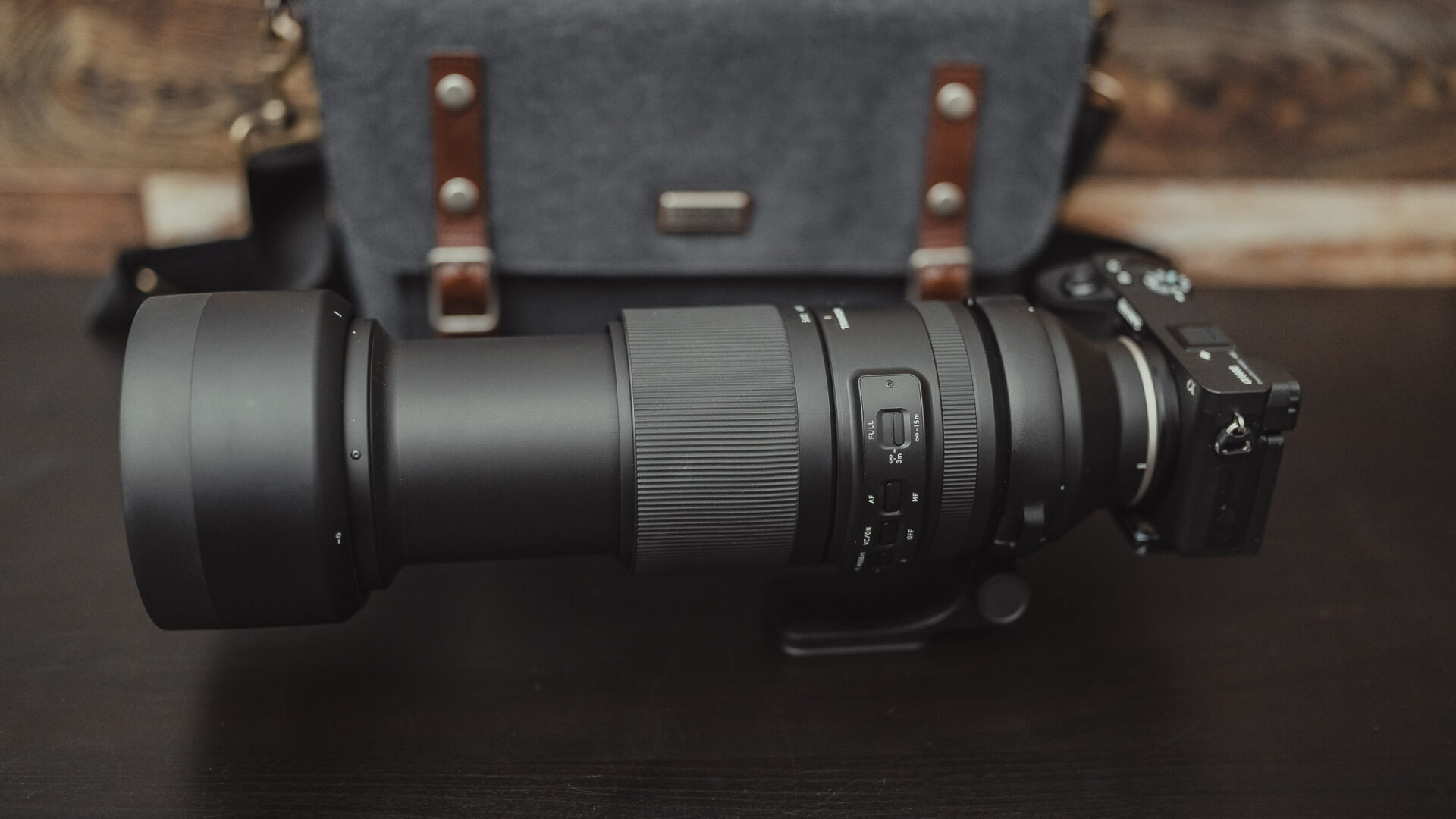
Two particularly interesting options for Sony E-mount photographers are the Sony FE 200-600mm F5.6-6.3 G OSS and the Tamron 150-500mm F5-6.7 Di III VC VXD.
Both lenses offer substantial reach, image stabilization and autofocus, and both can produce excellent wildlife photographs. However, they are designed with slightly different priorities in mind.
So which is better for a Kenya safari: the Sony 200-600mm or Tamron 150-500mm?
For photographers whose main priority is maximum wildlife reach, birds, distant animals and detailed wildlife portraits, the Sony 200-600mm is generally the stronger safari lens.
For photographers who want a smaller, slightly lighter and more flexible telephoto that starts at 150mm, the Tamron 150-500mm can be an excellent choice, particularly when photographing larger animals at relatively close distances.
The best choice ultimately depends on your safari destination, subjects, camera body, photography style and how much equipment you want to carry.
Sony 200-600mm vs Tamron 150-500mm at a Glance
| Feature | Sony FE 200-600mm G OSS | Tamron 150-500mm |
|---|---|---|
| Mount | Sony E | Sony E |
| Focal length | 200-600mm | 150-500mm |
| Maximum aperture | f/5.6-6.3 | f/5-6.7 |
| Stabilization | Optical SteadyShot | Vibration Compensation |
| Weight | 2,115g | 1,725g |
| Minimum focus distance | 2.4m | 0.6m at 150mm / 1.8m at 500mm |
| Maximum magnification | 0.20x | 0.33x approximately |
| Zoom design | Internal zoom | Extending zoom |
| Best strength | Reach and wildlife specialization | Portability and flexibility |
| Particularly strong for | Distant wildlife and birds | General safari and closer wildlife |
| Teleconverter compatibility | Sony 1.4x and 2.0x | Not designed around Sony teleconverters |
| APS-C field of view | 300-900mm equivalent | 225-750mm equivalent |
Sony lists the 200-600mm at 2,115g, with a 2.4m minimum focus distance, 200-600mm range, optical stabilization and compatibility with Sony’s 1.4x and 2.0x teleconverters.
Tamron lists the Sony E version of its 150-500mm at 1,725g without the tripod mount, with a 150-500mm range, f/5-6.7 aperture, Vibration Compensation and a minimum object distance of 0.6m at 150mm and 1.8m at 500mm.
That roughly 390g difference may not sound enormous on paper, but it can become noticeable when you are carrying camera equipment for several hours during repeated game drives.
What Makes the Sony 200-600mm So Good for Kenya Safari Photography?
The biggest reason to choose the Sony 200-600mm is simple:
600mm gives you more reach.
That extra 100mm compared with the Tamron may not sound dramatic, but in wildlife photography every bit of additional reach can matter.
A safari vehicle does not always get as close to an animal as you would like.
You may encounter:
- A lion resting 80 metres away
- A leopard high in a tree
- A cheetah sitting far across the plains
- A rhino at a distance
- A herd of elephants across a river
- A bird perched far away
- A small bird sitting on a distant branch
- Wildlife surrounded by tall grass
In these situations, 600mm can provide a meaningful advantage over 500mm.
The Sony also maintains a relatively consistent physical balance because it uses an internal zoom mechanism. Sony specifically notes that the lens does not change length when zooming, which helps maintain consistent balance during handheld shooting.
That is particularly useful when you are sitting in a safari vehicle and repeatedly moving between different focal lengths.
What Makes the Tamron 150-500mm So Good for Safari?
The Tamron’s greatest advantage is versatility combined with lower weight.
At 150mm, it gives you substantially more flexibility when animals are relatively close.
This can be useful when:
- An elephant approaches the vehicle
- A giraffe is standing nearby
- A lion walks toward the vehicle
- You want to photograph an entire animal
- You want to include the surrounding landscape
- Several animals are together
- You need to quickly pull back from 500mm
The 150mm starting point can be particularly useful because wildlife encounters are unpredictable.
One moment you may be photographing a distant lion at 500mm. Seconds later, that lion may walk toward the vehicle and suddenly 500mm becomes too tight.
The Tamron gives you an additional 50mm of wide-end flexibility compared with the Sony.
It is also approximately 390g lighter than the Sony 200-600mm.
Tamron specifically designed the lens around handheld use, with VXD autofocus and VC stabilization intended to make ultra-telephoto shooting easier without requiring a tripod.
Is 600mm Really Better Than 500mm for Safari?
Generally, yes, when your subject is distant.
But it does not mean that the Sony 200-600mm is automatically better in every situation.
The difference is easier to understand when you think about the size of your subject in the frame.
At the same distance:
600mm gives you 20% more focal length than 500mm.
That means the Sony can produce a tighter framing of distant animals.
This becomes especially valuable for:
- Leopards
- Cheetahs
- Small antelope
- Birds
- Distant lions
- Wildlife portraits
- Animals across open plains
For large animals that are relatively close to the vehicle, however, the difference becomes less important.
A large elephant at close range may actually be easier to photograph at 150mm than at 200mm.
That is where the Tamron’s wider starting point becomes useful.
Sony 200-600mm vs Tamron 150-500mm for the Masai Mara
The Masai Mara is one of the best environments for long telephoto wildlife photography because many encounters take place across relatively open landscapes.
You may photograph:
- Lions
- Leopards
- Cheetahs
- Elephants
- Buffalo
- Giraffes
- Wildebeest
- Zebras
- Topi
- Gazelles
- Birds of prey
For the Masai Mara, I would generally give the Sony 200-600mm the advantage if wildlife photography is your primary objective.
Why?
Because the Mara often rewards reach.
A leopard may be resting in a distant tree. A cheetah may be positioned several hundred metres away. A lion pride may be spread across open grassland.
In those situations, the additional 100mm can help.
The Sony also works particularly well when you want to isolate an animal from its surroundings and create a tighter wildlife portrait.
But the Tamron has an important advantage
If you are a traveller who wants to minimize equipment weight, the 150-500mm makes a lot of sense.
It is also useful when your safari includes plenty of close encounters and environmental photography.
So for the Masai Mara:
Maximum wildlife reach: Sony 200-600mm
Lower weight and greater wide-end flexibility: Tamron 150-500mm
Sony 200-600mm vs Tamron 150-500mm for Amboseli
Amboseli National Park presents a slightly different photography environment.
Amboseli is famous for its elephants and spectacular views toward Mount Kilimanjaro.
For elephant photography, you can often benefit from both wide and long focal lengths.
If an elephant is relatively close, 150mm can be useful for capturing the entire animal and its environment.
If the elephant is farther away, 500-600mm becomes valuable for portraits and details.
Therefore, the Tamron’s 150mm starting point can be particularly attractive in Amboseli.
However, if your primary objective is detailed wildlife photography rather than environmental images, the Sony’s 600mm reach remains valuable.
For Amboseli, I would describe the choice this way:
Elephant portraits and distant wildlife: Sony 200-600mm
Elephants + landscapes + flexible framing: Tamron 150-500mm
If you are using a full-frame Sony body and want a single dedicated wildlife lens, both are excellent options.
Sony 200-600mm vs Tamron 150-500mm for Tsavo
Tsavo can present a different challenge because wildlife encounters can vary considerably.
The parks are enormous, and animals may be encountered at different distances.
Long reach can therefore be extremely useful.
The Sony 200-600mm is particularly attractive when animals are distant and you want to fill more of the frame.
However, the Tamron’s 150mm end can be useful for larger animals and environmental compositions.
For a photographer spending many days on safari, the decision may ultimately come down to whether reach or versatility is more important.
Which Lens Is Better for Lions?
For lions, I would generally choose the Sony 200-600mm if the objective is wildlife photography.
At 600mm, you can produce tighter portraits from a greater distance.
This can be especially useful when a pride is resting far from the vehicle.
However, lions can also approach very close to safari vehicles.
When that happens, the Tamron’s 150mm end becomes useful because it allows you to pull back and capture more of the animal.
Verdict for lions
Distant lions and portraits: Sony 200-600mm
Close lions and environmental photographs: Tamron 150-500mm
Which Lens Is Better for Leopards?
This is one area where I strongly favor the Sony 200-600mm.
Leopards are often difficult to find and may be positioned high in trees or partially hidden in vegetation.
When you finally find one, it may be far away.
Having 600mm available can make a substantial difference.
The additional reach can help you:
- Fill more of the frame
- Capture facial details
- Photograph a leopard in a tree
- Isolate the animal from surrounding vegetation
- Reduce the need for aggressive cropping
For leopard photography in Kenya, the Sony 200-600mm is therefore my preferred option.
Which Lens Is Better for Cheetahs?
Again, the Sony 200-600mm has an advantage when the cheetah is distant.
Cheetahs often hunt across open grasslands, where the subject may be far from the safari vehicle.
The additional reach can be valuable.
However, if the cheetah suddenly runs toward the vehicle, the Tamron’s 150mm end provides greater flexibility.
This illustrates an important point:
The best safari lens isn’t necessarily the lens with the longest focal length. It is the lens that gives you the right combination of reach and framing flexibility for the encounter.
Which Lens Is Better for Elephants?
This one is much closer.
Elephants are enormous animals, and you may encounter them relatively close to the vehicle.
At close range, 200mm can already be quite long.
The Tamron’s 150mm starting point therefore has a real advantage.
It gives you more room to capture:
- The entire elephant
- Multiple elephants
- Elephant families
- Elephants with Kilimanjaro
- Elephants with the surrounding landscape
But the Sony 200-600mm becomes excellent when you want to photograph:
- Elephant faces
- Eyes
- Tusks
- Skin details
- Distant elephant herds
Verdict
For elephant portraits: Sony
For elephants + environment: Tamron
Which Lens Is Better for Birds on Safari?
This is one of the clearest wins for the Sony 200-600mm.
Birds are generally smaller than mammals, so reach matters even more.
The difference between 500mm and 600mm can be useful when photographing:
- Eagles
- Vultures
- Secretary birds
- Kori bustards
- Kingfishers
- Bee-eaters
- Rollers
- Storks
- Flamingos
- Other African bird species
The Sony also supports the optional Sony 1.4x and 2.0x teleconverters, extending the lens to 840mm or 1200mm respectively, although the resulting aperture becomes significantly slower.
For a photographer who wants one lens primarily for wildlife and birds, the Sony 200-600mm is the stronger proposition.
Which Lens Is Better for Wildlife Portraits?
Sony 200-600mm.
At 600mm, you can create tighter compositions without physically getting closer to the animal.
This can be particularly useful for:
- Lion portraits
- Leopard faces
- Cheetah portraits
- Elephant eyes
- Giraffe heads
- Bird portraits
The longer focal length can also help isolate the subject against a distant background.
Which Lens Is Better for Environmental Wildlife Photography?
This is where the Tamron 150-500mm becomes more attractive.
Environmental wildlife photography is about showing the animal within its surroundings, rather than filling the frame entirely with the animal.
For example:
- Elephant beneath Mount Kilimanjaro
- Lion surrounded by the Mara grasslands
- Giraffe against an African sunset
- Zebra herd within the landscape
- Wildebeest crossing a large plain
The 150mm end gives you more flexibility for these compositions.
Which Lens Is Better for a Beginner?
For a beginner, I would consider the Tamron 150-500mm particularly attractive if portability is important.
It gives you:
- 150mm for close subjects
- 500mm for distant wildlife
- Image stabilization
- Fast autofocus
- A relatively manageable size
- Less weight than the Sony
It is a very capable “one telephoto lens” solution.
However, if the beginner is specifically going to Kenya primarily to photograph wildlife and wants maximum reach, I would recommend learning with the Sony 200-600mm.
Which Lens Is Better for a Professional Wildlife Photographer?
For a photographer whose priority is wildlife rather than general travel photography, I would choose the Sony 200-600mm.
The combination of:
200-600mm + optical stabilization + internal zoom + 600mm reach + teleconverter compatibility
makes it an extremely compelling safari lens.
Sony also provides a focus range limiter and wildlife-oriented stabilization modes, including a mode intended to make framing erratic wildlife easier.
Which Lens Is Easier to Carry?
Tamron 150-500mm.
The Tamron weighs approximately 1.725kg, while the Sony weighs approximately 2.115kg.
That’s roughly 390g less for the Tamron.
The difference becomes more significant when you add:
- Camera body
- Extra batteries
- Memory cards
- Camera bag
- Binoculars
- Other lenses
- Accessories
If you’re flying around Africa or trying to keep your safari kit compact, the Tamron’s lower weight is a legitimate advantage.
Does the Sony 200-600mm Have Better Balance?
For many wildlife photographers, yes.
The Sony uses an internal zoom mechanism, so the physical length doesn’t change when you move from 200mm to 600mm. Sony says this helps maintain stable handling and consistent balance while zooming.
The Tamron extends as it zooms toward 500mm.
That doesn’t make the Tamron poorly balanced, but the Sony’s internal zoom design is particularly well suited to repeated focal-length changes while shooting from a safari vehicle.
Which Lens Has Better Close-Focusing Ability?
This is a surprisingly strong advantage for the Tamron.
The Tamron can focus as close as 0.6m at 150mm and 1.8m at 500mm, with a maximum magnification ratio of up to 1:3.1 at 150mm.
The Sony 200-600mm has a minimum focus distance of 2.4m and maximum magnification of 0.20x.
For normal safari wildlife, this may not matter much because your animals are generally far beyond the minimum focusing distance.
But the Tamron can be more versatile for:
- Flowers
- Insects
- Small details
- Close subjects
- General travel photography
This makes it a more versatile travel lens outside the safari vehicle.
What About Image Stabilization?
Both lenses provide stabilization.
The Sony uses Optical SteadyShot, while the Tamron uses Vibration Compensation (VC).
For safari photography, stabilization is useful because you will frequently be shooting handheld from a vehicle.
However, stabilization should not be confused with freezing animal movement.
If a lion is running, for example, increasing shutter speed is more important than relying on stabilization.
A practical safari setup might involve:
Fast shutter speed + appropriate aperture + Auto ISO + animal/subject tracking
rather than simply relying on lens stabilization.
Which Lens Is Better in Low Light?
Neither lens is a low-light specialist because both are relatively slow telephoto zooms.
The Sony is f/5.6 at 200mm and f/6.3 at 600mm.
The Tamron is f/5 at 150mm and f/6.7 at 500mm.
Interestingly, the Tamron starts slightly brighter at the wide end, while the Sony reaches 600mm at f/6.3 compared with the Tamron’s 500mm at f/6.7.
For dawn and dusk safari photography, the camera body becomes important.
A modern full-frame Sony body such as the Sony A7 III or A7 IV can pair very well with either lens.
Sony 200-600mm vs Tamron 150-500mm on an APS-C Sony Camera
This comparison becomes even more interesting if you are using a Sony APS-C camera such as the Sony A6700.
Sony states that the 200-600mm provides an APS-C-equivalent field of view of 300-900mm.
Tamron states that its 150-500mm becomes a 225-750mm full-frame equivalent on APS-C.
Therefore:
Sony 200-600mm on APS-C: 300-900mm equivalent
Tamron 150-500mm on APS-C: 225-750mm equivalent
For dedicated wildlife photography, that makes the Sony particularly powerful on an APS-C body.
However, the Tamron still gives you the wider 225mm-equivalent end, which can be useful for close animals.
Which Lens Should You Rent for a Kenya Safari?
If you are visiting Kenya specifically for wildlife photography, I would make the decision based on your priorities.
Choose the Sony 200-600mm if:
- Wildlife photography is your main purpose
- You want maximum reach
- You photograph birds
- You want tight wildlife portraits
- You expect many distant animals
- You are visiting the Masai Mara
- You are photographing the Great Migration
- You want one serious dedicated wildlife lens
- You are comfortable carrying a heavier lens
Choose the Tamron 150-500mm if:
- You want to reduce weight
- You want more flexibility at the wide end
- You photograph large animals at close range
- You want a more compact travel setup
- You want one lens for wildlife and general outdoor photography
- You value portability highly
What About Taking Both?
For a serious wildlife photographer, taking both lenses can make sense, but I wouldn’t recommend it for everyone.
They overlap considerably.
If you have both, you could use:
Tamron 150-500mm: closer wildlife, environmental portraits and situations where 150mm is useful.
Sony 200-600mm: distant wildlife, birds and tight portraits.
However, if you’re travelling on a normal holiday safari, carrying both may add unnecessary weight.
A better approach may be to choose the lens that best matches your photography style.
My Recommendation for the Masai Mara
If I were choosing specifically for a Masai Mara wildlife photography safari, I would take the:
Sony 200-600mm
The Masai Mara is one of those destinations where the additional reach is particularly valuable.
You can encounter animals at a wide range of distances, and 600mm gives you more flexibility when the subject is far away.
It is especially attractive for:
- Leopards
- Cheetahs
- Lions
- Birds
- Wildlife portraits
- Migration photography
- Distant animals
The Tamron remains an excellent alternative if weight and portability are more important to you.
My Recommendation for Amboseli
For Amboseli, the decision is slightly closer.
If your priority is:
Elephants + Kilimanjaro + environmental photography
I’d seriously consider the Tamron 150-500mm.
If your priority is:
Elephant portraits + distant wildlife + birds
I’d choose the Sony 200-600mm.
My Recommendation for Tsavo
For Tsavo, I would lean toward the Sony 200-600mm for dedicated wildlife photography.
The additional reach can be useful when wildlife is distant, while 200mm is still sufficiently wide for many larger-animal encounters.
Final Verdict: Sony 200-600mm or Tamron 150-500mm?
There isn’t a single winner for every safari photographer.
But if you ask:
Which one would I choose specifically as a wildlife photography lens for Kenya?
My answer is:
Sony 200-600mm
The extra reach to 600mm, internal zoom design, optical stabilization and wildlife-oriented features make it the more specialized safari lens. Sony also supports its 1.4x and 2.0x teleconverters, providing additional reach for photographers who need it.
But the Tamron 150-500mm is not a lesser lens simply because it stops at 500mm.
Its biggest advantages are its lower weight, 150mm wide end, strong stabilization, fast VXD autofocus and excellent close-focusing capability. Tamron specifically designed it as a relatively compact 500mm-class ultra-telephoto for handheld shooting.
The simplest way to choose
For maximum wildlife reach: Sony 200-600mm
For birds: Sony 200-600mm
For leopards and distant big cats: Sony 200-600mm
For wildlife portraits: Sony 200-600mm
For the Great Migration: Sony 200-600mm
For a lighter setup: Tamron 150-500mm
For close elephants: Tamron 150-500mm
For environmental wildlife photography: Tamron 150-500mm
For general travel + wildlife: Tamron 150-500mm
For a dedicated Kenya wildlife photography setup: Sony 200-600mm
Should You Rent the Sony 200-600mm or Tamron 150-500mm for Your Kenya Safari?
If you are travelling to Kenya primarily to photograph wildlife, the Sony 200-600mm is the lens I would recommend first.
For the Masai Mara in particular, its 600mm reach can be extremely useful when animals are distant, while the 200mm end remains practical for larger subjects and many safari encounters.
If you are more concerned about keeping your camera bag lighter and want a lens that can move more easily between wildlife and general outdoor photography, the Tamron 150-500mm is an excellent alternative.
For visitors who are unsure which lens to choose, renting both at different times or choosing based on the specific safari itinerary can be a better approach than buying a lens solely for a once-in-a-lifetime African safari.
MaraZooms Safaris & Cameras Africa provides wildlife camera and telephoto lens rental options for safari photography in Kenya, including equipment suitable for destinations such as the Masai Mara, Amboseli, Tsavo and Lake Nakuru. The right combination depends on your camera body, itinerary, photography experience and the type of wildlife you most want to photograph.
Related MaraZooms Guides
- Sony 200-600mm vs Sony 100-400mm for Kenya Safari
- Sony 200-600mm vs Sony 400-800mm for Wildlife Photography
- Best Sony Camera and Lens Combination for a Kenya Safari
- Best Lens for Masai Mara Photography
- Best Lens for Amboseli Elephant Photography
- Best Camera and Lens for the Great Migration
- Should You Rent or Buy a Telephoto Lens for an African Safari?
- Best Camera Equipment to Take on a Kenya Safari
